
An amazing sensation in Aswan Egypt
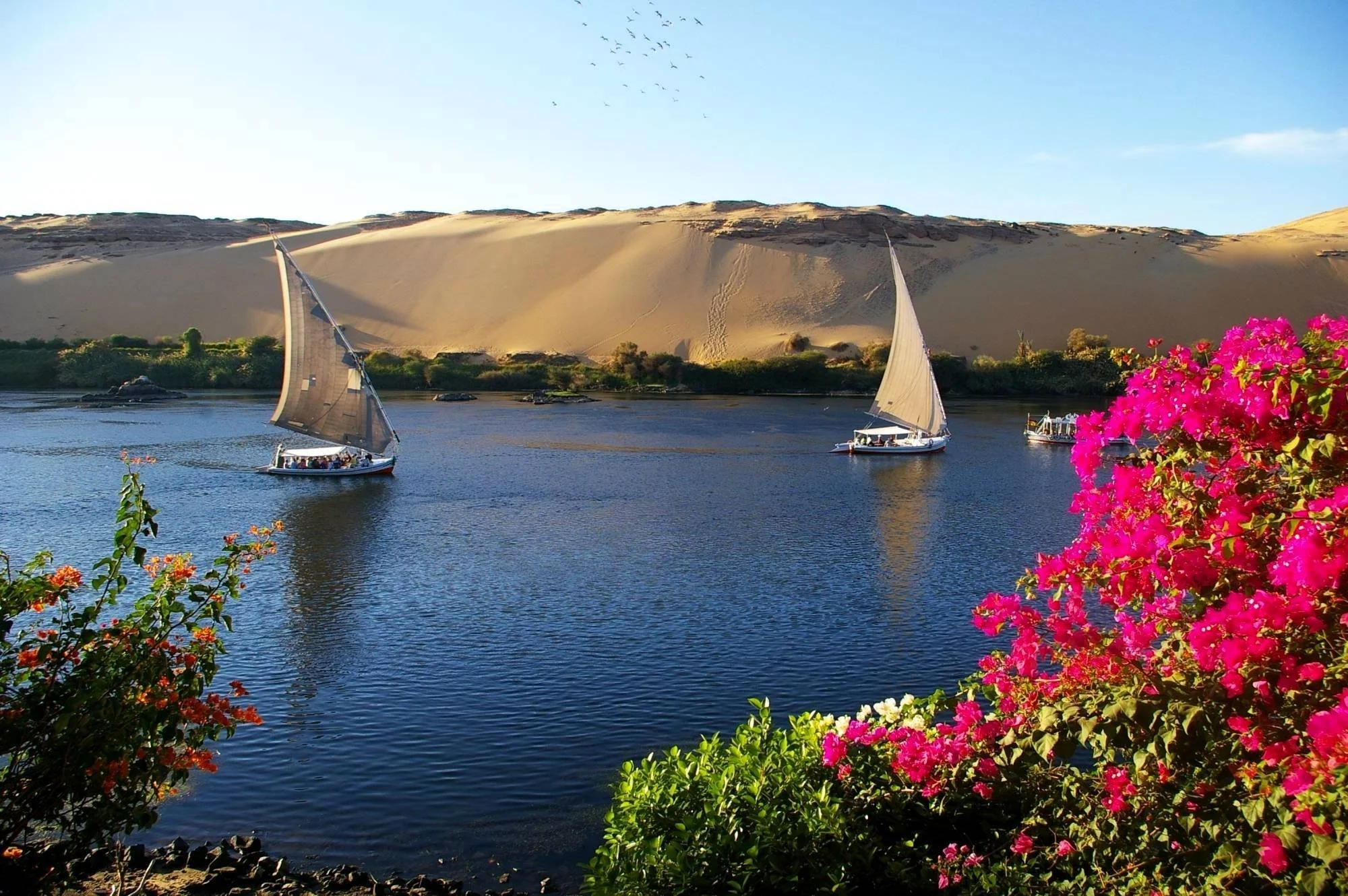
A beautiful vista of the Nile River.
Everything was quiet. It was early morning, and the streets of Aswan lay empty. Two feluccas drifted lazily on the Nile, which at that hour offered a truly picturesque scene. We left the city and ventured into the desert to reach the airport.
"We will fly!" I exclaimed with joy.
It was my first time on a Piper aircraft, a small two-seater. Was it safe? I glanced around, uneasily, but it was too late to turn back. My travelling companion, speaking with a Nubian dressed in a pink gallebaya, then opened the door and slid into the seat beside me. As the Piper taxied onto the runway, a wave of panic overtook me. I began to sweat with anxiety as the tiny plane shuddered and trembled.
"This is madness!" I thought, closing my eyes, fearing something might explode beneath my seat as the aircraft hurtled forward. Then, almost imperceptibly, the plane lifted off the ground. Its weight vanished, along with the engine’s roar.
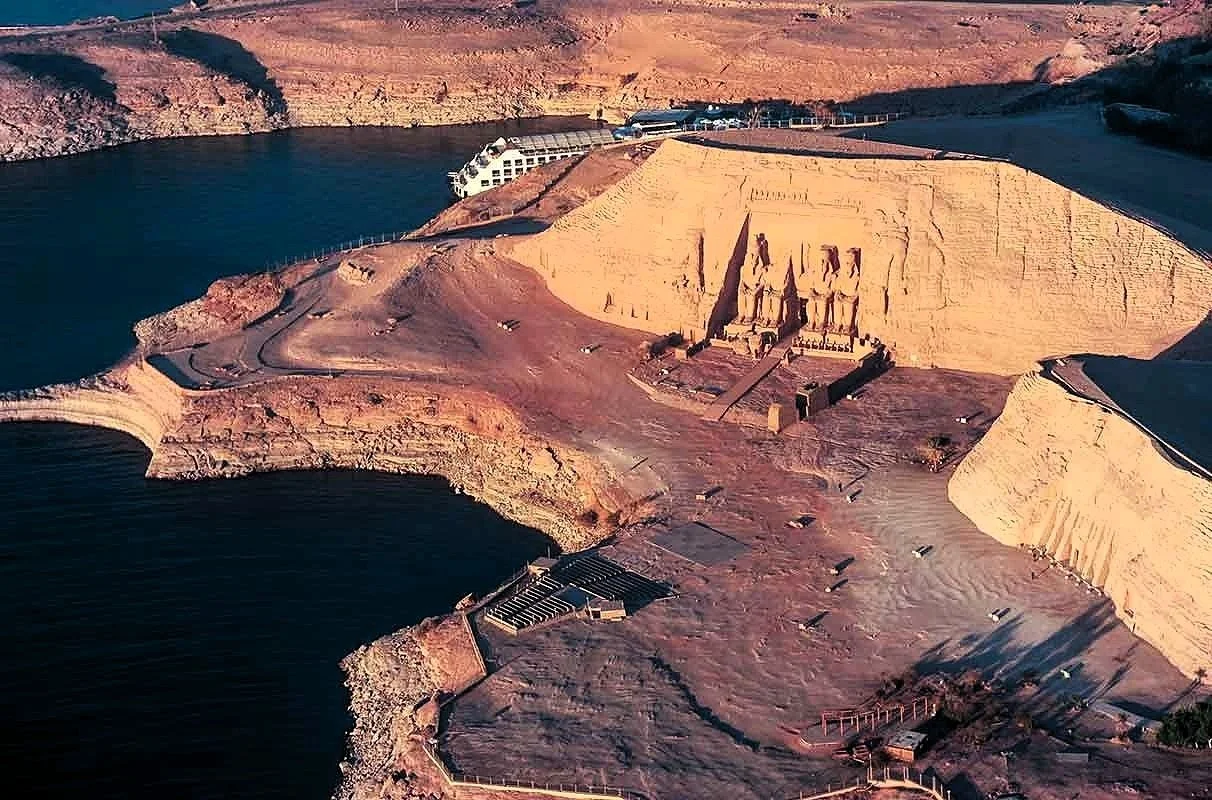
The Temple of Abu Simbel, viewed from above.
I opened my eyes. My racing heart gradually calmed as I tilted my head to behold one of the most majestic sights of my life. Below, the Nile snaked through the landscape, extending all the way into Lower Egypt. Its banks formed a vivid green ribbon, stretching as far as the eye could see. The desert, touched by the first rays of the sun, glowed pale pink. Triangular white sails of the feluccas glided serenely along the river, while Elephantine Island, the exotic Kitchener Gardens, and the quarries where the ancient Egyptians mined red granite unfolded beneath me.
The plane banked slightly, turning southwards.
"It’s magnificent," I whispered, caught in a rapture of happiness.
A tiny cloud brushed past us as we soared over Nubia, its dry, red earth stretching below, while the Nile flowed like a silver thread into the depths of Sudan.
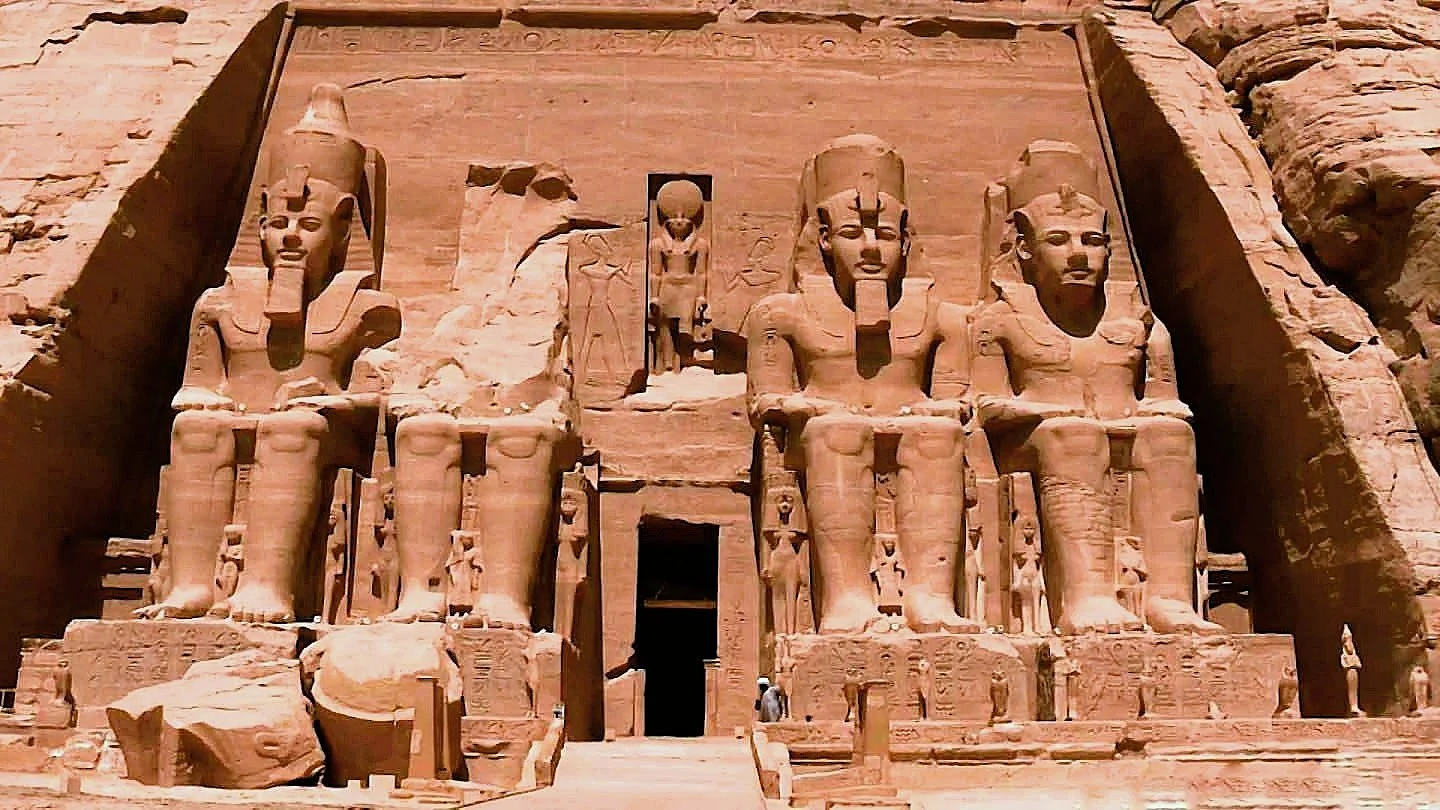
The grand temple of Ramses II at Abu Simbel, 13th century BC.
We descended briefly to admire the solitary pharaonic temples of Abu Simbel that have stood as timeless guardians of the river. Then we gained altitude again to survey the villages of straw and mud, remnants of a world partially submerged when the Aswan Dam created Lake Nasser. Farther downstream lies the Temple of Isis, painstakingly relocated to a neighbouring island of Philae with UNESCO’s aid after years of partial inundation. Here stands the most exquisite of ancient temples, dedicated to Isis, patroness of Cleopatra, who visited often to worship.
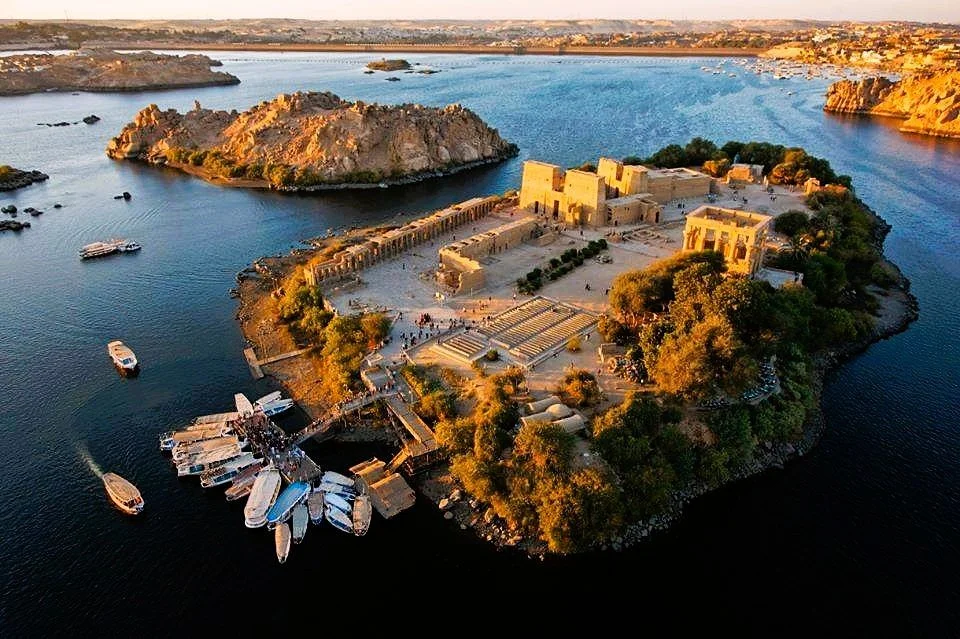
The Temple of Isis as seen from above.
The sensation of gazing upon the desert and the river from above was unparalleled — a moment of sublime wonder that words can scarcely capture.
Places, cultures and stories woven into every chapter. Μy Books in English Books in Italian Βooks in Greek
The book, EGYPT, A Journey to the Nile, is published in Greek. It will soon be published in English.
Related Articles
Ancient Egypt's Royal Court: Elegance, Power and Sacred Rituals
Royal ceremonies, precious fragrances, refined beauty traditions and courtly life reflected the wealth, authority and cultural brilliance that defined the civilisation of the pharaohs.
Read the Story
The Secrets of Egyptian Hieroglyphics: A Language Carved in Stone
Ancient inscriptions etched into temples and monuments preserve a sophisticated writing system whose sacred symbols continue to reveal the history, beliefs and enduring legacy of Egypt's civilisation.
Read the Story
Arriving in Alexandria: A Mediterranean Reflection
From the first glimpse of the Egyptian coast to the harbour of Alexandria, a reflection on light, sea and the enduring spirit of one of the Mediterranean's great cities.
Read the Story