
Sailing to Alexandria, Egypt
The Pearl of the Mediterranean
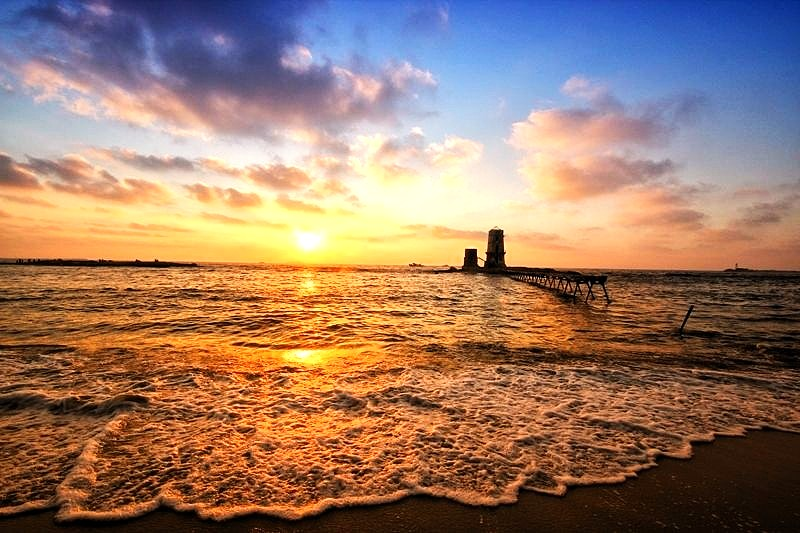
First light over Alexandria.
As the cruise ship sailed south across the Eastern Mediterranean, I never felt as though I were approaching foreign shores. There is something deeply familiar about these waters, where echoes of the Greek world have endured for centuries and continue to connect distant coasts through memory and history.
I stood on deck, looking towards the horizon while seagulls circled overhead, heralding our arrival. At first, the coastline appeared as a dark line against the sea. Gradually, as the morning sun climbed higher, it became clearer, revealing the outline of Alexandria.
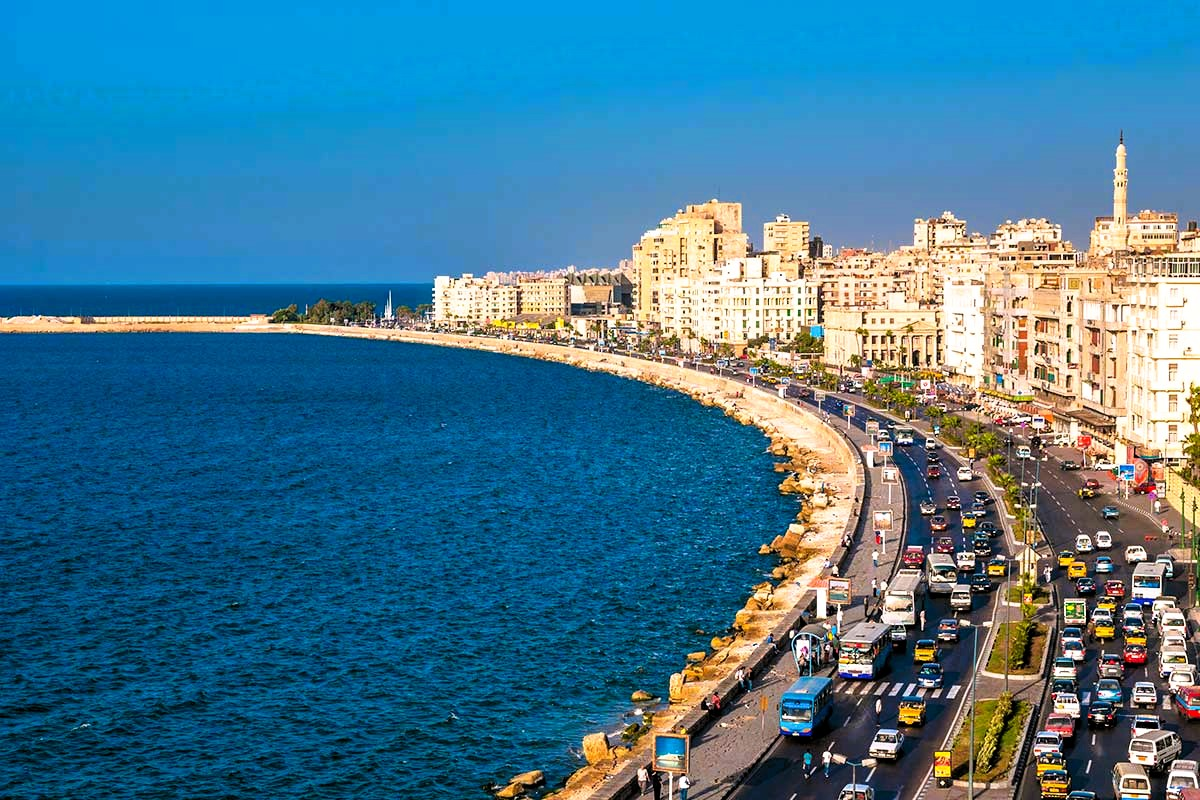
The scenic Corniche of Alexandria, where the city meets the Mediterranean.
A quiet shiver ran through me. It was not simply the sight of a city emerging from the horizon, but the extraordinary harmony of sea, light and movement. The steady course of the ship, the slow turning of the Earth and the sunlight spreading across the water seemed to merge into a single moment of perfect stillness. I was not looking romantically; I was simply looking with complete awareness. It felt less like a journey than a moment of grace.
Travel is often compared to life's pleasures, yet there are occasions when it becomes something altogether different. It becomes an invitation to pause and to listen, as though creation itself were quietly unfolding before one's eyes. Approaching Alexandria, whose legendary Lighthouse once guided sailors across these waters, was one of those rare moments.
Travel is often compared to life's pleasures, yet there are occasions when it becomes something altogether different. It becomes an invitation to pause and to listen, as though creation itself were quietly unfolding before one's eyes. Approaching Alexandria, whose legendary Lighthouse once guided sailors across these waters, was one of those rare moments.

The Corniche as seen from the Greek Nautical Club, Alexandria.
A dear Alexandrian friend came to meet me, as she had done on previous visits. We drove to the Greek Nautical Club overlooking the harbour, where fishing boats rested quietly on the water and the Corniche formed a graceful backdrop. Lunch there always reminded me how naturally Alexandria and Greece have remained connected across the sea, not only through history but also through hospitality and everyday life.
Later, we climbed to the terrace for coffee. Before us stood the Fortress of Qaitbay, built on the site where the great Lighthouse of Alexandria had once risen above the harbour. As I looked across the water, it was impossible not to imagine the countless travellers who had entered this port over the centuries, guided by one of the ancient world's greatest beacons.
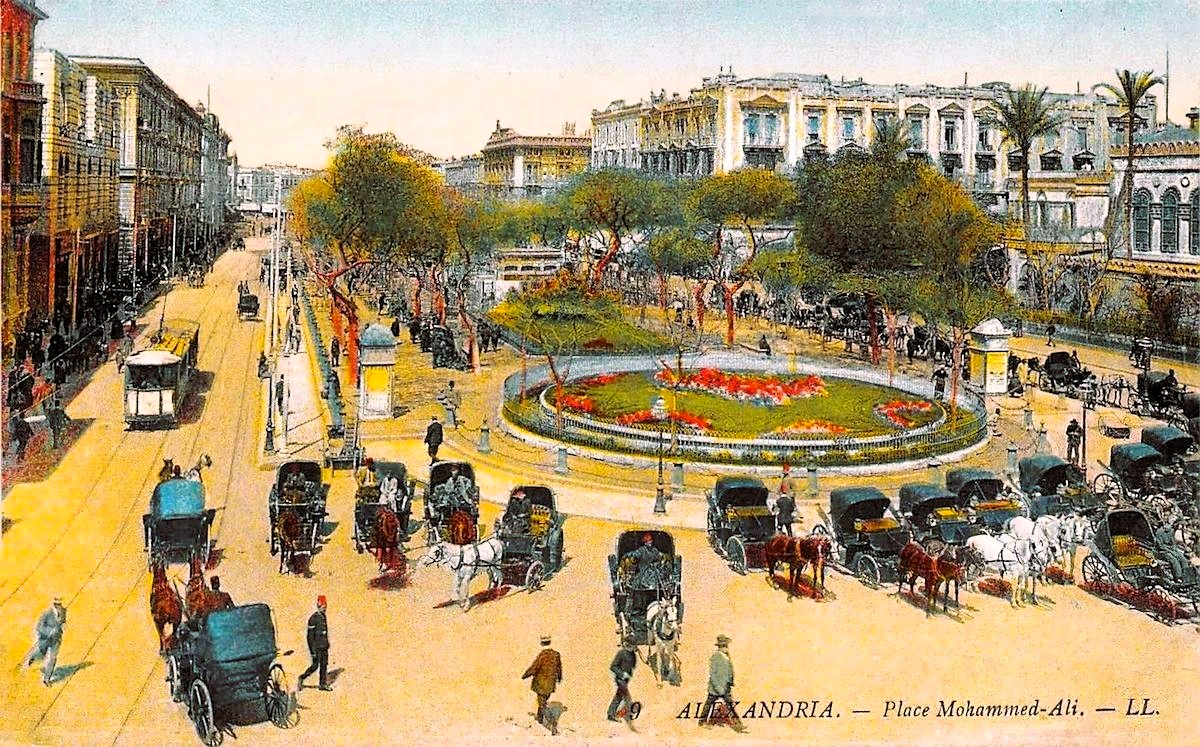
Mohamed Ali Square, the historic heart of Alexandria's commercial life, where a flourishing cosmopolitan Greek community shaped the city's character from the nineteenth century to the mid-twentieth century.
Alexandria has never impressed me through grandeur alone. Its beauty lies in its atmosphere: the meeting of sea and sky, the rhythm of its harbour, and the quiet awareness that every arrival carries with it the memory of all those who came before.
The world unfolds through every page. My Books in English Books in Italian Books in Greek
Related Articles
A journey through the Eastern Mediterranean, where for centuries coastal cities were linked by empires and maritime trade, forming enduring routes of exchange and cultural connection.
Rhodes, Greece: A Crossroads of Byzantine, Ottoman and Crusader Heritage
Within its magnificent medieval walls, Rhodes reveals a layered cultural landscape where Byzantine, Ottoman and Crusader influences converge in a uniquely preserved historical harmony.
Read the Story
Istanbul, Turkey: Ottoman Palaces Along the Bosphorus Shoreline
An ensemble of imperial palaces set directly on the waterfront, where marble, water and light reflect the enduring splendour of the Ottoman world.
Read the Story
The Oriental Vision in Venice: Byzantium, the Islamic World and Venetian Splendour
A reflection on the cultural and artistic dialogues between Venice, Byzantium and the Islamic world, and how these encounters shaped the city’s visual culture and architectural magnificence.
Read the Story