
My Pilgrimage to Jerusalem
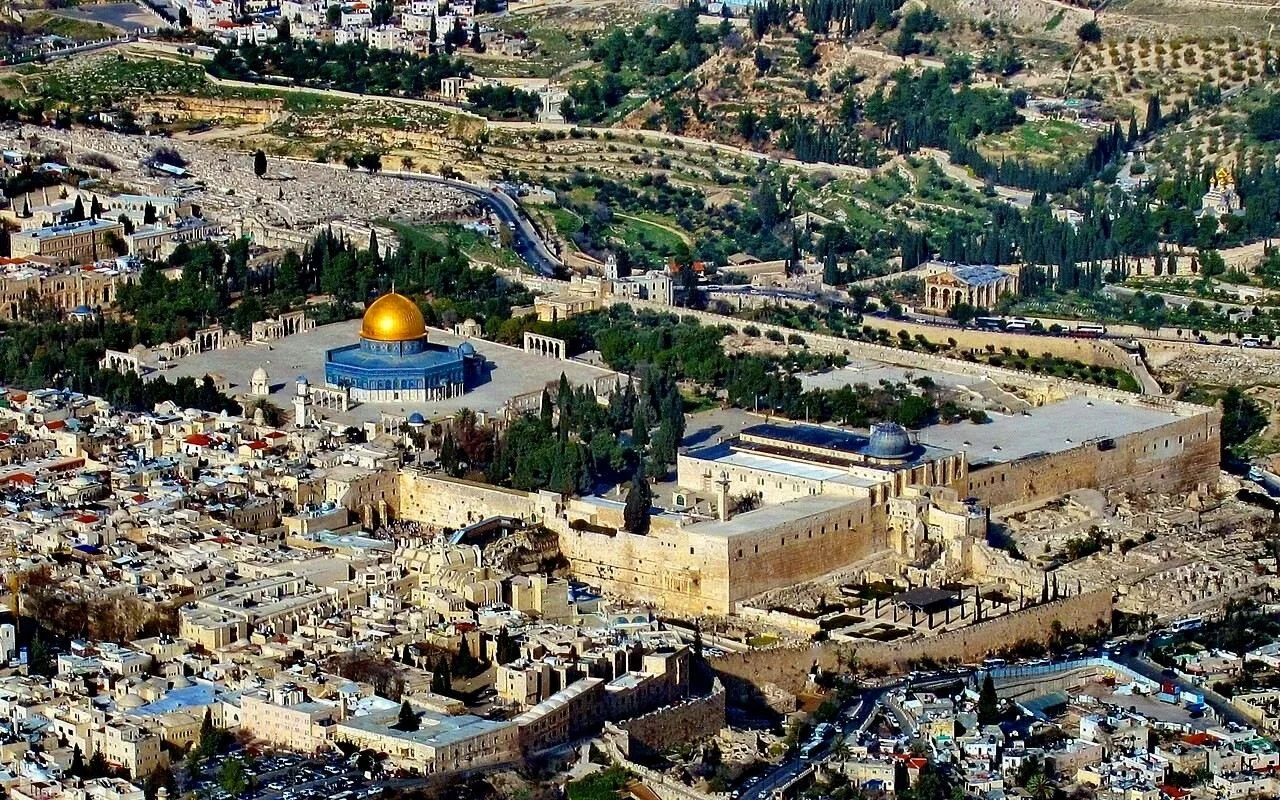
A view of the Temple Mount, Jerusalem – Photographer: Avraham Graicer
With the Order of the Knights of the Holy Sepulchre
On that particular day, with her dog sitting quietly at her feet, my Roman friend, Josephine, announced to me that she would be going to Jerusalem in a few months. I was glad to hear it and wanted to know more but she suddenly stopped talking and looked at me, then she asked me to accompany her on her pilgrimage.
“Pilgrimage?” I repeated. It was as if I was hearing the word for the first time.
It was something so outside the realm of my own interests and I just stared at her blankly for a few seconds. Exchanging our personal experiences under the Roman stars was a favourite pastime, following the Latin-Christian path of her life was quite another.
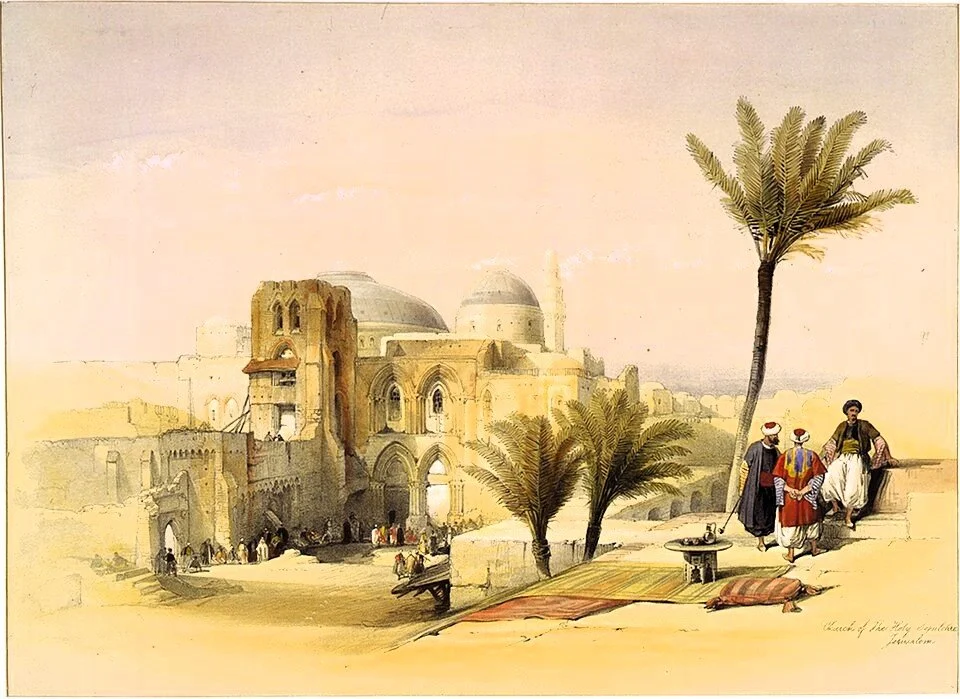
Lithograph of the Church of the Holy Sepulchre, 19th century, by David Roberts.
Pilgrimage? I asked myself, trying to make room for the word inside my mind. I was ready to refuse but she started talking again:
“We will go with the Order of the Knights of Jerusalem,” she told me, and started to enthusiastically explain to me exactly who the Knights were.
Listening to her, the whole idea started to interest me. The opportunity to travel with the Order of the Knights of the Holy Sepulchre to Jerusalem and to witness their rituals was starting to sound more and more attractive. It tied into my cultural interests, the curiosity of the traveller was starting to overcome me and, somewhere out of all of this, I got the message from Rome that I had to go. When everything had been put in order in my mind, I agreed to accompany my friend. As for the pilgrimage, whose purpose I still did not completely understand, I allowed it to flutter over my head, like an abstract thought.
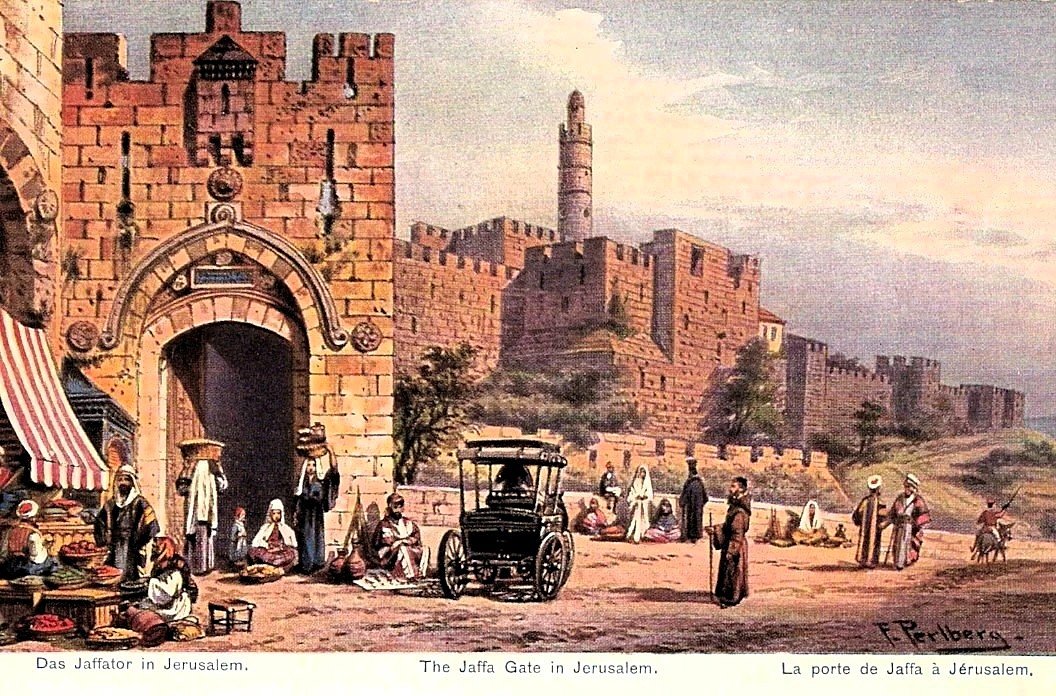
The Jaffa Gate, Jerusalem, in the 19th century.
And so my preparations began. My organized nature was put into use once more. Maps and all the topography of the Holy Land came down from the shelves of my library. With the help of the Guide Michelin, Jerusalem soon became photographed in my mind. I reread books by French and English travellers.
Ibn Battuta refreshed himself in my memory, as did the Crusades – from the point of view of the Arabs as well as the Franks. The lives of Solomon and David were ensconced on my night table. Persians, Byzantines and Mamluks marched militantly through the centuries. If Josephine happened to drop by and saw the chaos of my library, she would surely have been shocked:
“All this to hear the Word of God?”
Fortunately, she didn’t drop by, and I didn’t know exactly what I was going to hear.
The day for our departure finally arrived.
This is an excerpt from my book Feeling Rome, in which I recount my cherished experience in the Holy Land.
Related Articles
From the Ancient Roman Necropolis to the Holy Land: Discovering the Tomb of Saint Peter
Beneath the grandeur of Saint Peter's Basilica lies the ancient necropolis where tradition locates the tomb of the Apostle Peter. An encounter with the earliest roots of Christianity before continuing towards Jerusalem and the sacred landscapes of the Holy Land.
Read the Story
Moscow's Sacred Skyline: Golden Domes, Winter Snow and the Christian East
Standing beneath Moscow's radiant domes, I discovered a city where Orthodox tradition, Russian artistry and the landscapes of the Christian East come together in one of Europe's most captivating winter settings.
Read the Story