
Gangtey Lodge, Bhutan
Hidden Gem of Himalayan Hospitality
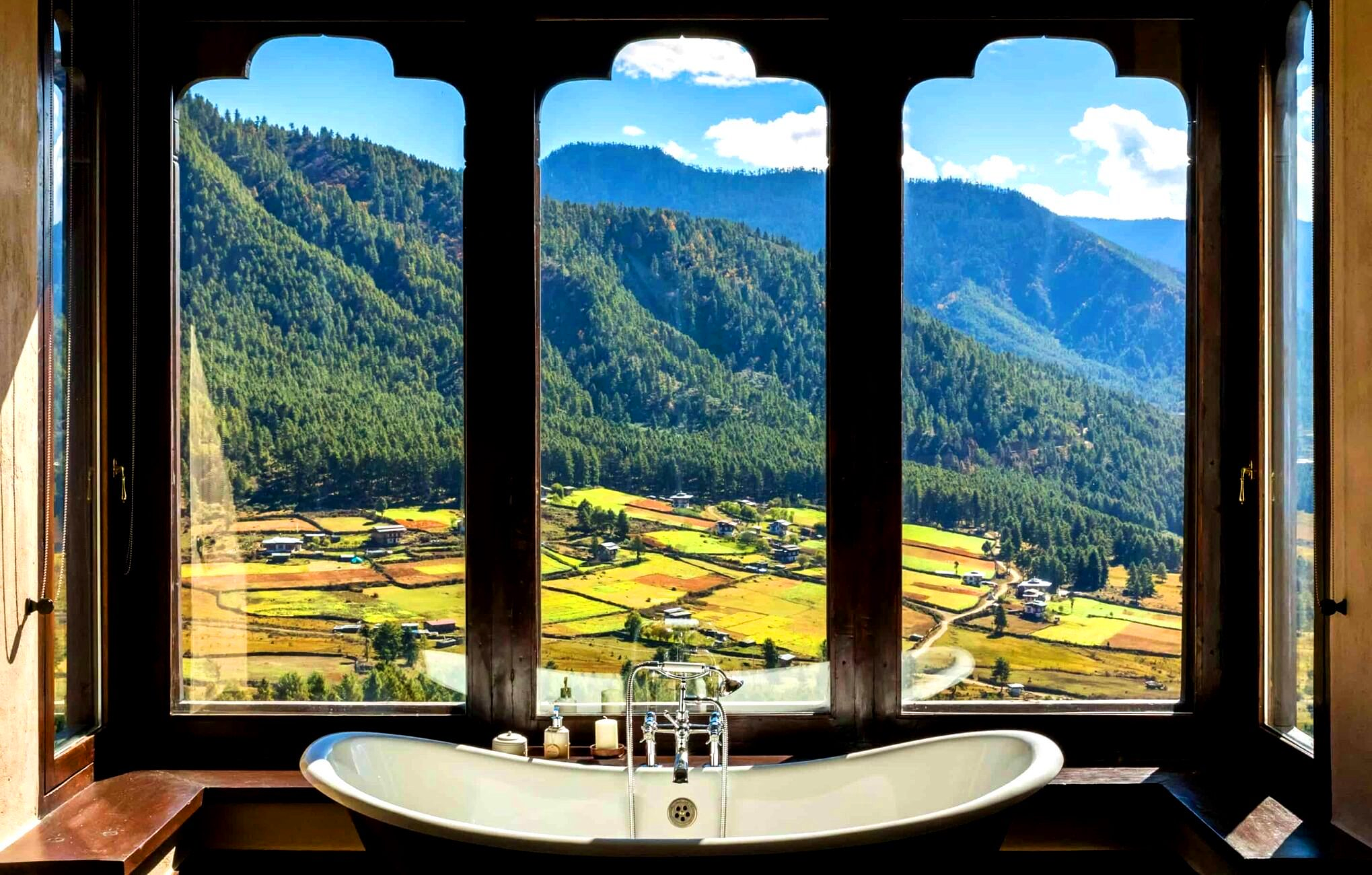
Beyond the windows of Gangtey Lodge, the majestic Himalayan valleys unfold in serene, uninterrupted beauty.
Certainly, there are legendary hotels that have left an indelible mark on the history of international tourism. After a full day spent exploring majestic landscapes, impressive ruins, mountains offering breathtaking vistas and unforgettable scenic routes that bring us into closer contact with the remarkable heritage left behind by the civilisations that came before us, a beautiful and spacious room, an enticing dinner or impeccable service become the very essence of refined travel.
Bhutan, which opened its doors to foreign visitors only a few decades ago, in 1974, has no long-established tourism tradition. And yet, in the enchanting valleys of this tiny kingdom, small and exclusive lodges began to spring up like beautiful flowers. Their distinctive atmosphere is deeply rooted in the ancient traditions of Bhutanese architecture, as well as in the philosophy of its remarkable people, who have embraced the celebrated concept of Gross National Happiness as a way of life.
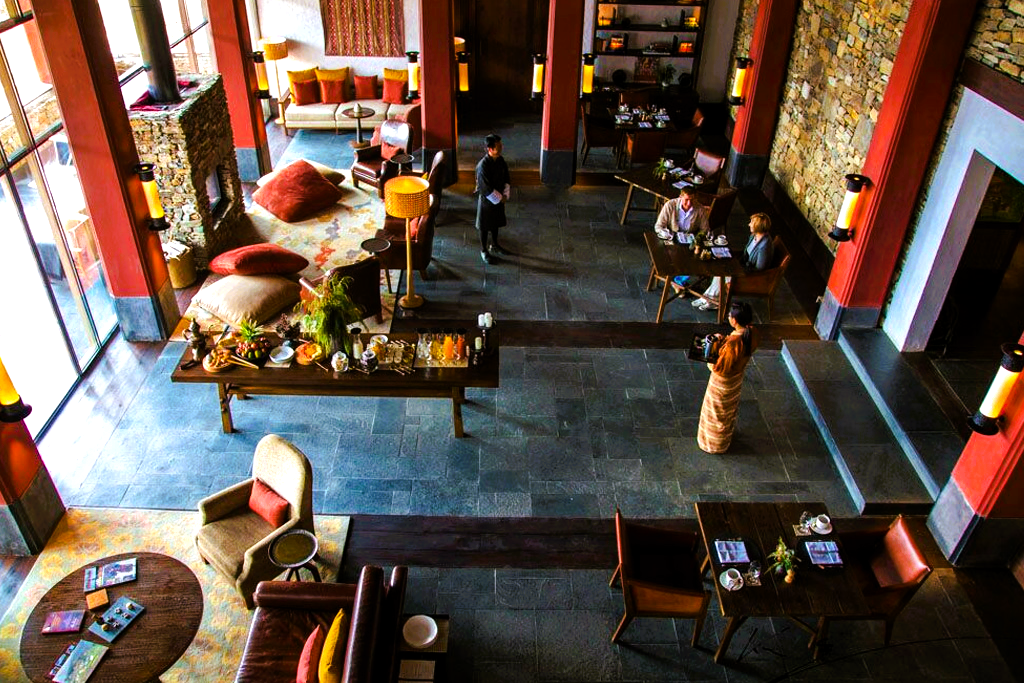
Bathed in Himalayan daylight, the tranquil lobby of Gangtey Lodge reflects the warmth and distinctive elegance of Bhutanese architecture.
One such place is Gangtey Lodge, the culmination of an adventure that began in 2003 with its owners, Khin Omar Win and Brett Melzer. The founders of the iconic Balloons over Bagan in northern Myanmar, they had been invited to Bhutan to explore the possibility of introducing hot-air ballooning to the country.
Instead, when they came across the spectacular and unspoilt Gangtey Valley, a different idea began to take root: to create an exclusive retreat that would not be detached from its surroundings, but would instead help preserve Bhutanese rural life.
Gangtey Lodge is situated in the Phobjikha Valley, in central Bhutan, at an altitude of around 3,000 metres, amid one of the most pristine and breathtaking landscapes of the Himalayas. Surrounded by forested slopes and dramatic mountain ridges, the valley seems almost entirely cut off from the rest of the world.
With my companions, I arrived there after a long day spent exploring the spectacular valleys of the Himalayas. Night had already fallen, and deep darkness had enveloped the mountains, making the journey to the lodge seem even more remote and mysterious.
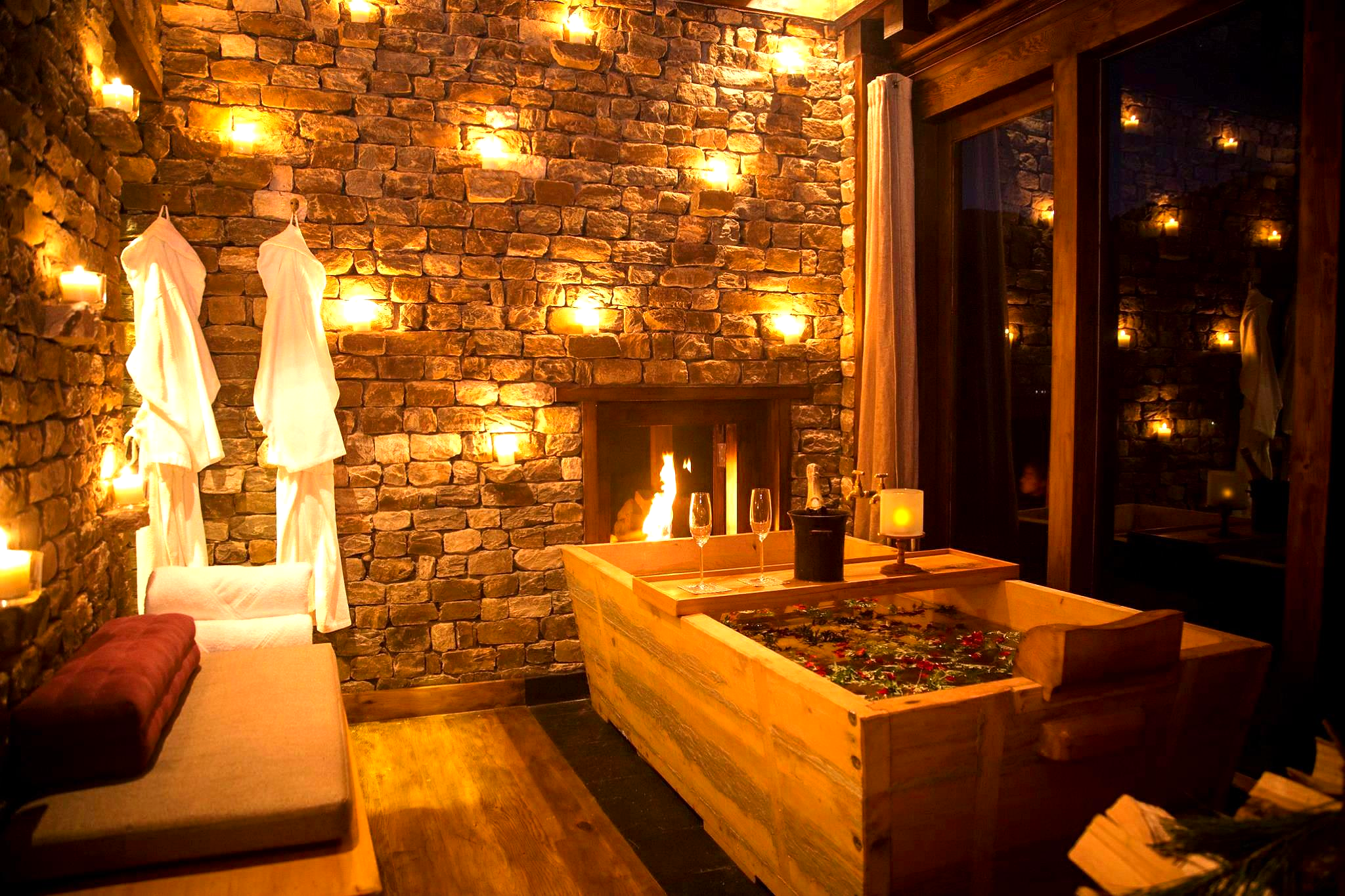
Quiet moments of relaxation at the Gangtey Lodge Spa.
As I stepped out of the car, I had no idea what awaited me in this isolated place. Yet the moment I entered the lodge, my uncertainty disappeared. I felt as though I had stepped into an oasis of warmth, beauty and extraordinary tranquillity.
Everything had been created with exquisite taste. Traditional Bhutanese architectural elements and natural materials were combined with warm, earthy tones, creating an atmosphere that was both elegant and deeply comforting. The delicate fragrance of essential oils lingered in the air, soft music played quietly in the background, and the impeccable staff welcomed us with a graciousness that felt entirely natural.
Then came dinner, prepared with local ingredients and crafted with remarkable delicacy and skill. The food was refined without losing its connection to the land, while every detail conveyed the same discreet sense of quality. It was hospitality at its most accomplished: never ostentatious, yet evident in every thoughtful detail.
The following morning, as the sun rose over the mountains, the Himalayas seemed to enter the lodge through its vast glass walls. Suddenly, the landscape lay before us in all its glory: a panoramic view across the immaculate valley, which stretched beneath us in gentle, serpentine curves until it disappeared into the distance.
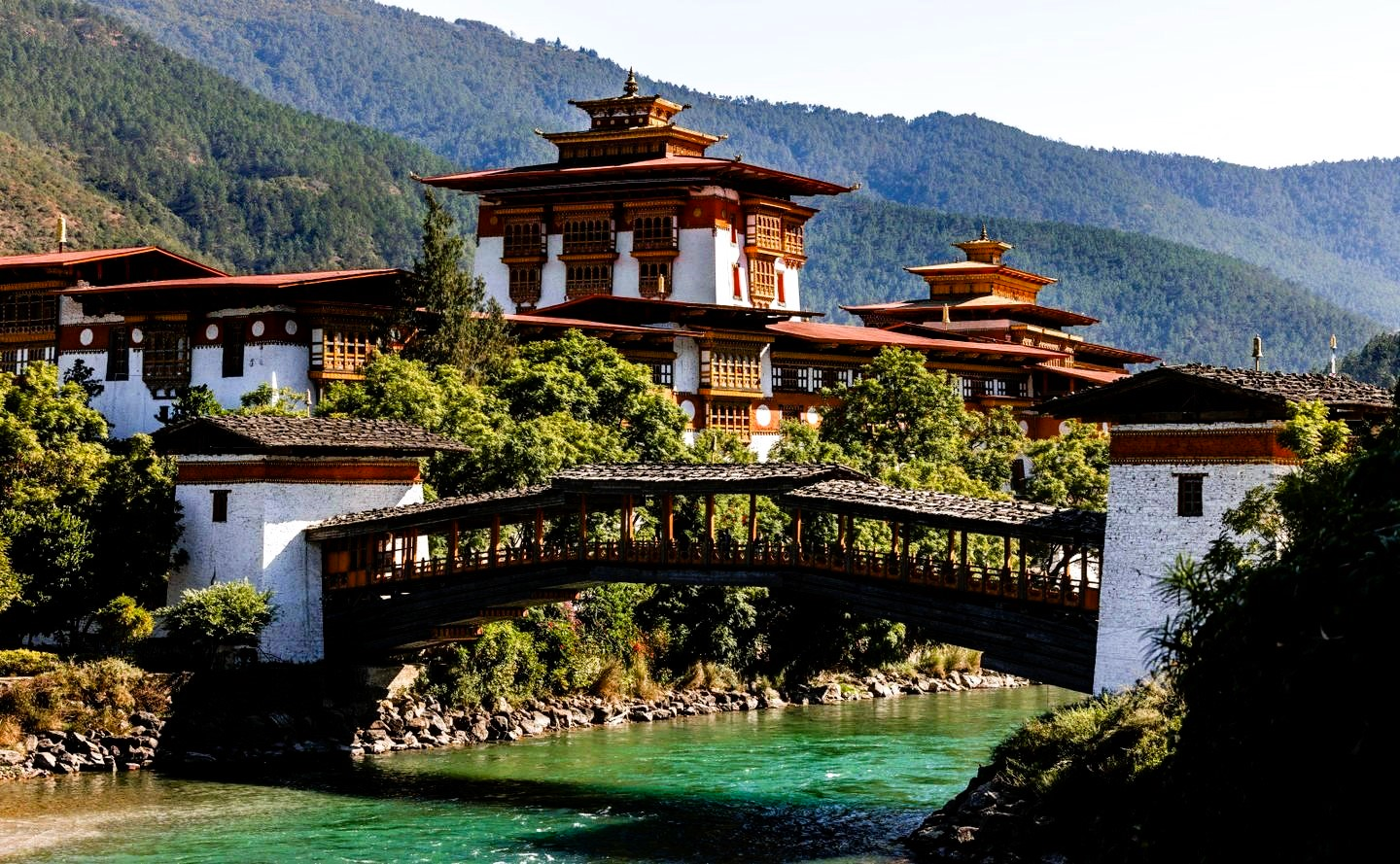
Crossing the wooden bridge towards Punakha Dzong, where the serenity of the river meets the grandeur of Bhutanese architecture.
It was one of those rare moments when you realise that no interior, however beautifully designed, can rival the grandeur of nature.
It is true that the landscape of Bhutan is extraordinarily striking. And yet, after some time, I began to sense a certain visual uniformity. The same could be said, to some extent, of the dzongs — those ancient Buddhist monastic fortresses that are among the country’s most important landmarks and principal attractions. They are undeniably impressive, but after visiting several of them, one begins to recognise recurring architectural forms, familiar lines and a remarkably consistent aesthetic.
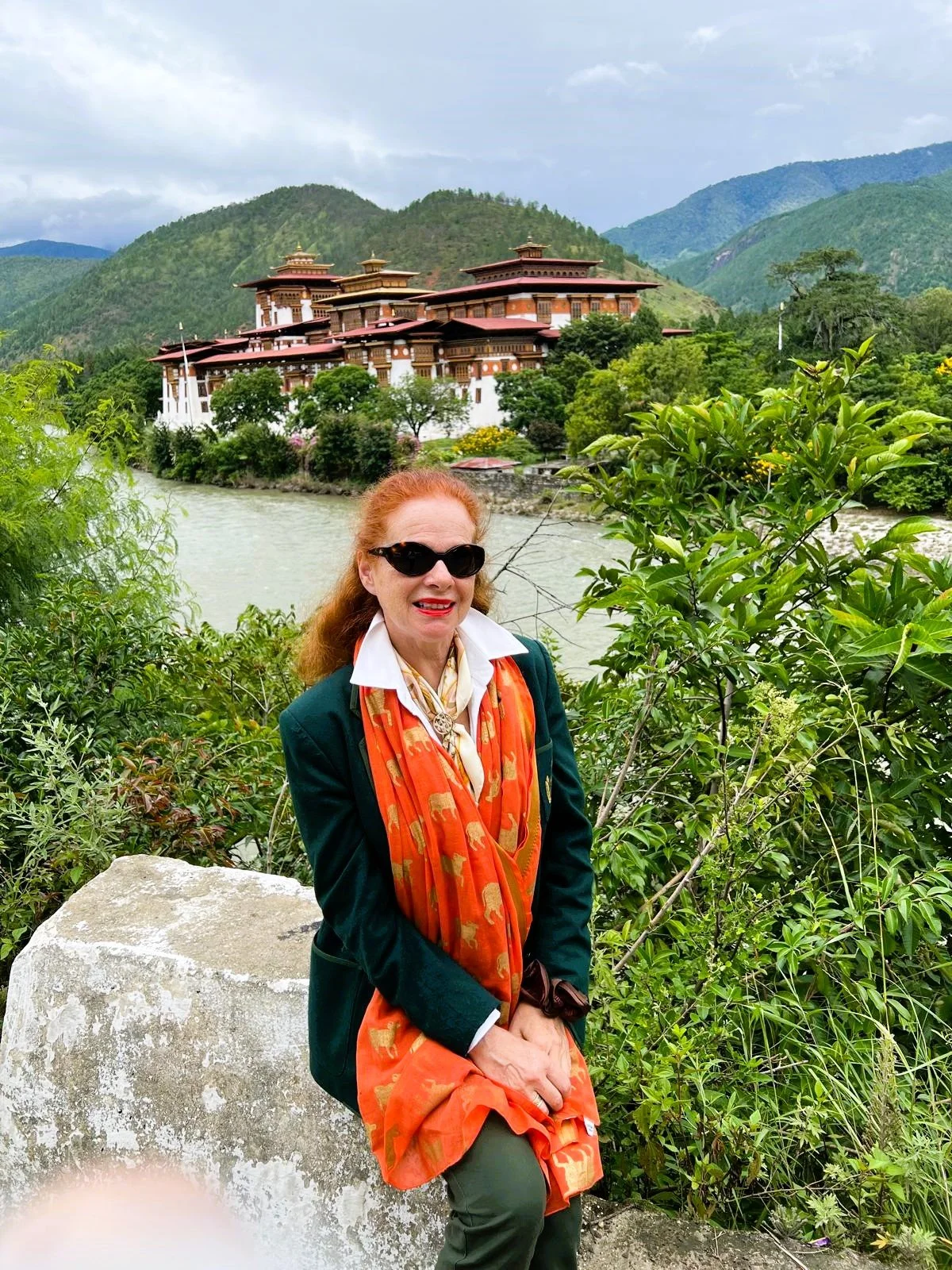
The author after visiting Punakha Dzong — beyond beauty, towards meaning.
Curiously, however, this did not weary me.
Quite the opposite.
I found that my mind had no need to search for anything beyond the imposing presence of a monastery. Its beauty was not merely something I observed; it seemed to penetrate me. Gradually, almost without realising it, I found myself surrendering to its atmosphere.
Perhaps this is because Bhutan does not demand that you constantly seek something new.
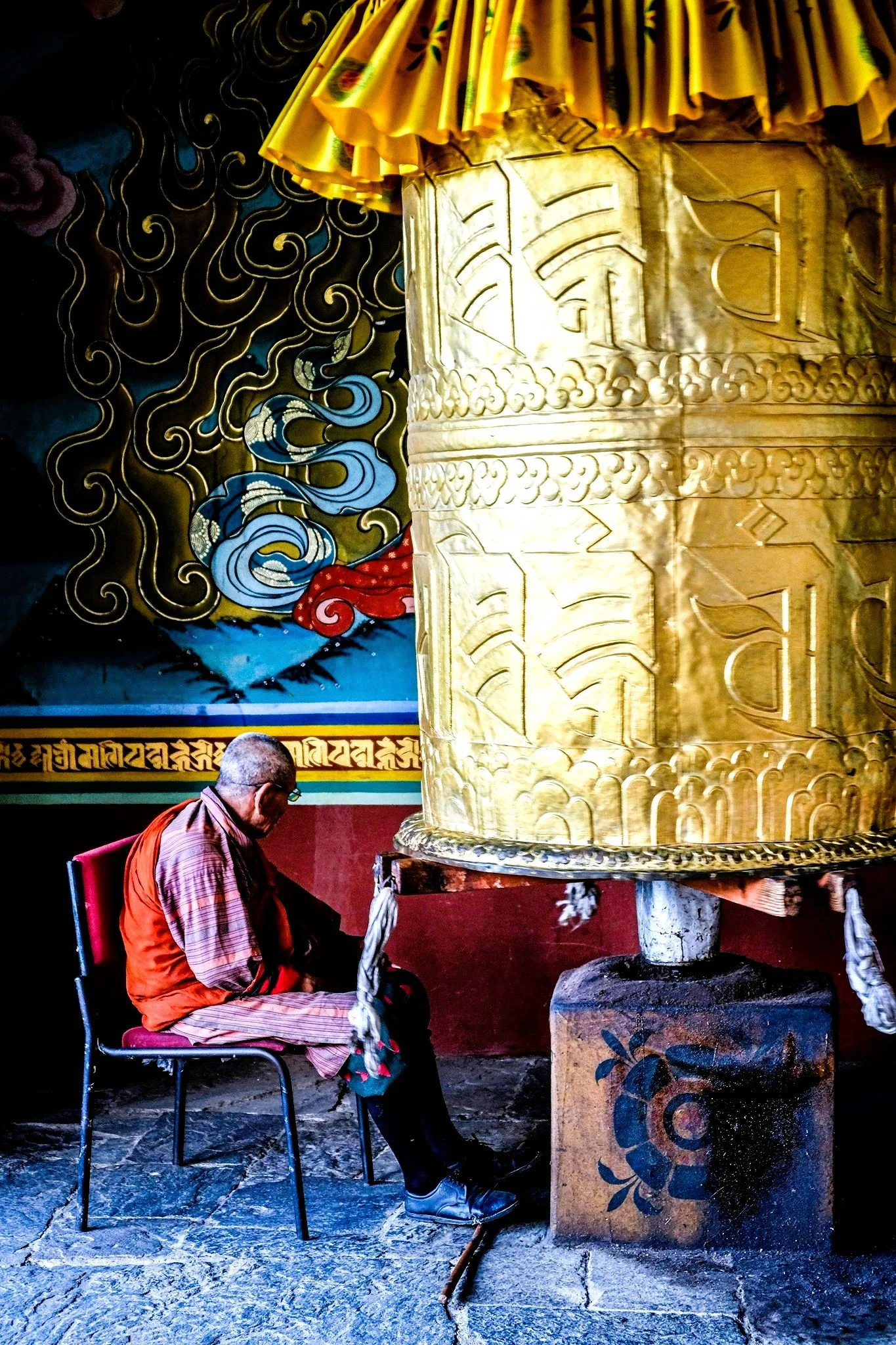
Buddhist monk turning the great prayer wheel, inscribed with sacred mantras — prayers set in motion.
You do not come here in search of great monuments, lost civilisations or archaeological treasures, as you might in so many other parts of the world. There is no sense of urgency, no need to hurry from one sight to another, to see everything, photograph everything, tick every box before moving on.
Nothing of the sort.
Here, the experience is altogether different.
Slowly, I began to understand that travelling to Bhutan is not simply a journey to an exotic destination. It is something far more profound.
It is, above all, a spiritual journey.
A journey inwards.
The silence of the mountains, the simplicity of everyday life, the deep spirituality of the people, the monasteries seemingly suspended between earth and sky and, above all, the extraordinary sensation that time moves here according to a different rhythm gradually compel you to slow down.
To observe.
To listen.
And perhaps, for the first time in a very long while, to listen to yourself.
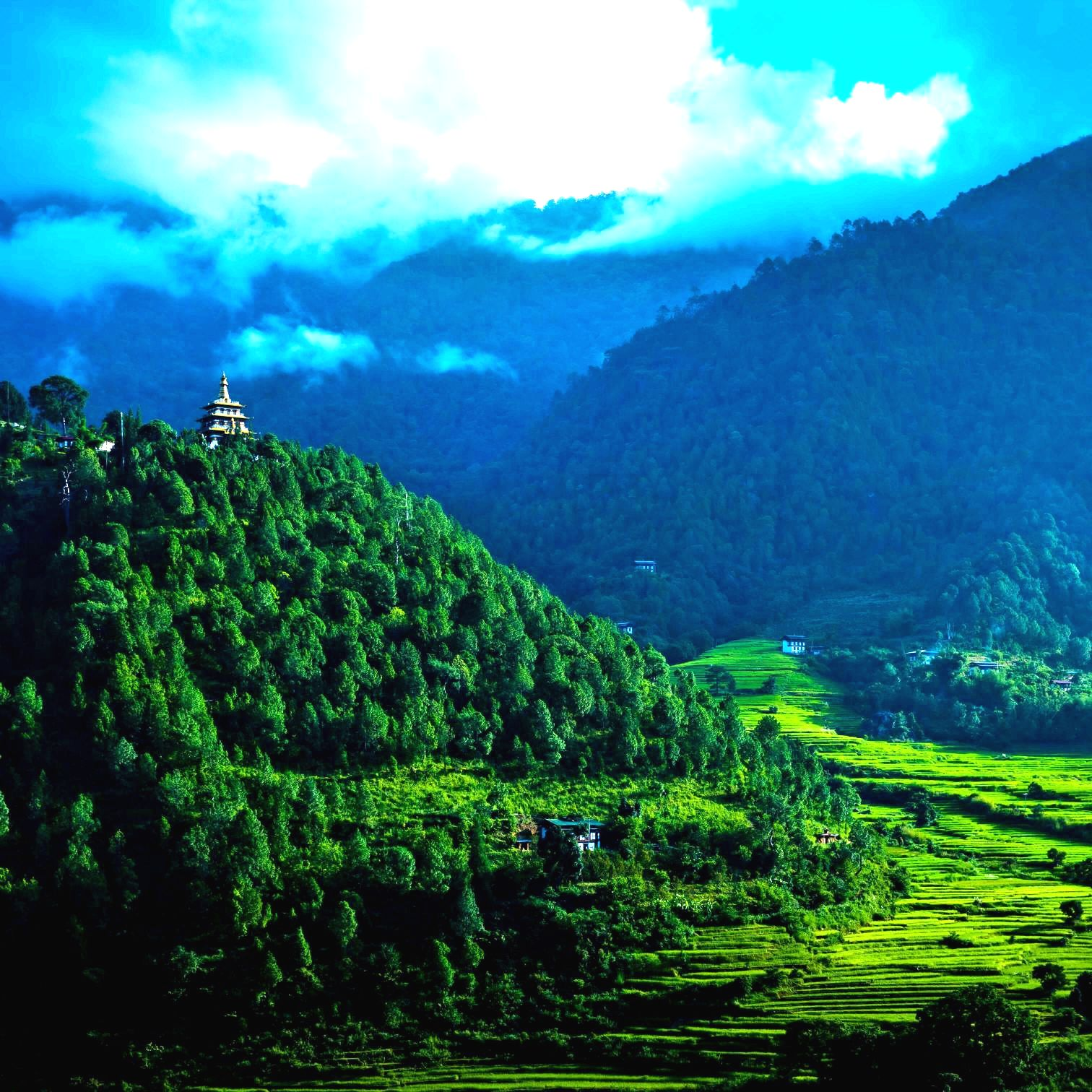
The emerald-green slopes of the Bhutanese Himalayas — a landscape that seems to evoke the mythical Shambhala, the legendary Himalayan paradise behind the enduring vision of Shangri-La.
That, ultimately, is what makes Bhutan so special. It is not merely the grandeur of the Himalayas, the monasteries or the architecture, nor even the celebrated philosophy of Gross National Happiness. It is the feeling of being in a place that, despite the realities of the modern world, has managed to preserve a different way of looking at life.
A way that seems less hurried, less demanding and perhaps, in some respects, more human.
And perhaps that is why, when I left Gangtey Lodge, I did not feel that I had simply visited yet another hotel. I had experienced something that felt more like a small, deeply personal initiation into the way Bhutan understands happiness, simplicity and our place within nature.
I believe the most memorable journeys are the ones lived slowly, allowing time for beauty, reflection and genuine connection.
A collection of my journeys in words: Books in English Books in Italian Books in Greek
Related Articles
Tandjung Sari: A Magical Door to Bali
From the tranquil gardens and oceanfront bungalows of Tandjung Sari to the timeless spirit of Sanur, Bali fascinates with its understated elegance, lush nature and deeply rooted traditions.
Read the Story
Udaipur, India: Relaxing at the Lake Palace
Amid the serene waters of Lake Pichola, the Lake Palace evokes the romance of another era, its marble courtyards, tranquil gardens and shimmering reflections creating a world of graceful repose.
Read the Story
Old Cataract, Aswan: A Romance on the Nile
From its graceful verandas and palm-fringed gardens to the golden waters of the Nile, the Old Cataract evokes the romance of another era, where grand journeys, legendary guests and the quiet beauty of Aswan came together beneath the Egyptian sun.
Read the Story