
The Old Cataract, Aswan, Egypt
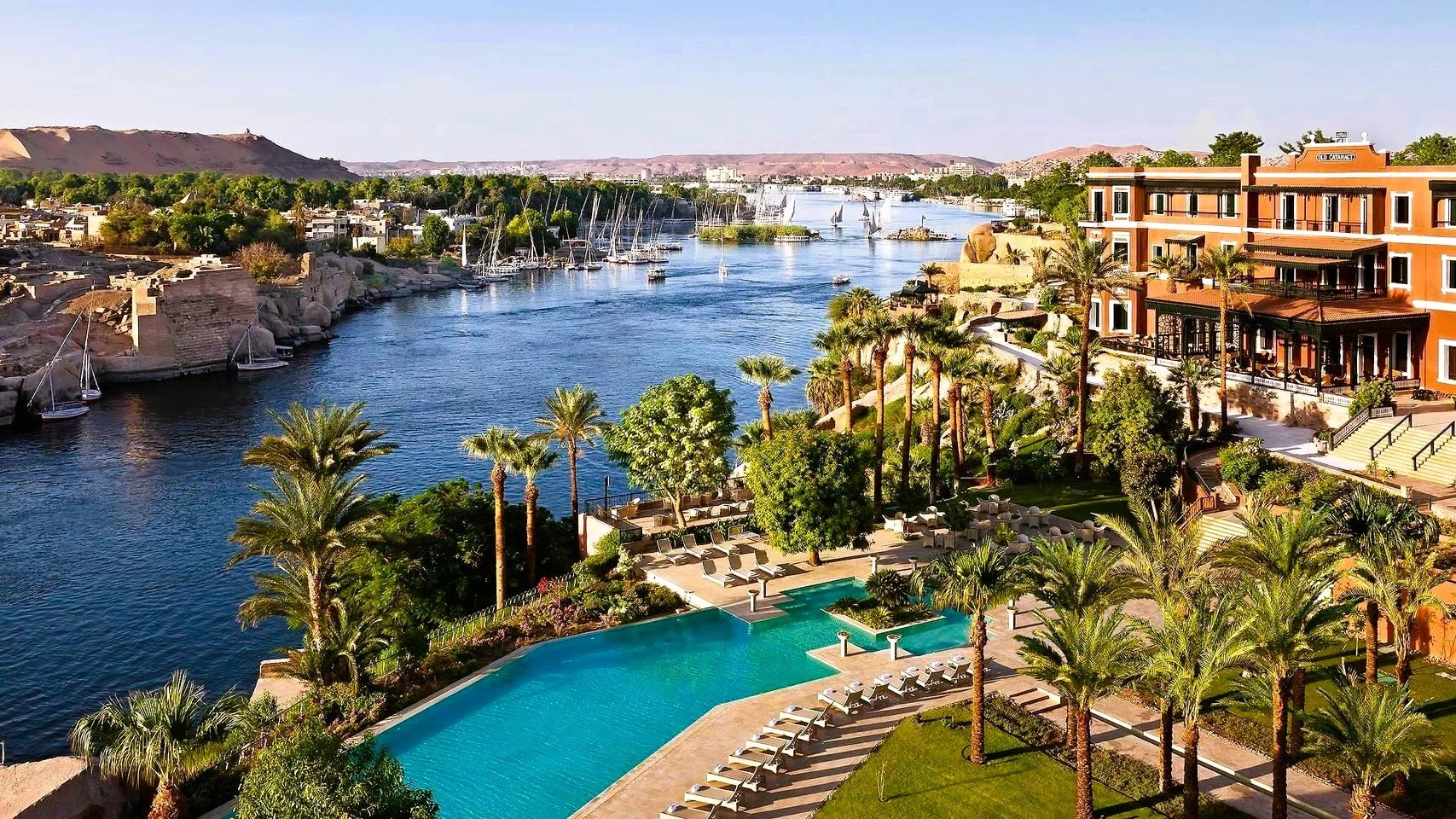
The Old Cataract, Aswan.
One of the most evocative views I remember from my travels is the one from the terrace of the Old Cataract Hotel, in Aswan. It is not merely the panorama that lingers in the mind, but the entire atmosphere in which this legendary hotel stands — poised above the Nile, facing Elephantine Island and the golden sweep of the desert beyond.
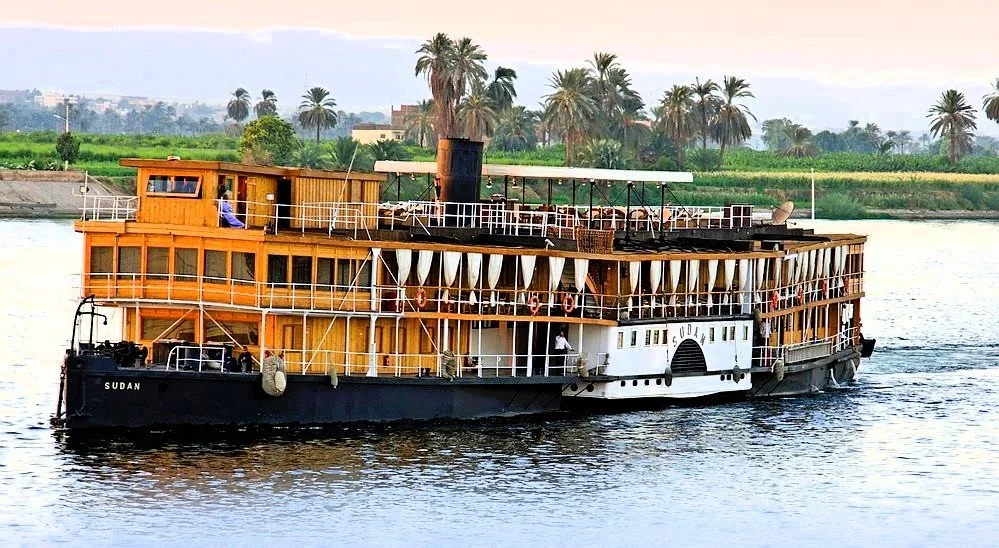
PS Sudansailing on the River Nile, one of the largest steamers in the fleet of Thomas Cook & Son.
Agatha Christie fixed it firmly in the collective imagination through her novel “Death on the Nile”, written during the great age of Nile cruising, when journeys from Cairo to Nubia were organised by Thomas Cook & Son, and their passengers were affectionately known as “Cookies”.
Let us return to 1902. The local topography, unchanged for millennia, was dramatically altered by the construction of the first Aswan Low Dam. The Nile cataracts — those tumultuous rapids that had astonished travellers for centuries — gradually disappeared as the river’s flow was regulated and the eddies and whirlpools gave way to calmer waters, submerging the rocks and islets that had once broken the current.
When the river was tamed, the cataract itself vanished. Thomas Cook, a businessman with a poet’s sensibility, sought to preserve its memory by giving its name to what would become one of Egypt’s most celebrated hotels, built opposite the very stretch where the cataract had once thundered. In this way, the illusion endured.
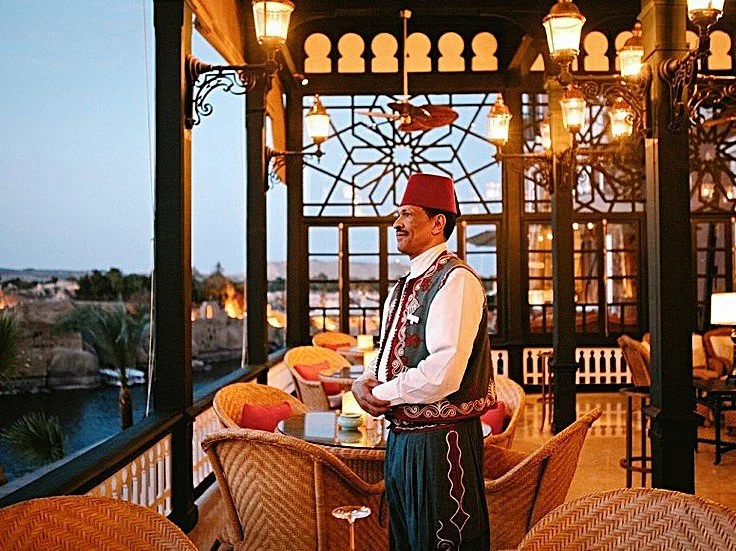
The verandah of the Old Cataract, overlooking the Nile and the passing feluccas, Aswan.
Opened in 1899 in a grand Victorian style and later enhanced with an Art Deco wing in the 1930s, the hotel has welcomed royalty, writers and statesmen alike, becoming an enduring emblem of Nile-side elegance and the romance of travel.
*The photo of the Old Cataract verandah on the blog cover page is attributed to Fabrice Rambert.
The book, EGYPT, A Journey Along the Nile, is published in Greek. It will soon be published in English.
Wander through cultures, places and stories in my Books in English Books in Italian Books in Greek
Related Articles
Gardens of Marrakesh: Silence, Colour, and the Art of Stillness.
Hidden behind ochre walls, the gardens of Marrakesh unfold as intimate worlds of shade, water, and quiet contemplation.
Read the Story
Tangier: At the Crossroads of Sea, Light, and Memory
From the terraces of the Fairmont Tazi Palace to the winding streets of the Medina, Tangier reveals a timeless dialogue between continents and cultures.
Read the Story