
The Charm of the Hellenistic and Roman World
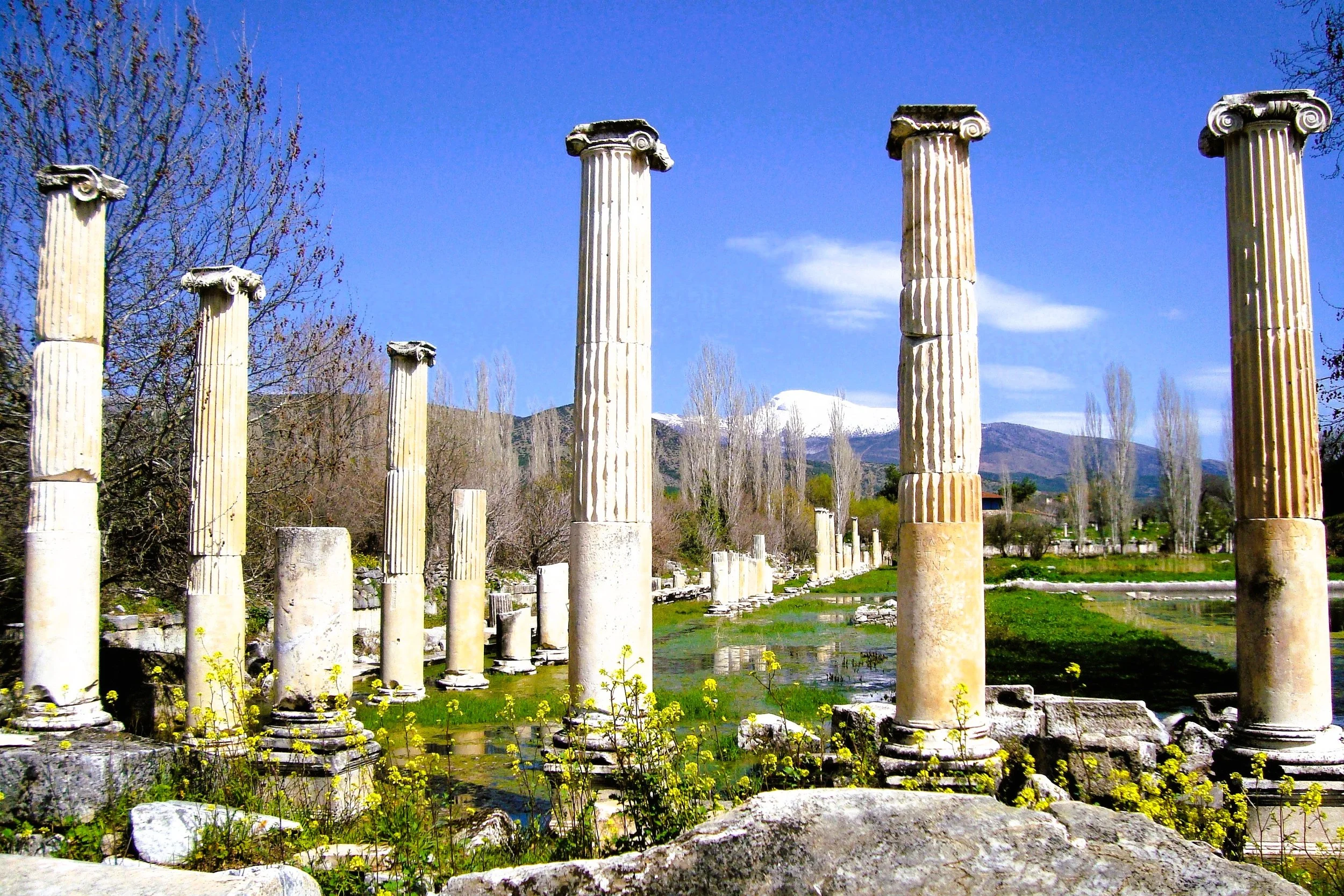
Ionic colonnade in the ancient city of Miletus, Asia Minor, long forgotten amidst the marshes. Photograph by Barbara Athanassiadis
The cities of antiquity in the Near and Middle East have always held a profound attraction for me, for I see in them an inseparable part of my Greece. The paradox, of course, is that so many of the great sites of the Hellenistic world now lie far beyond the borders of modern Greece. I have visited almost all of them, and I remain deeply haunted by their enduring charm.
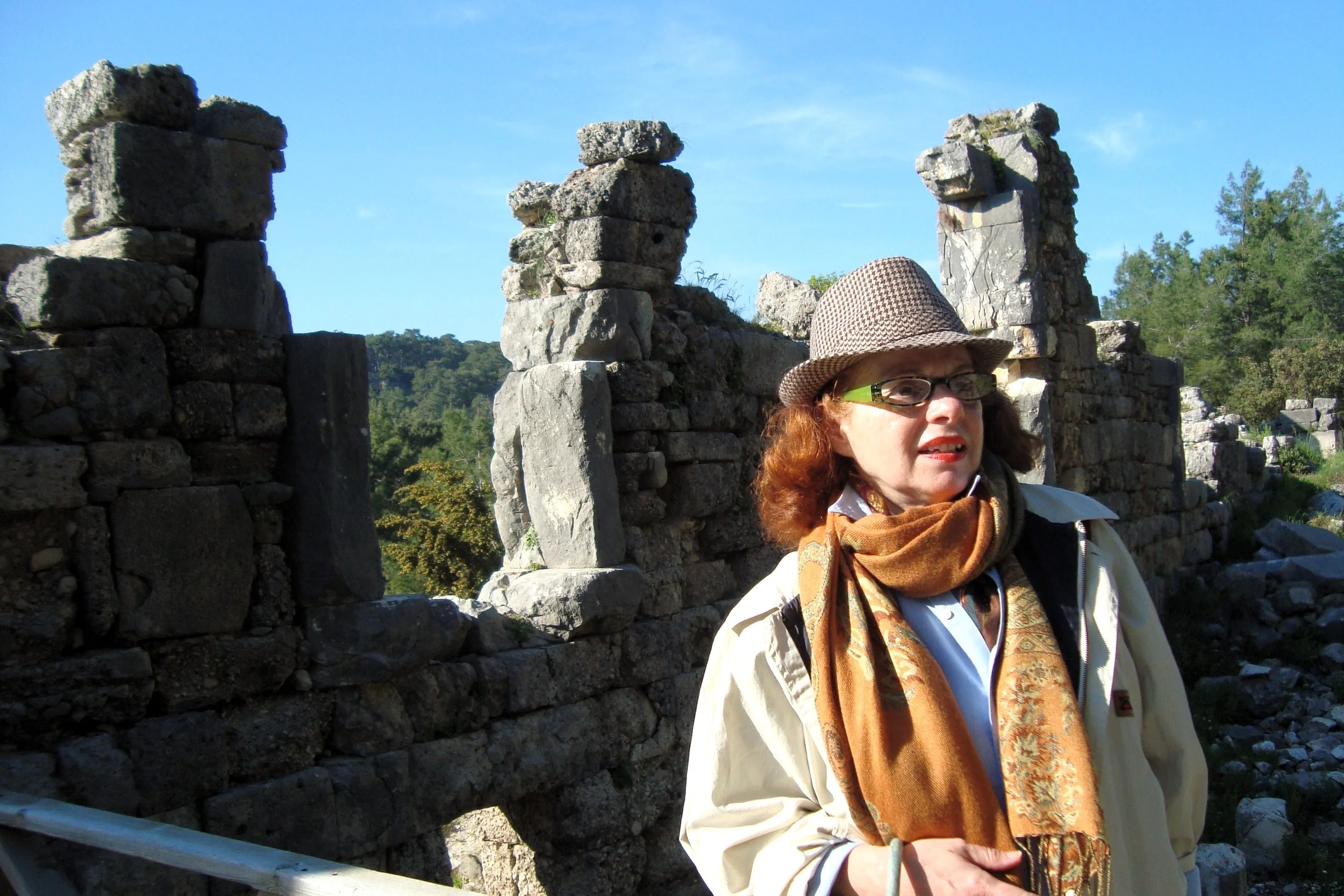
The author discovers the ruins of ancient Aspendos in southern Asia Minor.
What I discovered during these journeys was that, despite the apparent similarities of their theatres, temples, agoras, gymnasia and stadiums, each magnificent city possessed a character entirely its own. Their beauty was shaped not only by the landscapes in which they stood — whether among dramatic mountains crowned with snow, beside fertile plains, or on the edge of vast deserts — but also by the peoples who inhabited these regions long before the arrival of the Hellenistic world.
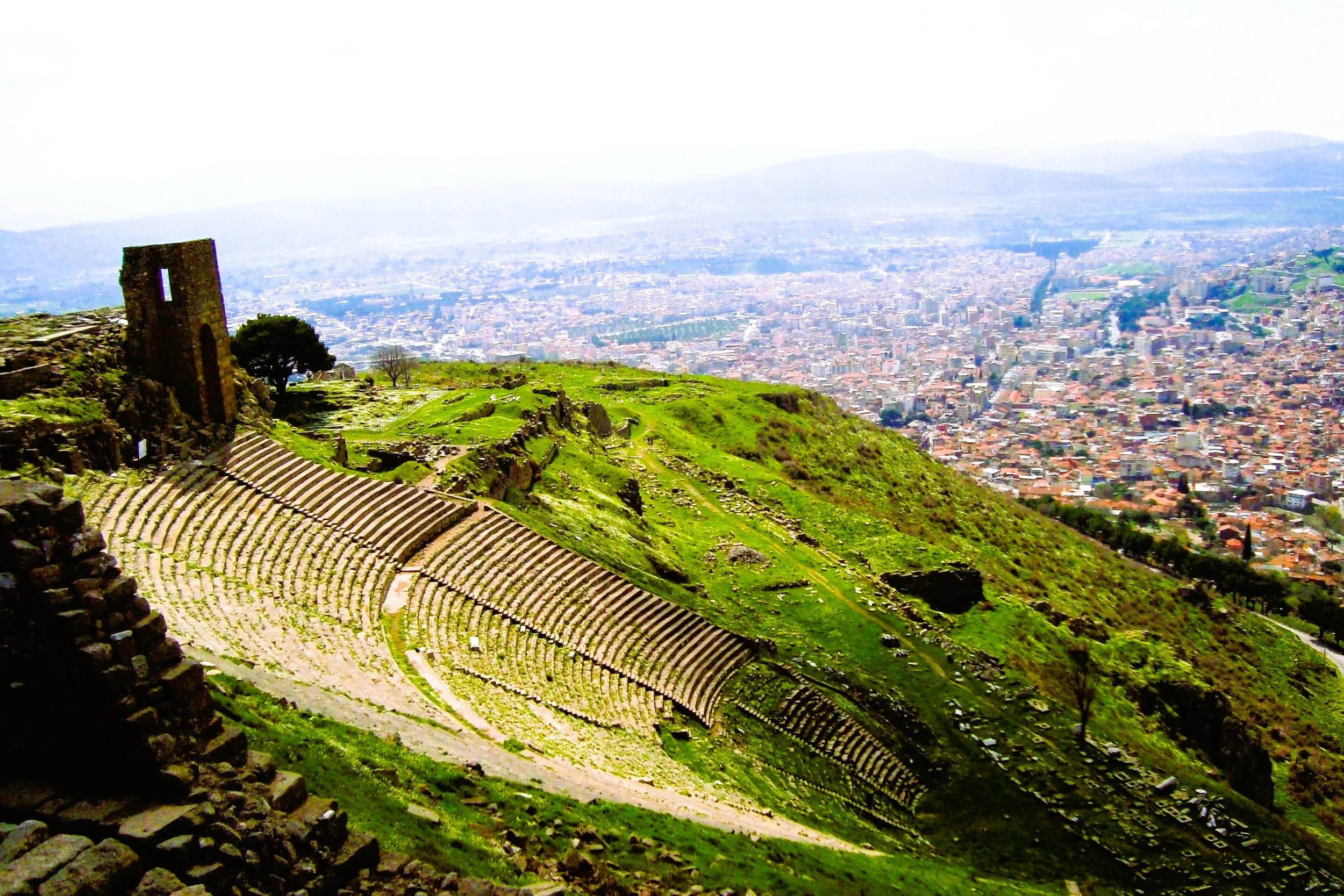
The dramatic incline of the vast theatre of Pergamon, Asia Minor. Photograph by Barbara Athanassiadis
Their ancient traditions, beliefs and artistic sensibilities subtly influenced the architecture and spirit of these cities, creating a remarkable fusion between Greek culture and the civilisations of the East.
Thus, in places such as Alexandria, Antioch, Pergamon, Ephesus and Palmyra, one encounters not merely replicas of the Greek polis, but living expressions of cultural dialogue between Greece and the ancient worlds of Egypt, Persia, Mesopotamia and Anatolia.
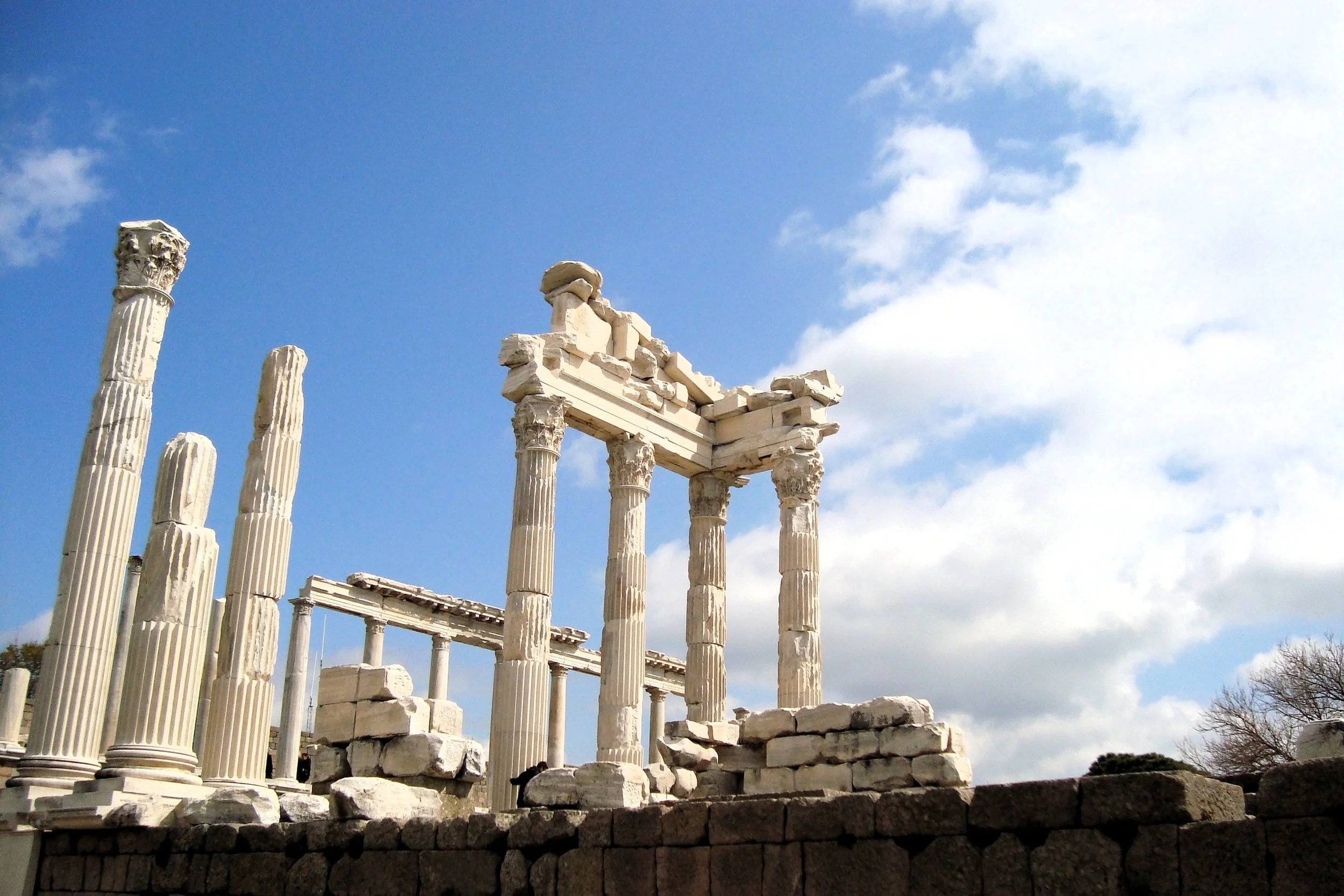
The Temple of Hadrian in Pergamon, built in the 2nd century AD during the reign of Hadrian, Asia Minor.

Earthquakes compressed the shattered pediment above the columns of the Temple of Hadrian, preserving exquisite Greco-Roman relief motifs in remarkable detail.
The Roman era, which followed, did not diminish this legacy but rather enriched and monumentalised it. The Romans admired Greek civilisation profoundly and transformed many Hellenistic cities into splendid imperial centres while preserving much of their original character.
In Ephesus, the Romans built grand libraries, baths and colonnaded streets; in Jerash and Baalbek, they raised majestic temples and forums of astonishing scale; while in Aspendos they constructed one of the finest surviving Roman theatres in the world. Even cities founded by Alexander and his successors acquired Roman arches, aqueducts, amphitheatres and roads, blending Hellenistic elegance with Roman grandeur.
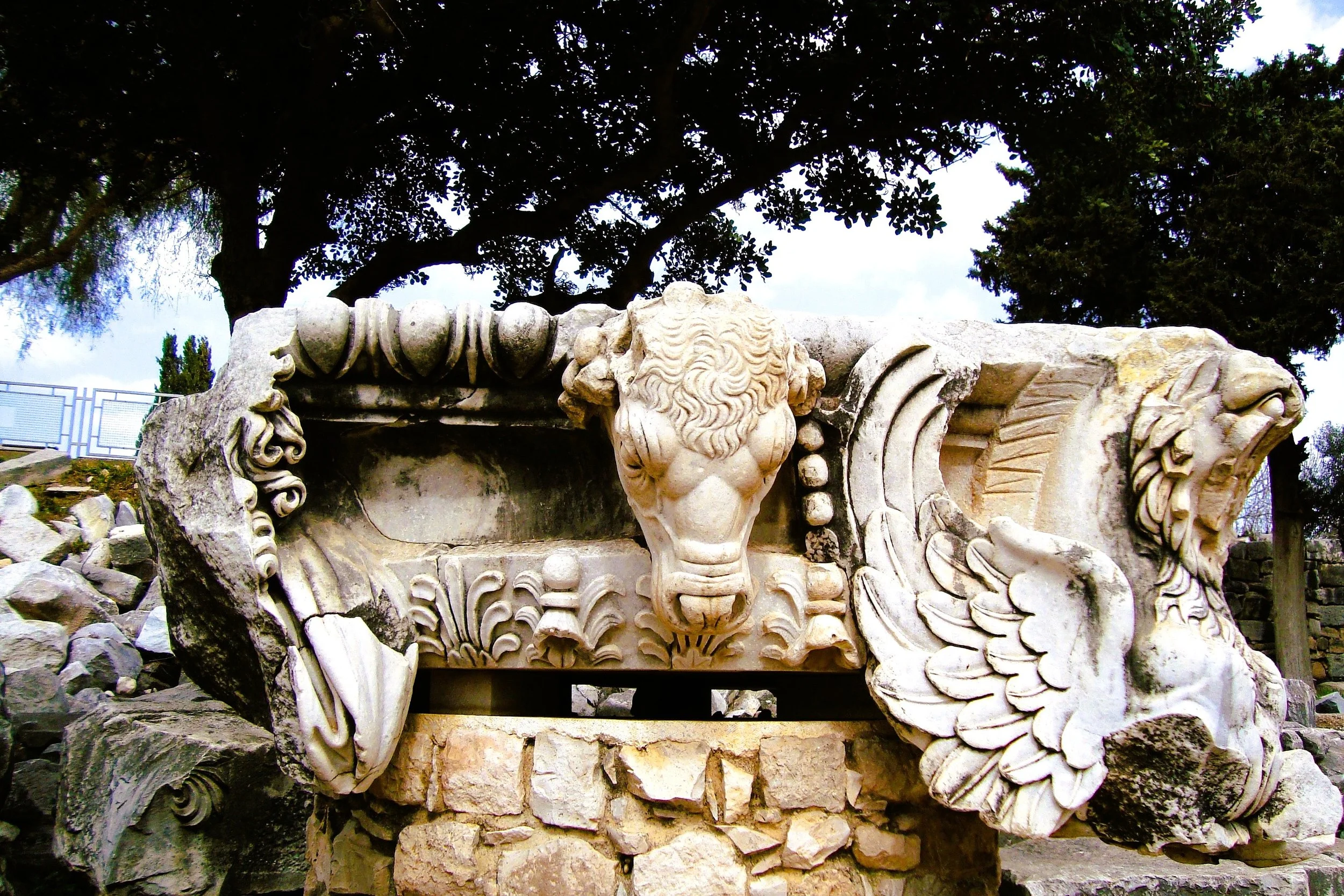
An exquisite Roman relief with Hellenistic motifs at the Temple of Apollo in Didyma, Asia Minor.

Column base with Greek meander motifs at the Temple of Apollo in Didyma, Asia Minor. The monumental temple was begun in the 4th century BC.
It is perhaps this extraordinary continuity — Greek, Eastern and Roman intertwined across centuries — that gives these cities their unique fascination. Walking through their ruins, one senses not only the greatness of the ancient world, but also the meeting of cultures that shaped the history of civilisation itself.
This revelatory journey into the Hellenistic-Roman world inspired me to dedicate a substantial section of my book Feeling Rome to its enduring legacy.
Discover the world of my Books in English Books in Italian Books in Greek
Relative Articles
Ancient Rome: Power carved in stone and fresco
A contemplative passage through the home of Augustus, where myth, politics, and memory remain inscribed in stone and painted walls.
Read the Story
Rome from Above: The Eternal City in Light and Ruins
A quiet perspective above ruins and rooftops, where light carries the weight of history.
Read the Story