
Royal Gems of India
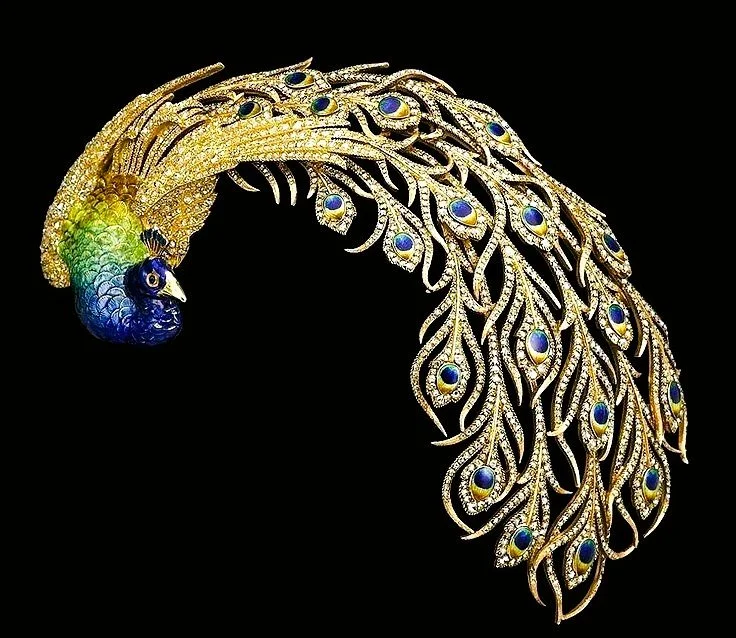
The Glittering Language of Indian Majesty
The jewels of the maharajas radiate an opulence of almost mythical intensity. Imagine strings of magnificent gemstones, fashioned with exquisite artistry, each piece a shimmering testament to the grandeur and authority of its royal owner.
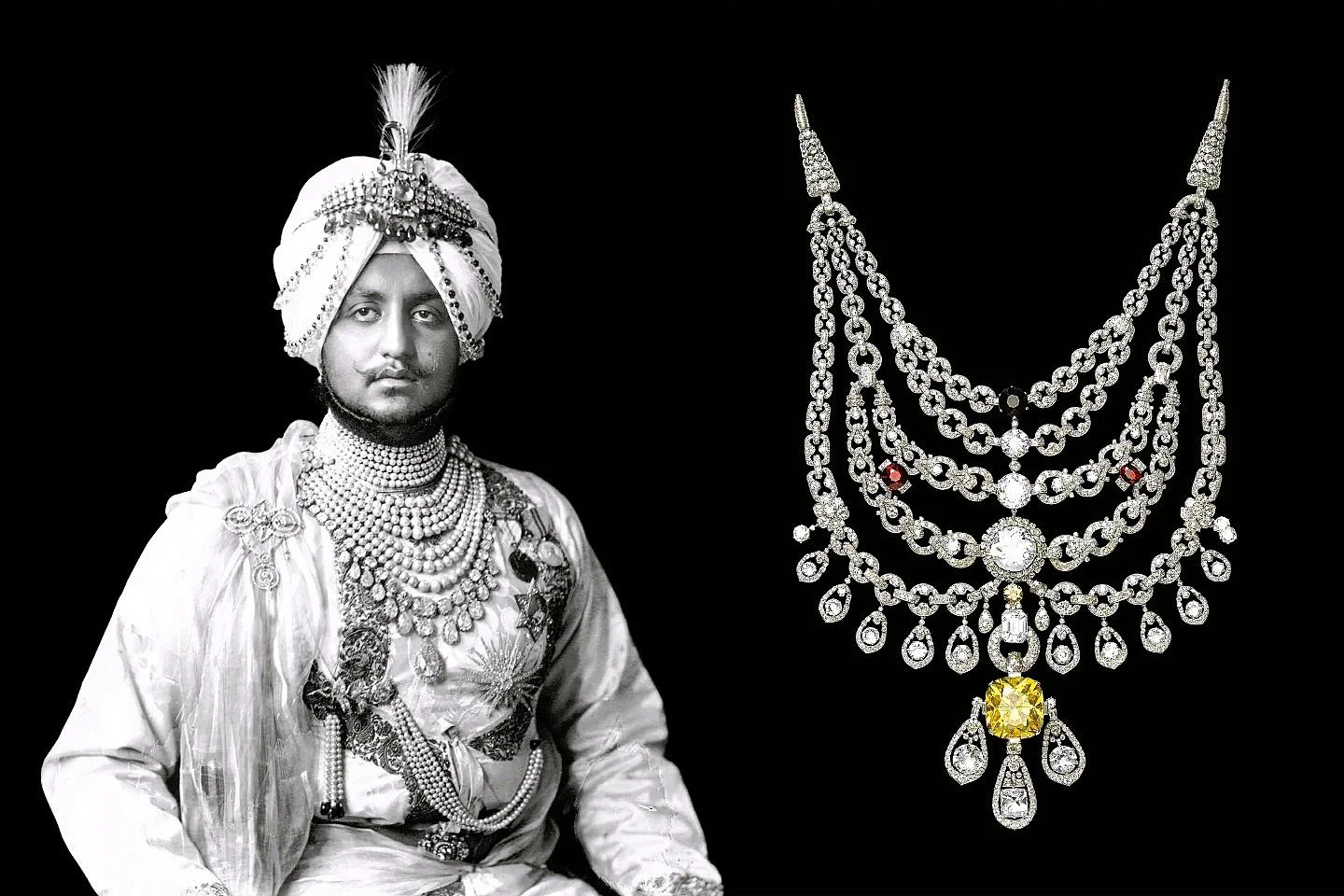
The Maharaja of Patiala in a regal posture, adorned with jewels that epitomise his prestige.
Every jewel told a story of wealth, power and lineage. No expense was spared. From India’s own storied mines and from distant lands, the rarest stones were gathered with relentless zeal. Diamonds of astonishing size and purity were set beside glowing rubies, deep emeralds and vibrant sapphires, forming treasuries of colour and fire unparalleled in luxury.
These were not mere ornaments but eloquent expressions of command and cultural identity that spoke across courts and durbars without words. Such jewels completed regal attire while proclaiming status, inspiring awe and defining sovereignty itself.
To trace this tradition, one must begin with the Mughals, the Turco-Persian-Mongol dynasty that swept across northern and central India in the sixteenth century. Descended from Tamerlane, they arrived as conquerors yet possessed refined sensibilities and a profound love of the arts. Warriors by birth, they delighted equally in poetry, gardens and beauty.
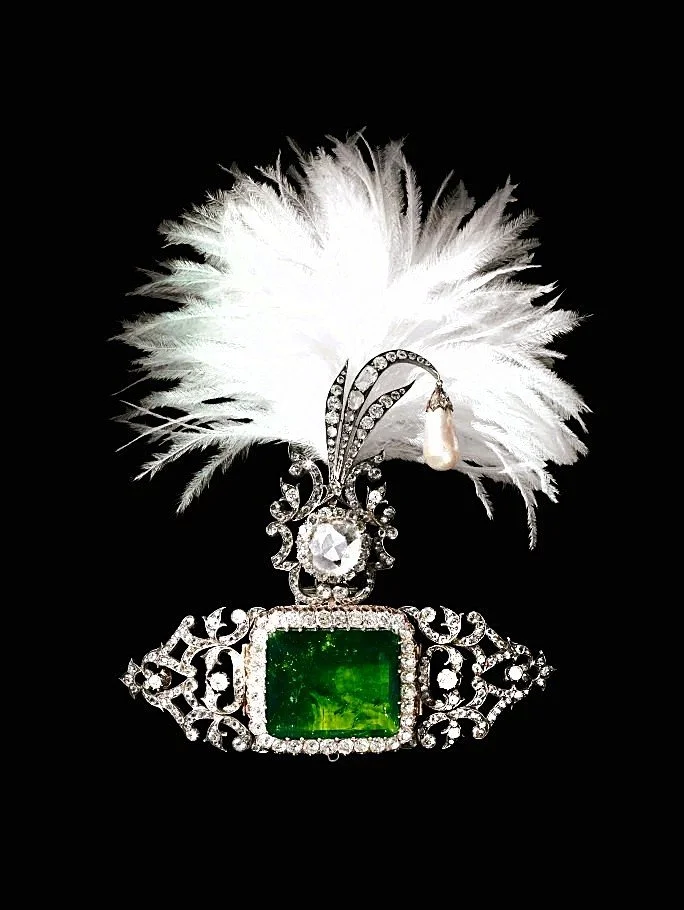
Turban ornament adorned with a central emerald and diamonds – The Al Thani Collection
Their legacy stands among the most exquisite cultural inheritances of the subcontinent: a fusion of Islamic and Persian aesthetics with indigenous Indian artistry, nowhere more eloquently expressed than in the serene symmetry of the Taj Mahal. This devotion to excellence naturally extended to jewellery, producing some of the most extraordinary creations in the history of ornament.
Mughal passion for gems was not purely aesthetic. Emeralds were held in particular esteem for their luminous green — the colour of Paradise in Islamic tradition and one beloved by the Prophet. To wear an emerald was believed to invite fortune and divine favour, its depths evoking celestial promise.
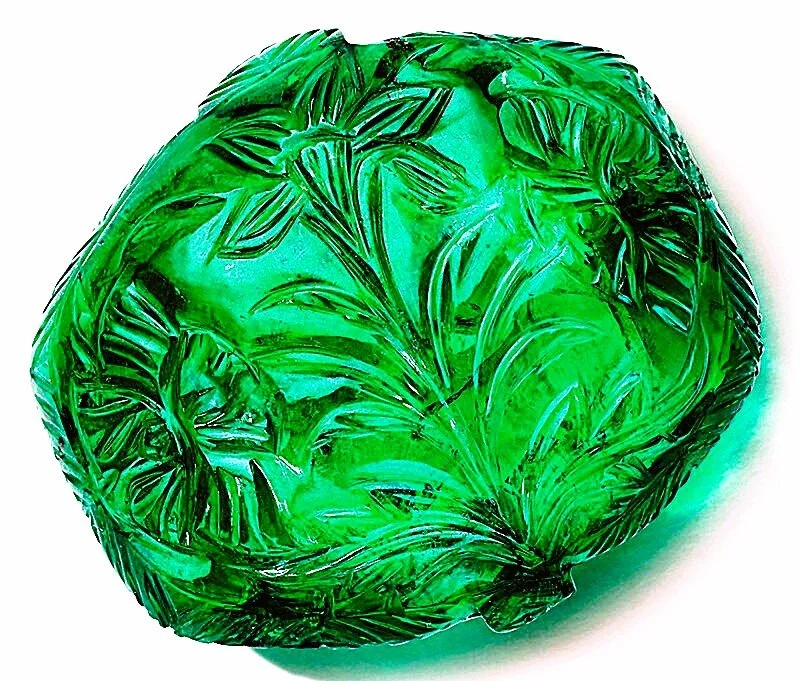
Engraved emerald with delicate floral motifs.
Under Mughal patronage, the Kundan technique reached perfection. Gems were set so seamlessly within gold that they appeared to float, secured by delicate foils rather than prongs. This allowed designs of remarkable complexity and grace, charged with symbolism and spiritual resonance.
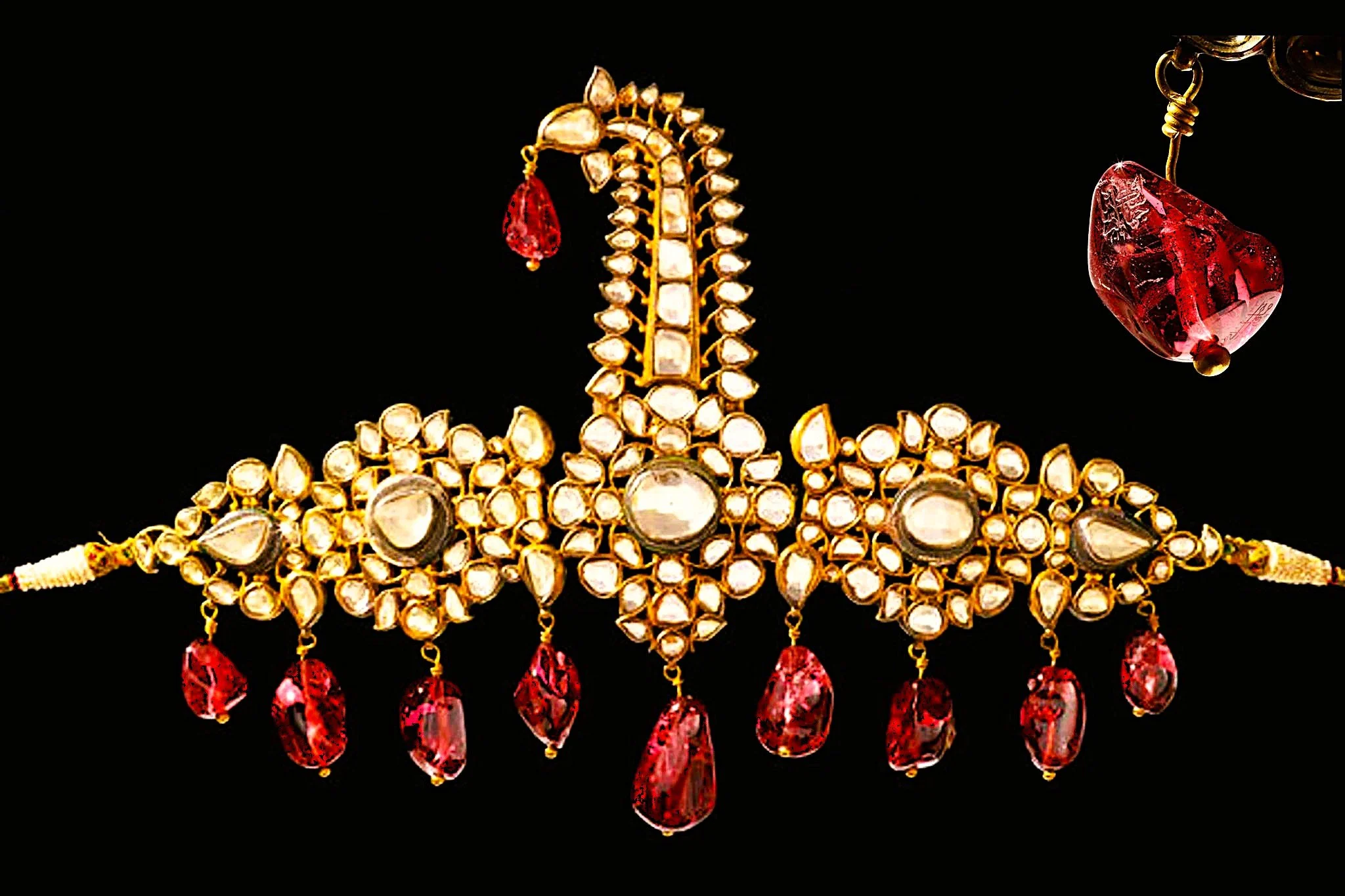
Turban Ornament of diamonds, floating in gold, with rubies beneath.
Thus, in the jewels of the maharajas, art and authority were fused. Created under royal patronage and exquisite craftsmanship, they endure as radiant witnesses to a civilisation that spoke its power through beauty.
I am endlessly inspired by destinations where art, culture and craftsmanship create a sense of timeless elegance.
My book: INDIA and my Persian Garden
Related Articles
The Maharani of Jaipur: A Life of Refined Elegance
Gayatri Devi, Maharani of Jaipur, reflects a rare blend of grace and independence, defined by enduring royal poise.
Read the Story
Rajasthan’s Farmwomen: Everyday Nobility in Motion
Across the desert landscape, rural women move with natural poise and dignity, transforming daily labour into an expression of quiet grace.
Read the Story