
Chateaubriand's Jerusalem
Awakening Europe's Oriental Imagination
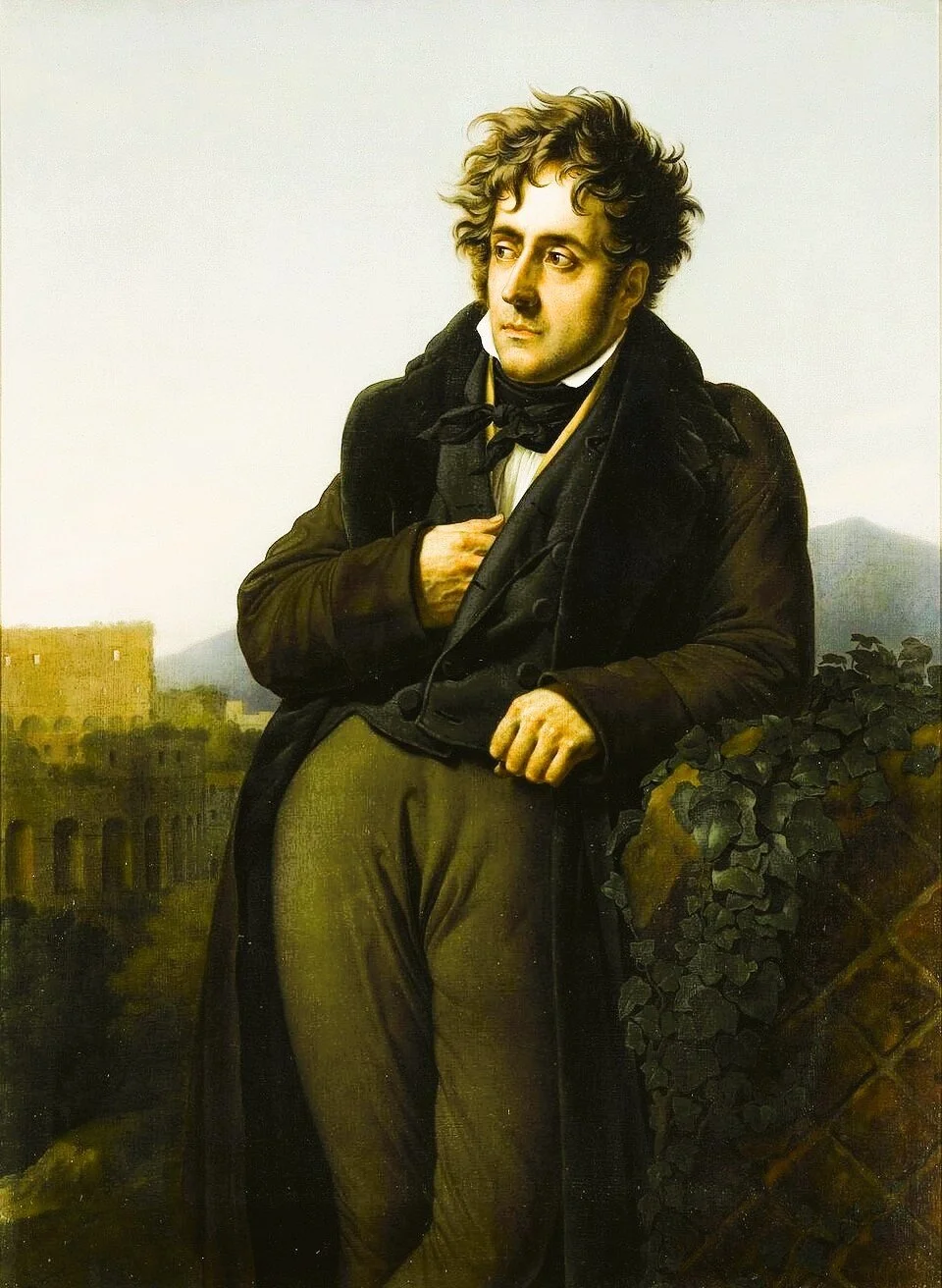
Portrait of Chateaubriand meditating on the ruins of Rome.
It is true that Romanticism lends mythical dimensions to great creators, surrounding them with an aura of nobility and generosity. François-René de Chateaubriand, for instance, is often imagined standing defiantly against the Atlantic waves, his hair swept by the Breton wind. Reality, however, was less theatrical. Born into an ancient aristocratic family, he endured exile and hardship during the French Revolution before embarking on journeys that would transform him into one of the greatest travel writers of his age.
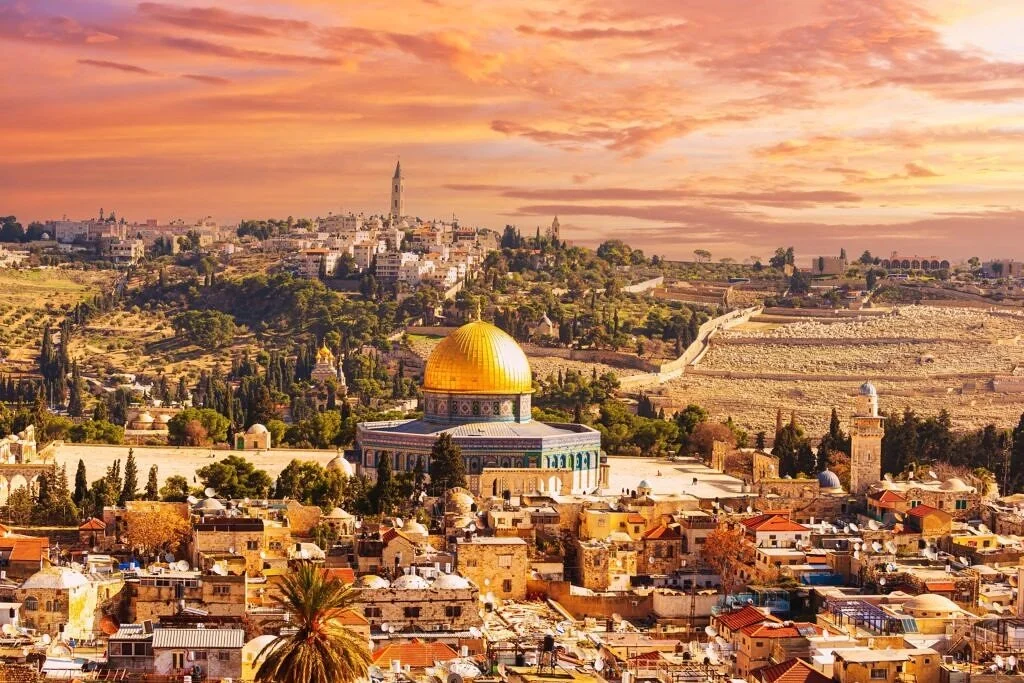
Sunset over the Holy City, Jerusalem.
It was through Chateaubriand that a distinctly Romantic fascination with the Orient flourished. His celebrated An Itinerary from Paris to Jerusalem (1811) offered European readers far more than an account of a pilgrimage. Rich with the fragrances of Greece, the landscapes of Asia Minor, the solemnity of Jerusalem and the timeless beauty of the Levant, the book combined poetic sensibility with remarkable powers of observation. It invited readers to rediscover the ancient world not as an abstract chapter of history but as a living landscape where biblical memory, classical civilisation and contemporary life coexisted.
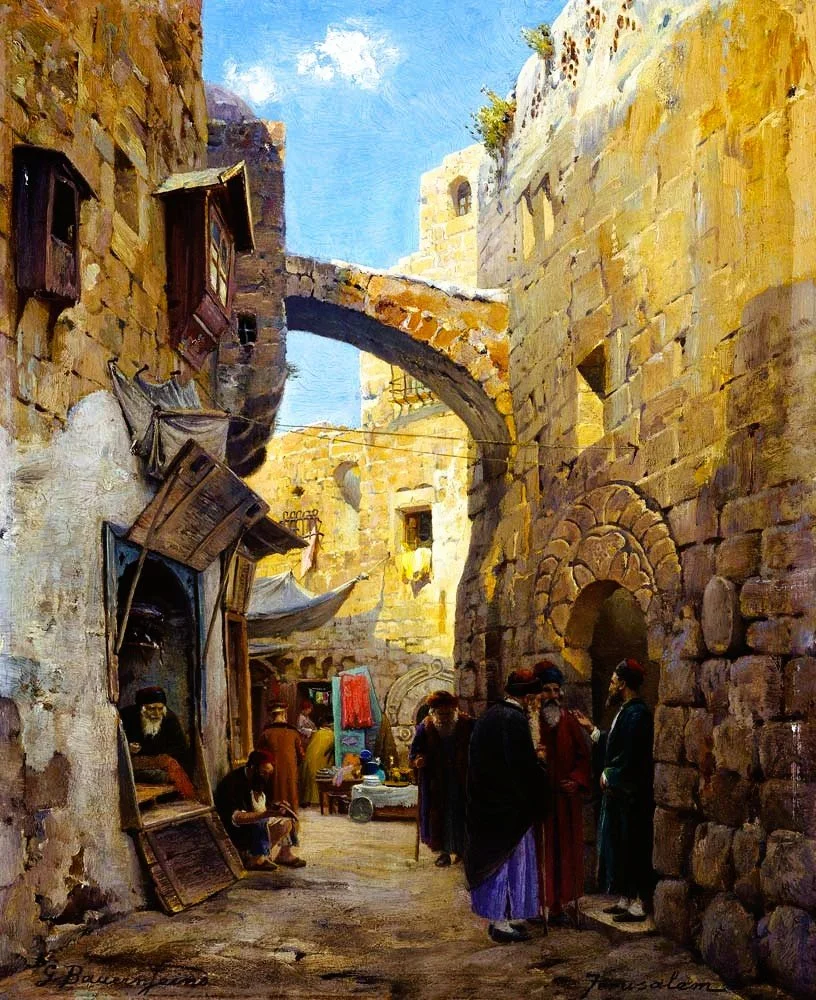
Street Scene in Jerusalem by Gustav Bauernfeind, c. 1885.
For Chateaubriand, Jerusalem was neither merely a sacred destination nor an archaeological curiosity. He approached the Holy City with profound emotion, describing its silence, its melancholy grandeur and its overwhelming historical resonance. The ruined walls, the sacred shrines and the austere landscapes surrounding the city stirred reflections on the fragility of empires and the permanence of faith. His observations moved effortlessly between personal contemplation and historical meditation, giving his travel narrative an almost philosophical depth.
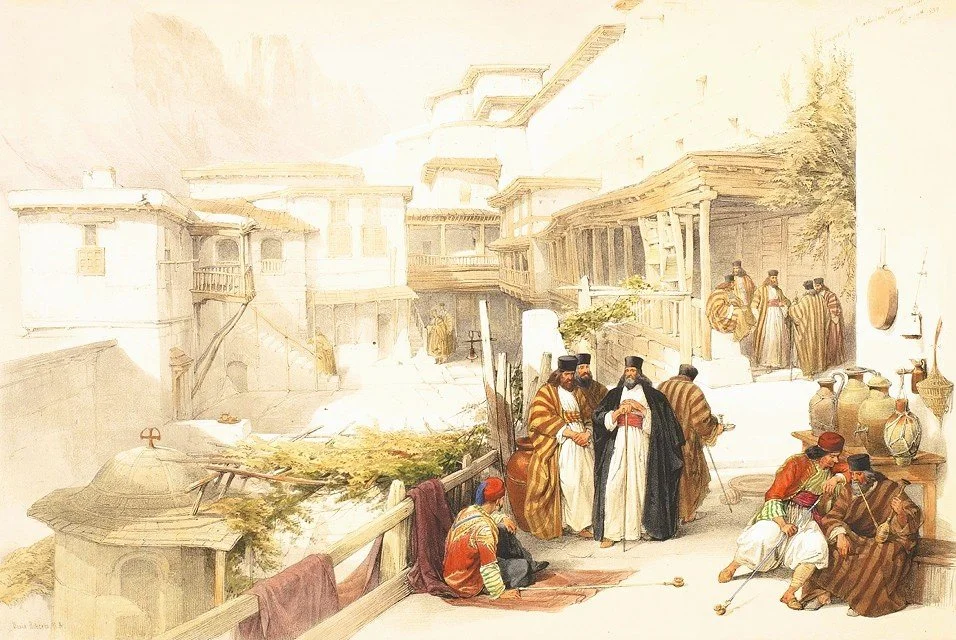
Convent of Saint Catherine, Mount Sinai by David Roberts, 1839.
His work also inspired a generation of Orientalist travellers, artists and writers who journeyed across Egypt, Syria, Palestine and the wider Near East throughout the nineteenth century. Figures such as Lamartine, Gérard de Nerval and Gustave Flaubert, together with painters including Eugène Delacroix and David Roberts, sought the landscapes that had captivated both Scripture and classical antiquity. To European eyes, these lands appeared at once mysterious and familiar: they were places where ancient civilisations seemed suspended in time, where dazzling light illuminated deserts, temples and bustling bazaars unlike anything found in the West.
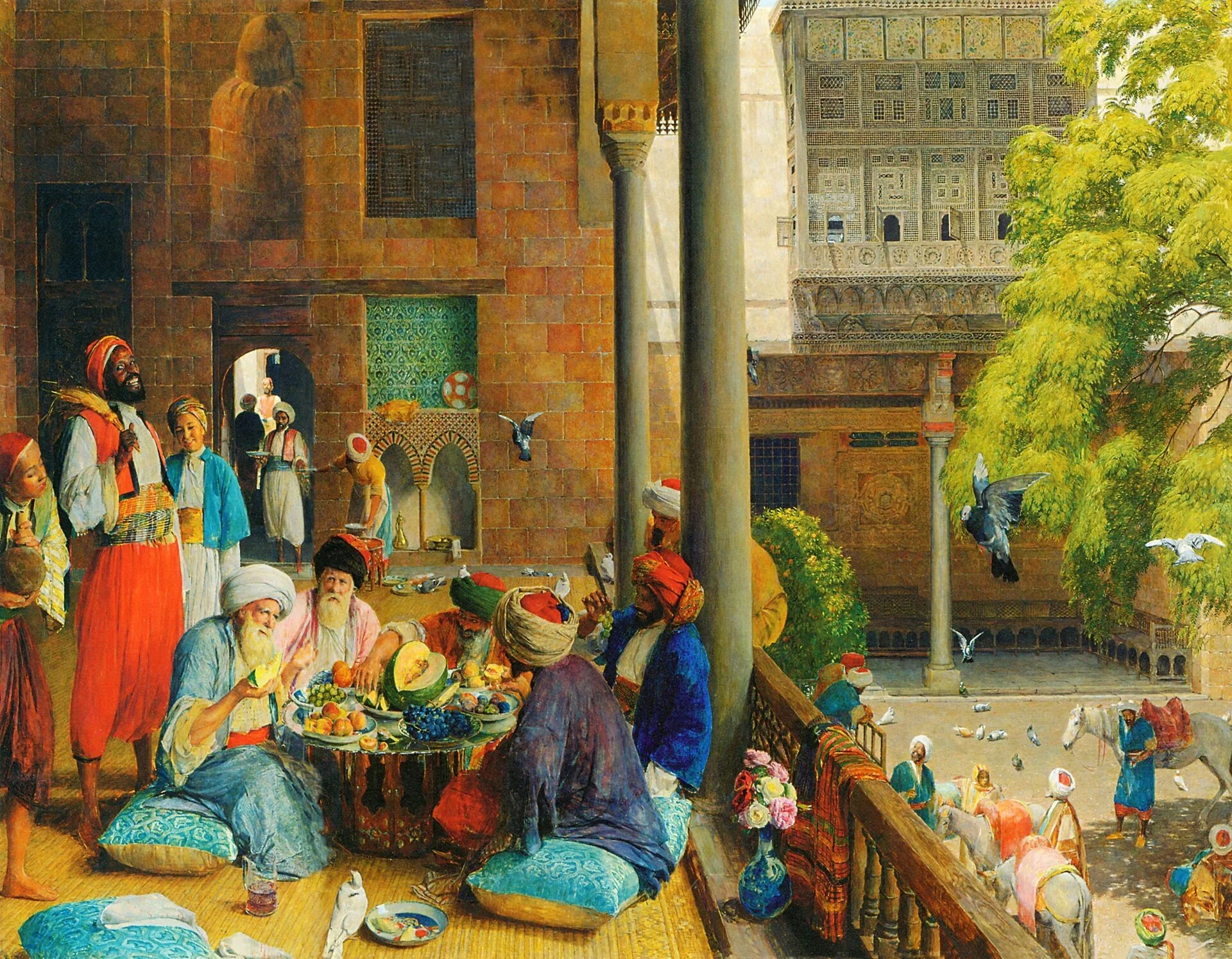
The Midday Meal in Cairo by John Frederick Lewis, 1875.
The Orientalists were not simply searching for picturesque scenery. Many believed they were encountering the very origins of civilisation, religion and human history. Their journals and paintings reveal a mixture of admiration, curiosity and romantic idealisation, qualities that profoundly shaped Europe's perception of the Eastern Mediterranean. While modern scholarship has rightly questioned the assumptions and stereotypes embedded within nineteenth-century Orientalism, there is little doubt that these journeys broadened Europe's cultural horizons and stimulated a renewed interest in archaeology, biblical scholarship and the history of the ancient world.
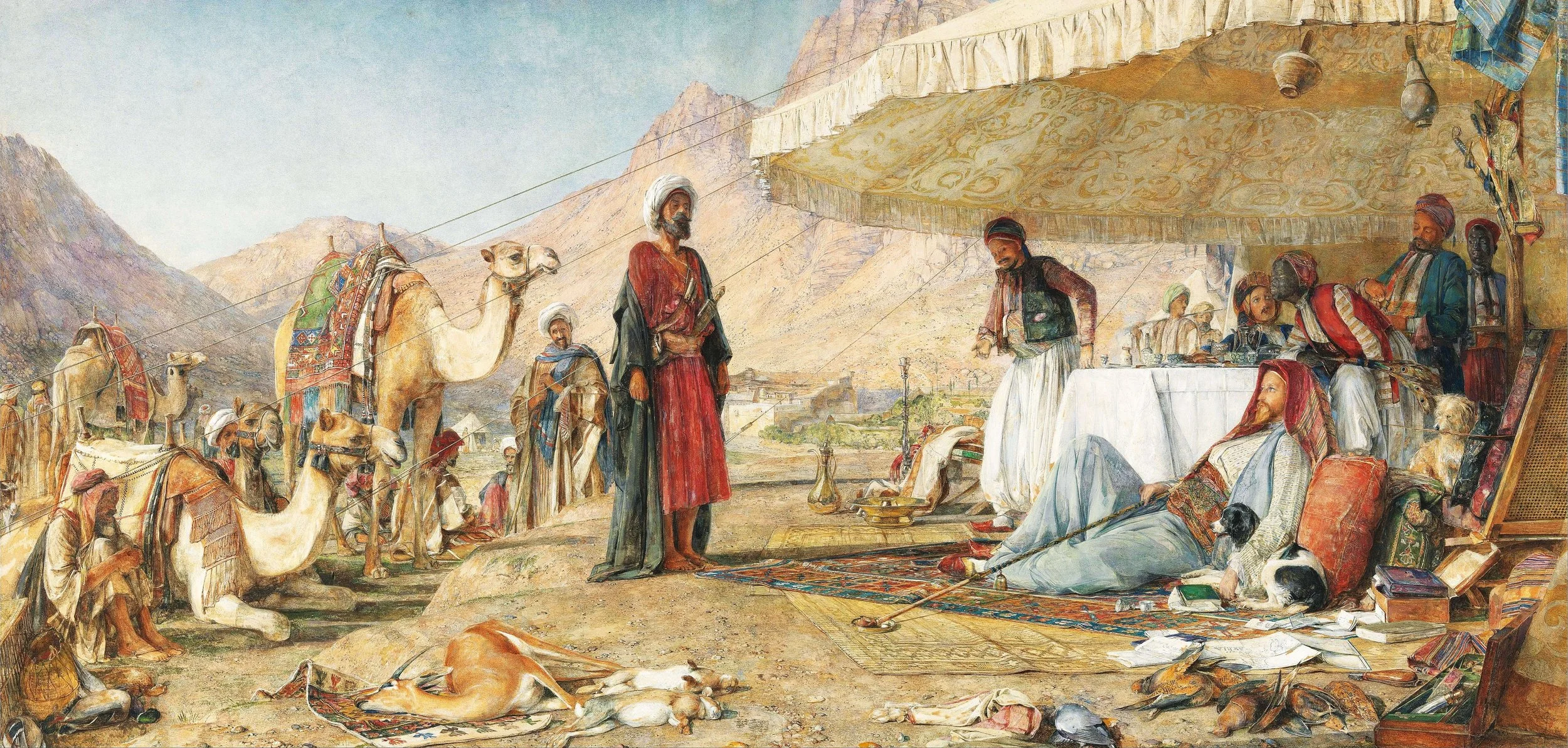
A Frank Encampment in the Desert of Mount Sinai by John Frederick Lewis, 1842 – The Convent of Saint Catherine in the Distance.
Chateaubriand stood at the beginning of this remarkable movement. His journey from Paris to Jerusalem transformed travel writing into literature and demonstrated that a voyage could become both an exploration of distant lands and a search for the deeper landscapes of memory, civilisation and the human spirit.
I believe the most memorable journeys are the ones lived slowly, allowing time for beauty, reflection and genuine connection.
A world of travel, culture and stories awaits. My Books in English Books in Italian Books in Greek
Related Articles
My Pilgrimage to Jerusalem: Rome, the Knights of the Holy Sepulchre, and the Road to the Holy Land
The path to Jerusalem was first traced in reading and contemplation, shaped by history, Crusader memory, and the landscapes of the Holy Land.
Read the Story
Where Saint Peter Rests: From Ancient Rome to the Holy Land
Descending beneath Saint Peter's Basilica, I encountered the ancient necropolis and the traditional resting place of the Apostle Peter—a journey into the origins of Christianity that naturally leads towards Jerusalem and the sacred geography of the Holy Land.
Read the Story
Moscow's Golden Domes: A Winter Journey Through Russia's Sacred Architecture
Amid snow-covered churches and shimmering golden domes, Moscow revealed a world where Orthodox tradition, Russian architecture and the imagination of the Christian East converge in a landscape worthy of a fairy tale.
Read the Story