
My Grand Tour to Sicily, Italy
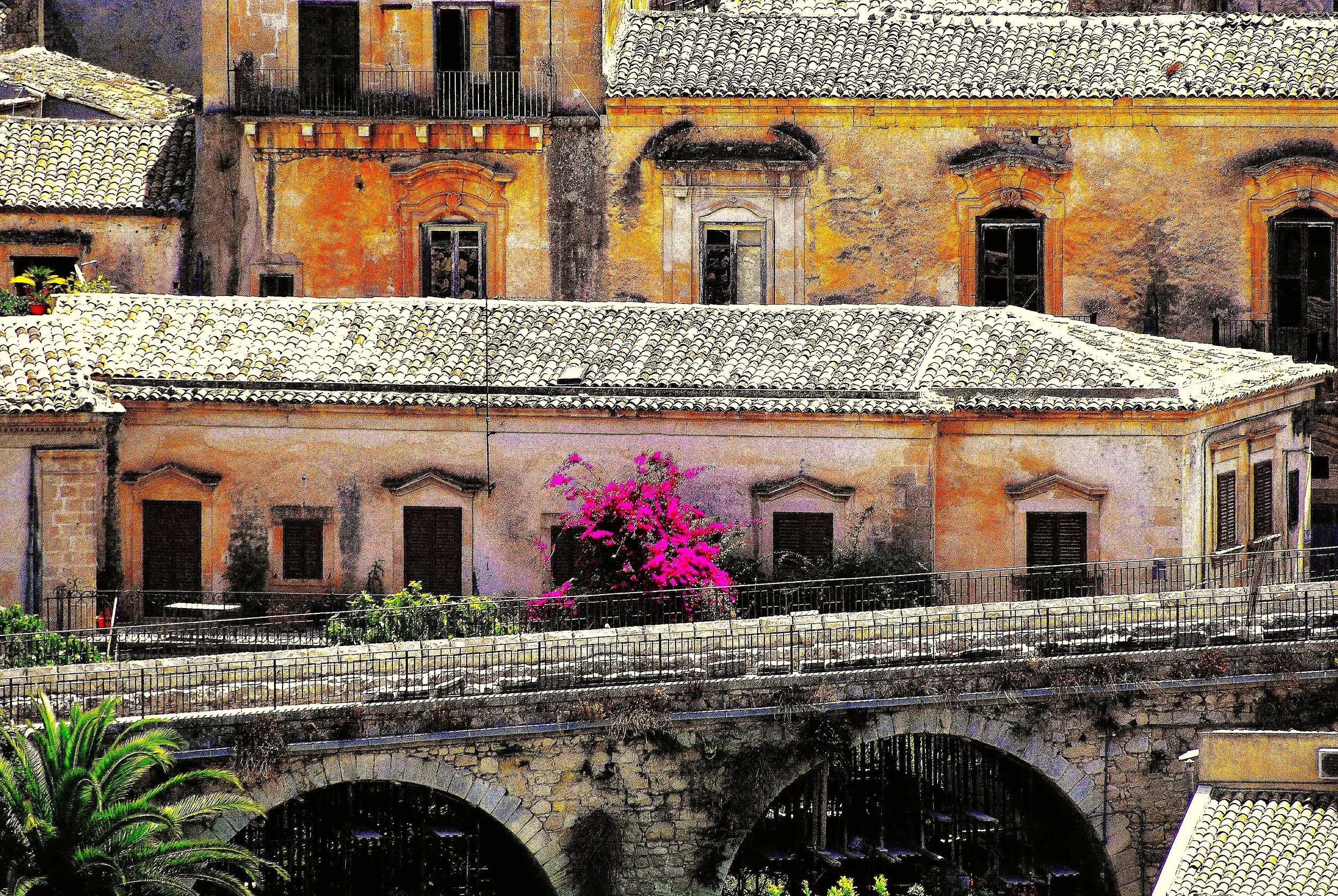
The scenery of Sicily’s towns, where centuries linger in the Mediterranean light.
Sicily had always existed in my imagination as a place shaped by cinema: harsh, sun-scorched landscapes, stern faces, and an atmosphere of austerity. Such images, largely crafted by Hollywood rather than by Italians themselves, had led me to expect a severe and rather unforgiving land. Yet the Sicily I encountered was something altogether different. Instead of parched hills and sombre people, I discovered an island of surprising lushness and vitality, where nature, architecture and culture come together with remarkable harmony.
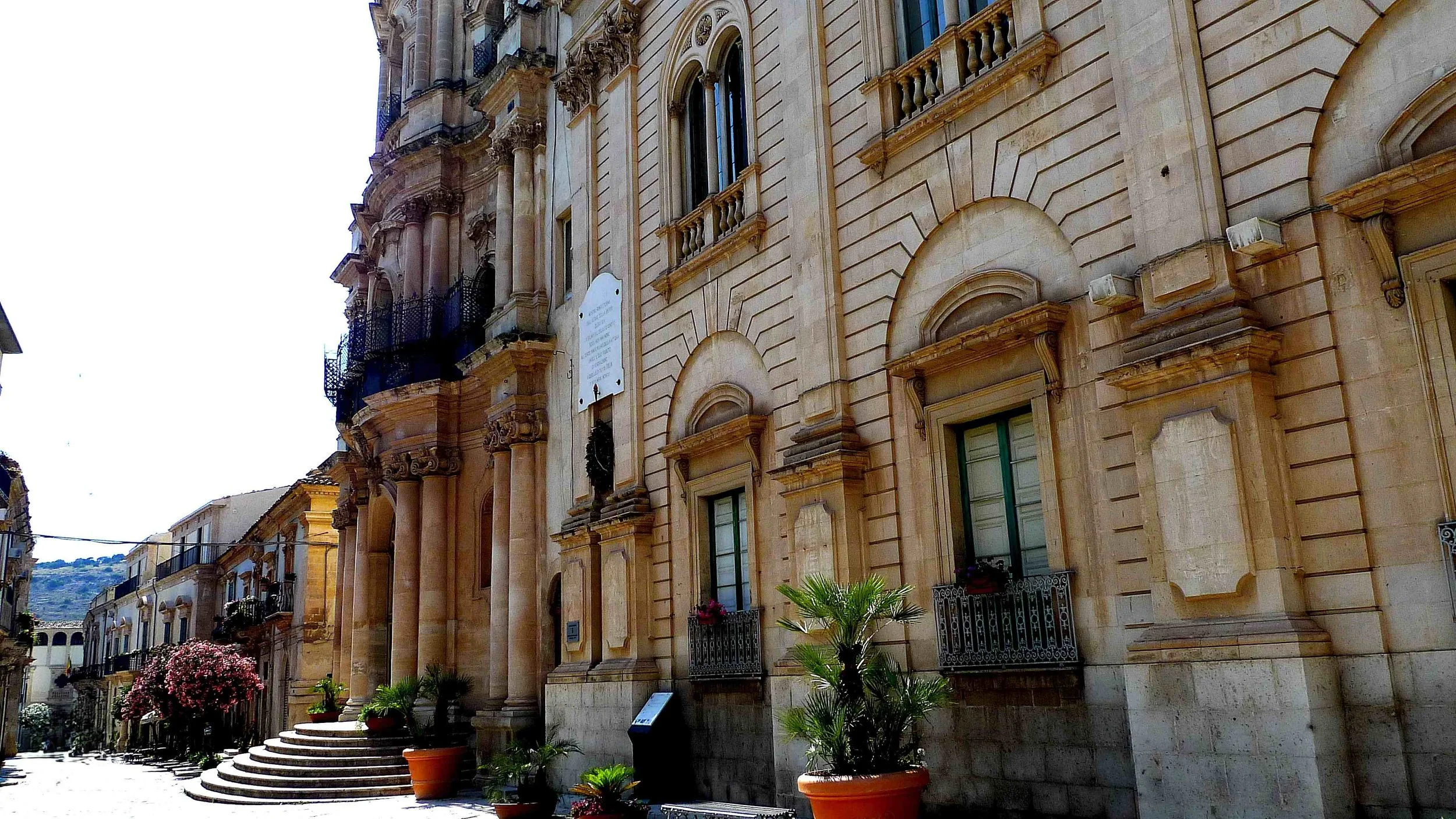
Baroque splendour and golden stone in Sicily’s enchanting towns.
Three images return to me whenever I close my eyes. The first is of verdant valleys scattered with orange groves and vineyards, their colours glowing under the Mediterranean sun. The second is of baroque balconies — uniquely Sicilian in their exuberance — curving outward from honey-coloured façades and lavishly decorated in wrought iron. Their elaborate supports take the shapes of griffins, sirens, lions and other creatures born from an exuberant imagination. The third image is that of the island’s cuisine. Sicily offers a wealth of pure, intensely flavoured ingredients, and once one sits at the table, the meal becomes a seemingly endless procession of dishes. Similar products may be found in Rome, but they never taste quite the same. When I asked my Sicilian friends why, their answer was simple: here, they said, the land is blessed by the sun.
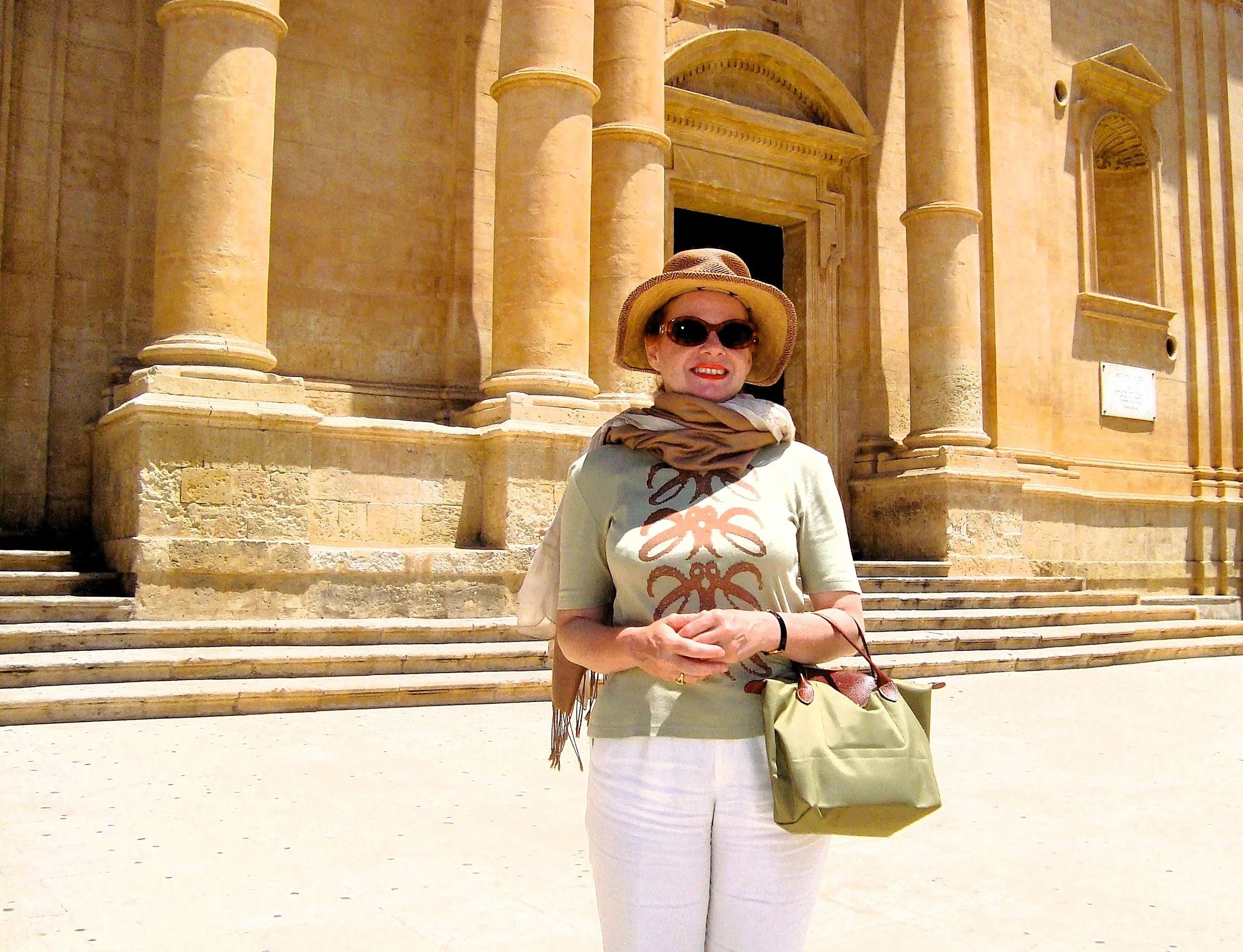
The author in the enchanting baroque town of Noto in southern Sicily.
It was this land that captivated me. I spent a week wandering through Syracuse and the valley of Noto, gradually falling under the spell of the region. Perhaps the reason lies in the way history here merges seamlessly with art. Deep-rooted traditions coexist effortlessly with the many cultures that have flourished on the island across the centuries. All of this unfolds within an atmosphere of profound silence.
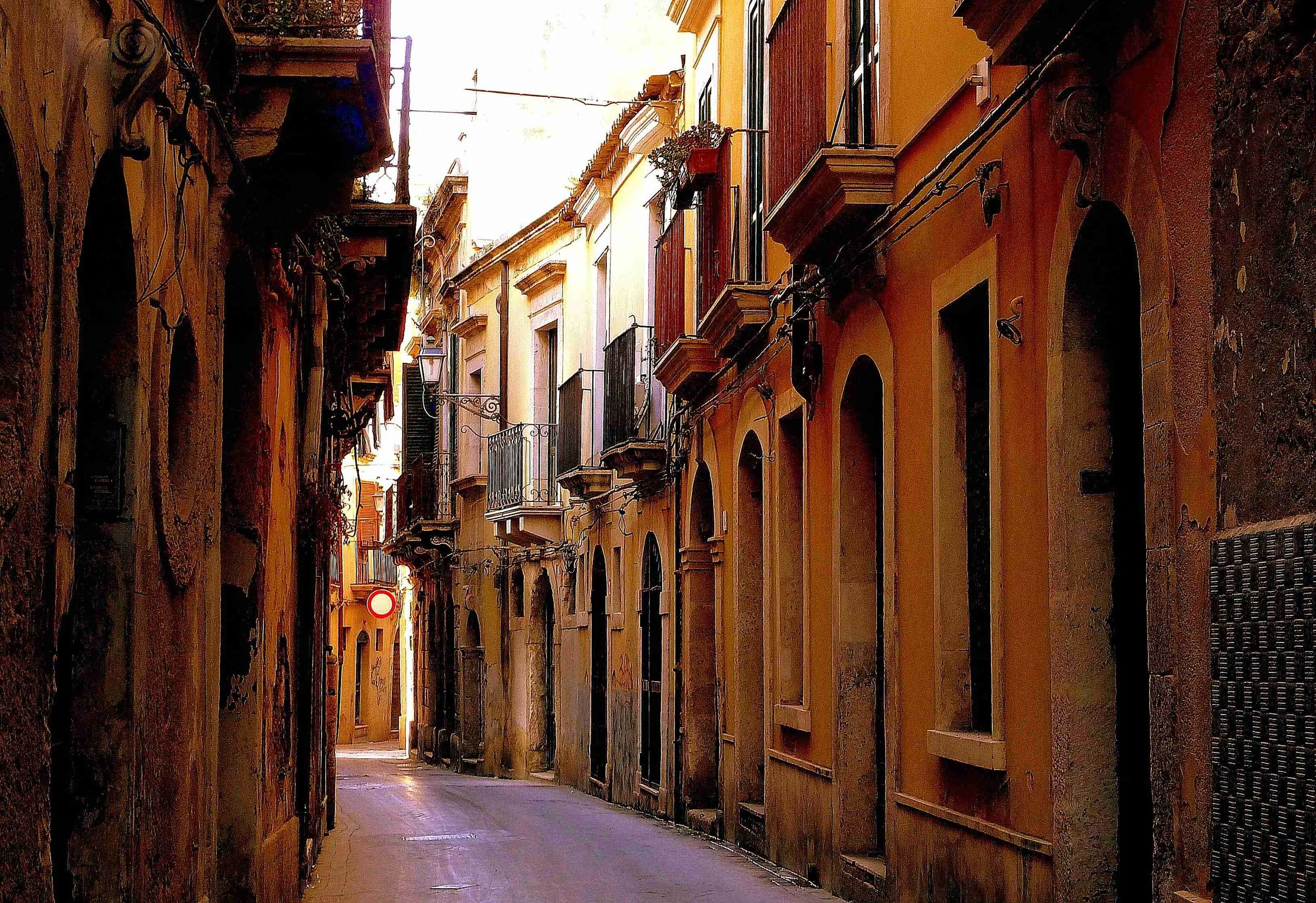
The stillness of early afternoon in Sicilian towns.
This silence, however, is not the familiar stillness of the early afternoon — the almost sacred hour in Sicily when people withdraw indoors, shutters are closed, and even churches fall quiet during the daily siesta. Rather, it is a deeper and more enduring calm that seems to permeate the island itself.
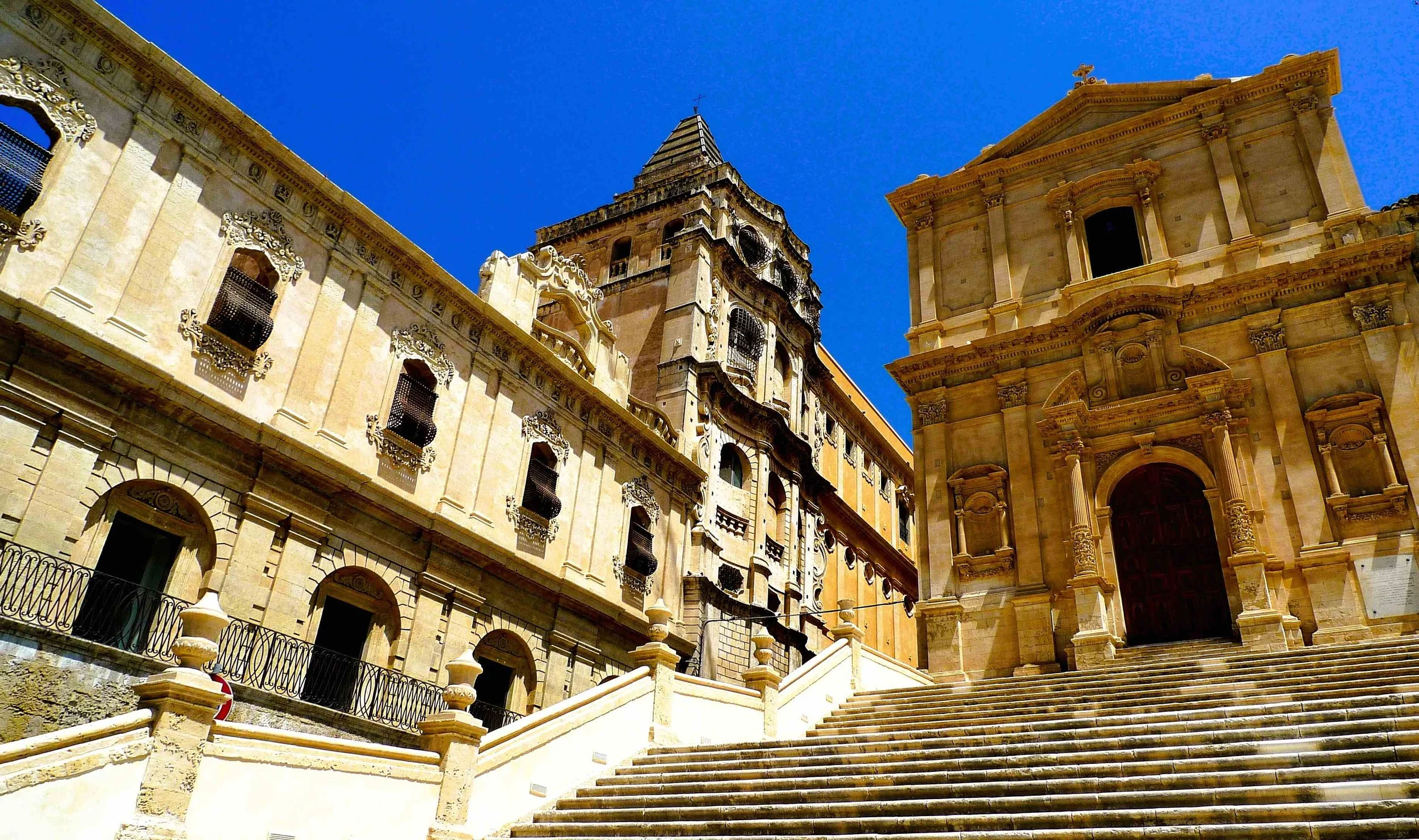
Noto in southern Sicily, a jewel of Sicilian baroque, born from the rebuilding after the earthquake of 1693.
One afternoon in the town of Noto illustrates this perfectly. After lunch, I stepped out onto one of the balconies of Palazzo Villadorata and gazed across the rooftops. The buildings, constructed from warm honey-coloured stone, bathe the entire town in a soft golden light. Noto appears almost like a theatrical set from which the actors have momentarily disappeared. Its beauty is all the more remarkable when one recalls that the town was reduced to ruins by the devastating earthquake of 1693. The city that stands today is the creation of visionary architects who rebuilt it with extraordinary baroque elegance.
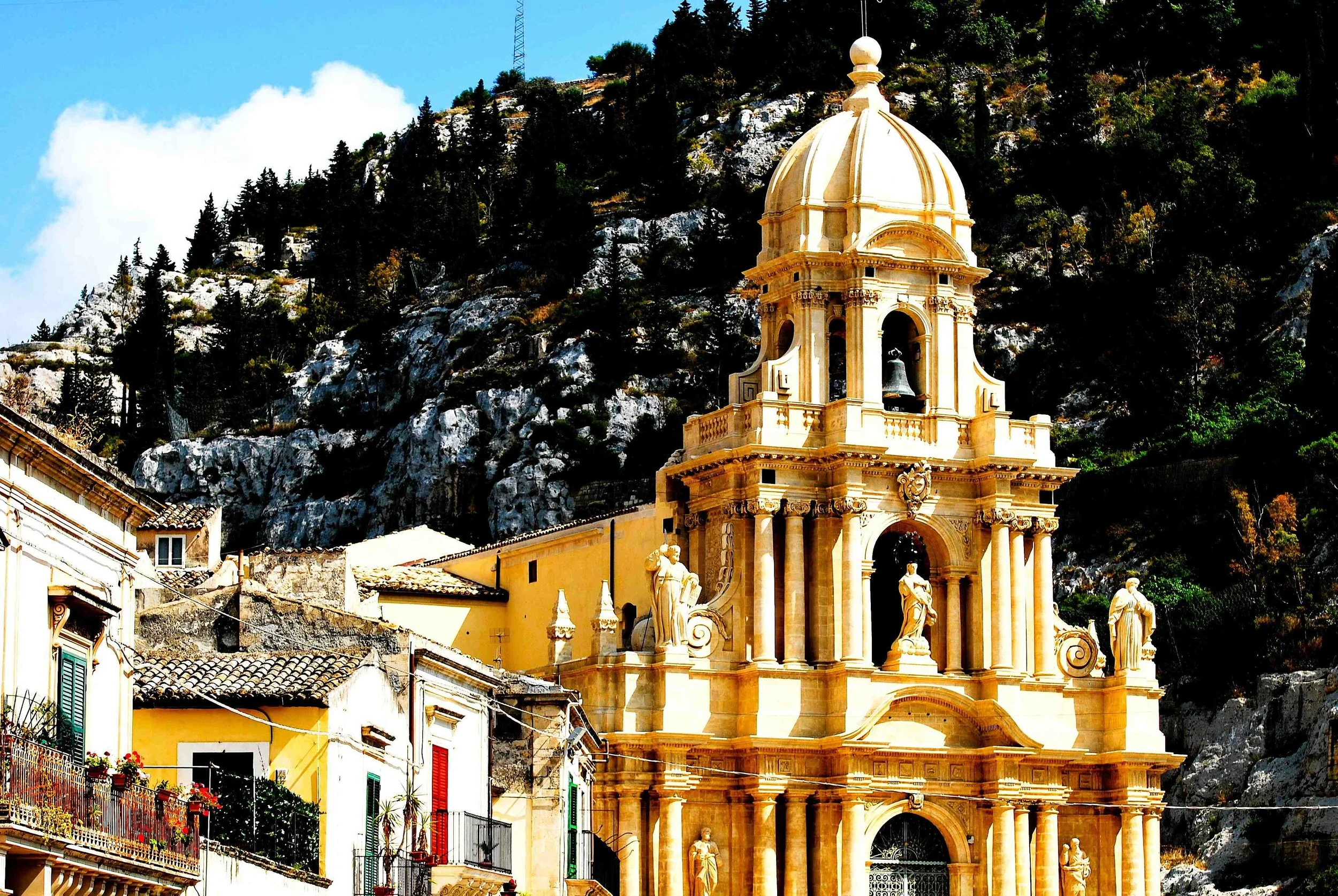
Baroque beauty suspended in the timeless silence of Scicli.
The same spirit can be found in nearby towns such as Ragusa, Modica, Scicli and Palazzolo. These settlements cling amphitheatrically to the slopes of steep hills, their streets and squares gradually awakening as the fierce midday sun begins to decline. In the evening, the piazzas fill with life: children run and play, elderly men sit leisurely at café tables, and newly married couples pose on church steps for photographs, surrounded by exuberantly dressed guests — Sicily obliges its celebrations to be splendid.
Yet beyond the towns, when one follows the winding roads deeper into the valley towards small fishing villages that gaze across the sea toward Africa, the silence returns. It is not emptiness but rather the expression of Sicily’s enduring composure. Situated at the very centre of the Mediterranean, the island has long been destined to pass from one ruler to another.
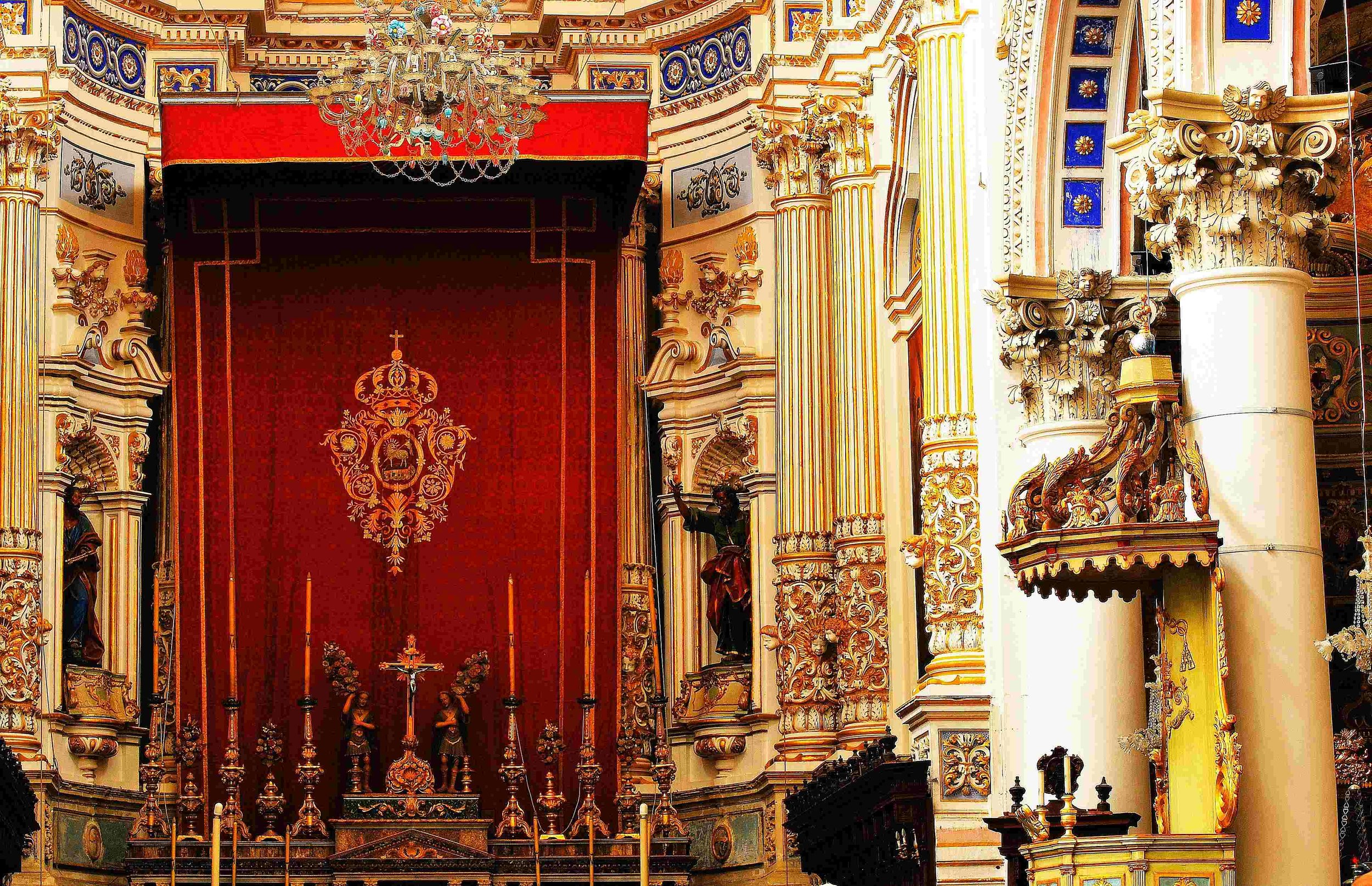
An ornate baroque church in southern Sicily.
Phoenicians founded Palermo; Romans introduced vast agricultural estates; Byzantines left their shimmering mosaics; Arabs created exotic gardens; Normans built imposing churches; Aragonese constructed fortresses; the Bourbons adorned their palaces with fleur-de-lys; and the kings of Piedmont eventually imagined the unification of Italy. Each conqueror left traces behind, yet Sicily patiently absorbed them all, weaving them into a complex cultural fabric.
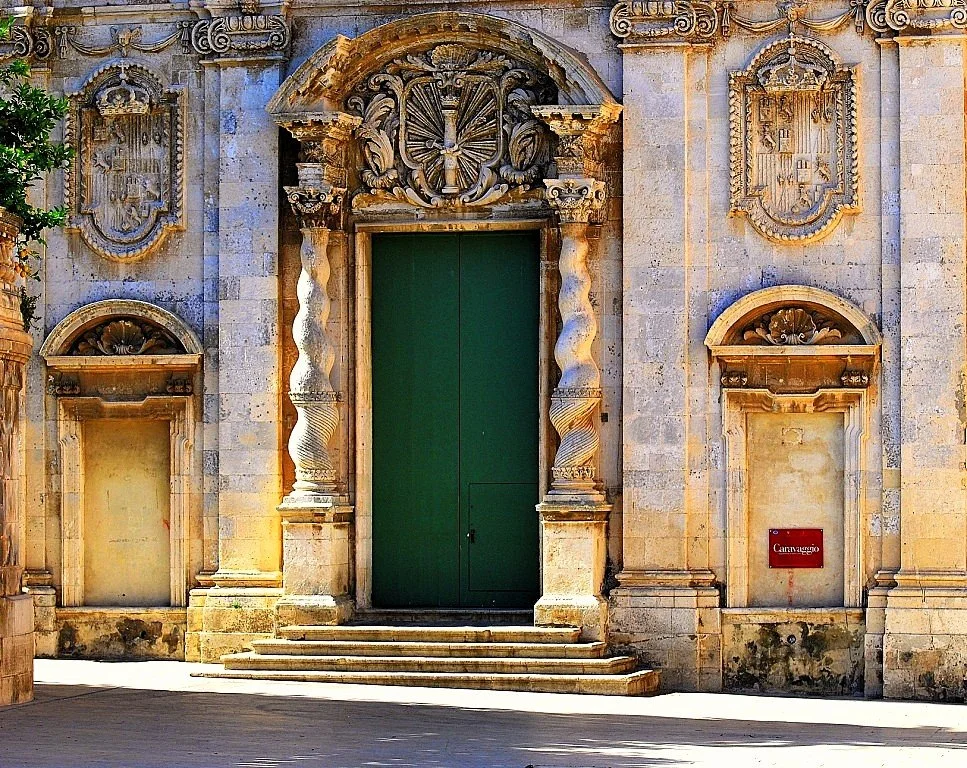
A lavishly decorated baroque entrance in Sicily.
Many rulers arrived convinced they would transform the island and rescue its people from hardship. Yet Sicilians themselves have always possessed a quiet certainty of their own completeness. In Luchino Visconti’s film Il Gattopardo, the Prince of Salina expresses this paradox memorably: once the cannon fire ends, nothing will ever be the same — yet everything will remain exactly as it was.
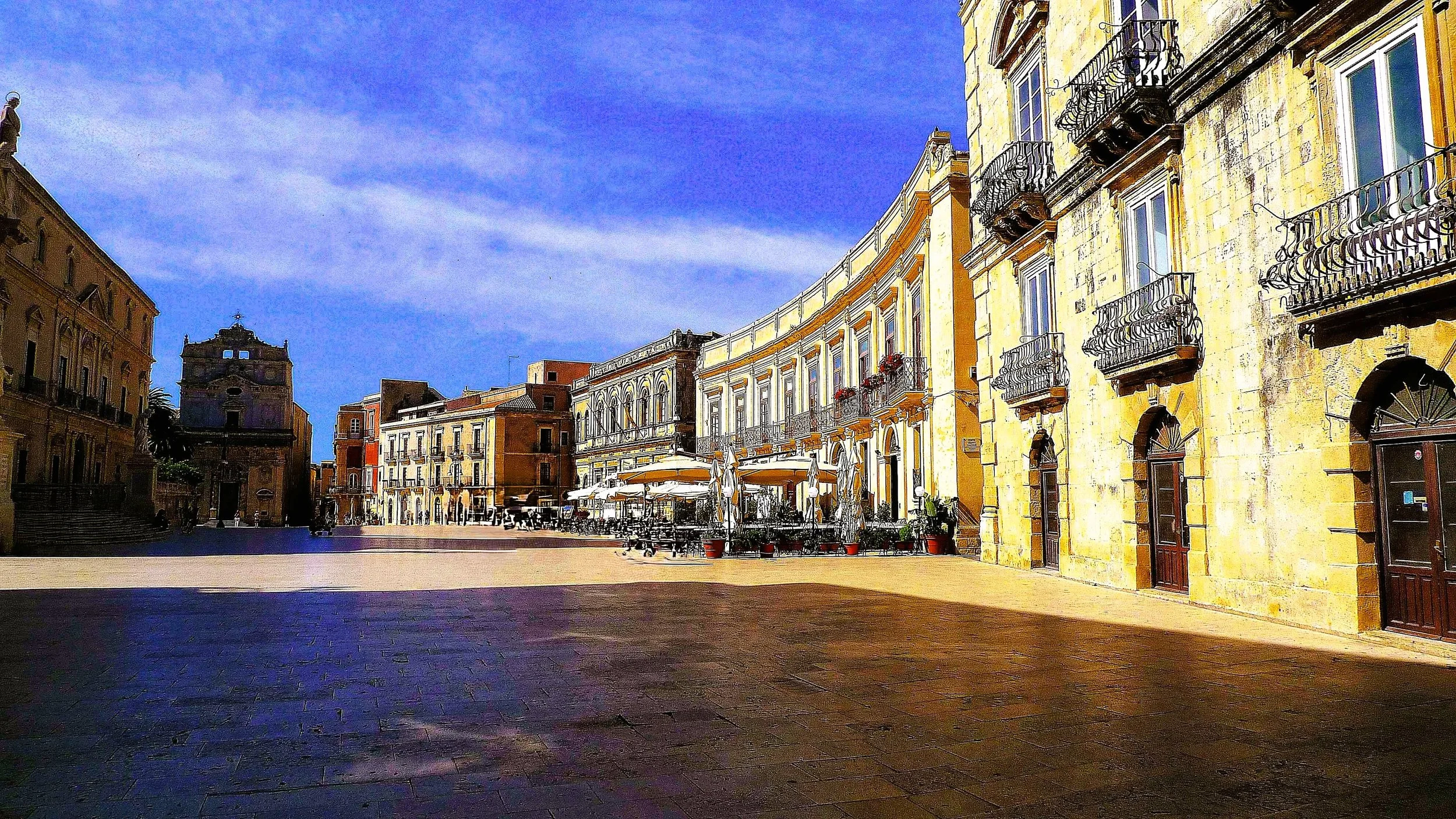
Syracuse’s central square, widely regarded as the most beautiful open-air drawing room in Italy.
My journey eventually brought me to Syracuse, which Cicero once described as the most beautiful of all Mediterranean cities. A walk through its historic heart, the island of Ortigia, easily persuades one of the truth of that claim. The central square bursts with the splendour of Sicilian baroque, often described as the most beautiful open-air drawing room in Italy. One evening our small group enjoyed refreshing granita beneath a sky filled with stars, while nearby alleys with graceful balconies led into shadowy lanes recalling the layout of an old Arab medina.
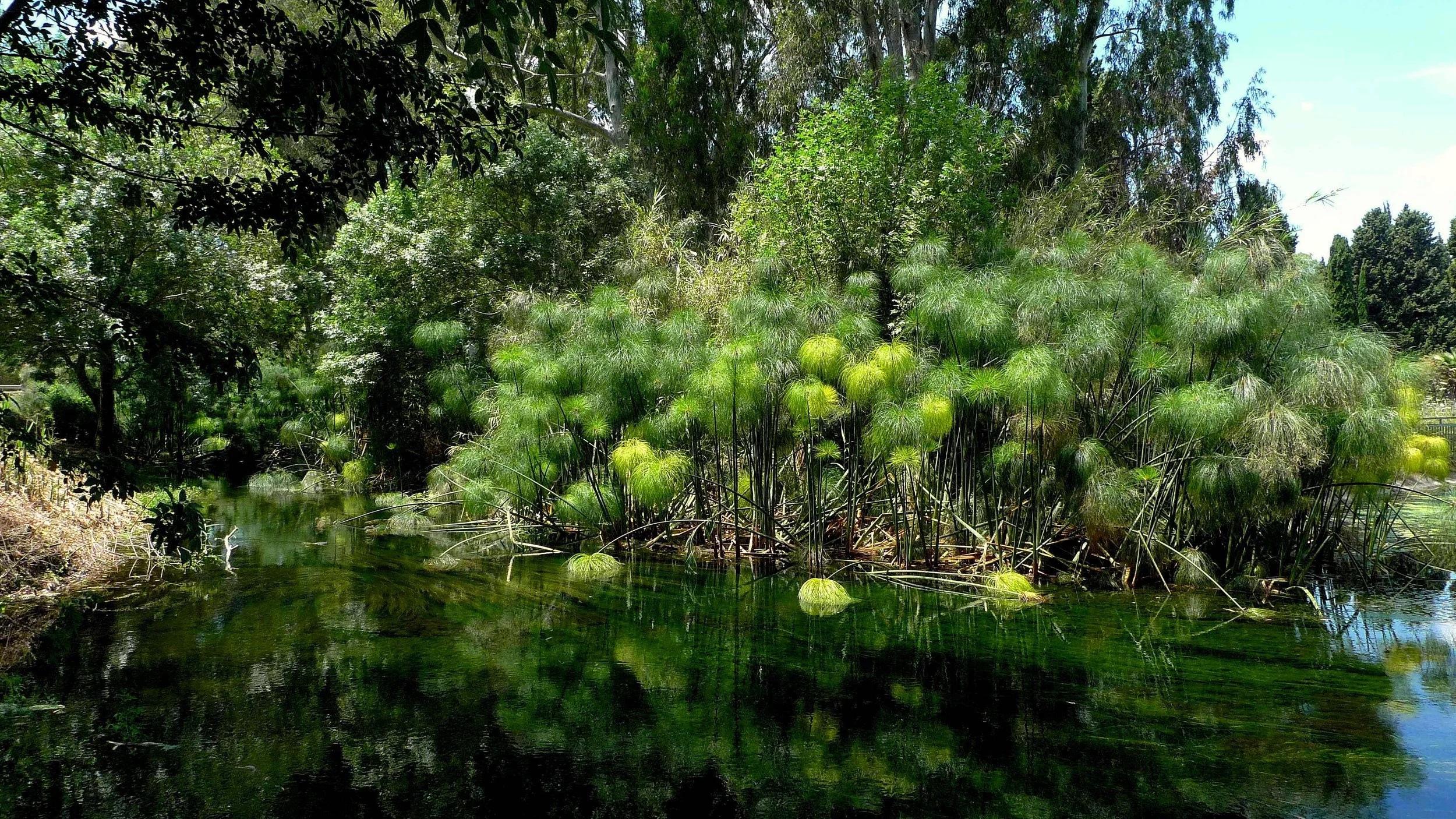
Papyrus has flourished for centuries along the banks of the Ciane River, Sicily.
At dawn the following day, a gleaming cruise ship anchored in the tranquil waters of a nearby bay made the scene appear almost Greek. The rugged coastline softens as it approaches the gentle waters of the Ciane River, where papyrus plants have grown for centuries — uniquely in Europe — beneath the shade of ancient trees. Travellers of the British Grand Tour once glided along this river in search of a brief passage into dreamlike landscapes.
Indeed, Greece is deeply present in Syracuse. It speaks through the scenery, through the ancient theatre, and through the living traditions of its inhabitants. My friend Giulia, a Syracusan, explained this to me after we attended a performance of Sophocles: every summer, she said, the entire city eagerly awaits the Ancient Drama Festival. Everyone attends — from fishermen to enthusiastic amateurs.
Her words moved me deeply. I realised then that my journey to Sicily had never been a simple excursion. It had been, rather, a pilgrimage — to a place where a living echo of Greece continues to thrive beyond the borders of the Greek world.
Slow, curated travel allows each journey to unfold naturally — through culture, aesthetics and moments of quiet inspiration.
Embark on a journey into my Books in English Books in Italian Books in Greek
A visual impression of Sicily: The blending of Cultures
Related Articles
Naples: Baroque Drama and Urban Splendour
A city where art, faith and architecture merge into one of Europe’s most expressive Baroque landscapes.
Read the Story
Rome: Renaissance Gardens and the Architecture of Beauty
A contemplative journey through Villa d’Este and the Renaissance vision of nature, order and artistic harmony.
Read the Story