
Hieroglyphics, Egypt
A Mysterious World
Once, during one of my journeys to Egypt, I found myself gazing intently at one of the immense columns of Karnak in Luxor. Not a single inch of its surface was left unadorned. My thoughts immediately turned to Trajan’s Column in Rome, so richly decorated with sculpted scenes. The difference, however, is that on Trajan’s Column one can read the narration of a historical event, whereas, standing before the column at Karnak, my eyes could decipher nothing at all.
The ancient Egyptians possessed a profound sense of horror vacui and, for this reason, covered the entire surfaces of their temples and tomb walls with hieroglyphs — a mysterious language that, even today, continues to fascinate us, not least because its decipherment is far from simple.

The Tomb of Seti I, Valley of the Kings, Luxor.
Or is it?
If one arms oneself with patience, time, and above all a deep love for this ancient civilisation, one may begin to read hieroglyphs. Once the fundamental keys are grasped, an immense body of knowledge unfolds through the language of this refined culture, rich in ritual and remarkably advanced. The concepts the ancient Egyptians inscribed remain strikingly relevant today — modern in spirit, yet simple and clear to the soul, as though reflected in the limpid waters of a still lake.
What enchants me most is that at the end of certain words appears the small image of a seated woman or man — a sign not pronounced, but indicating the gender of the word — or the symbol of a papyrus scroll tied with a bow, denoting elevated or abstract meaning.
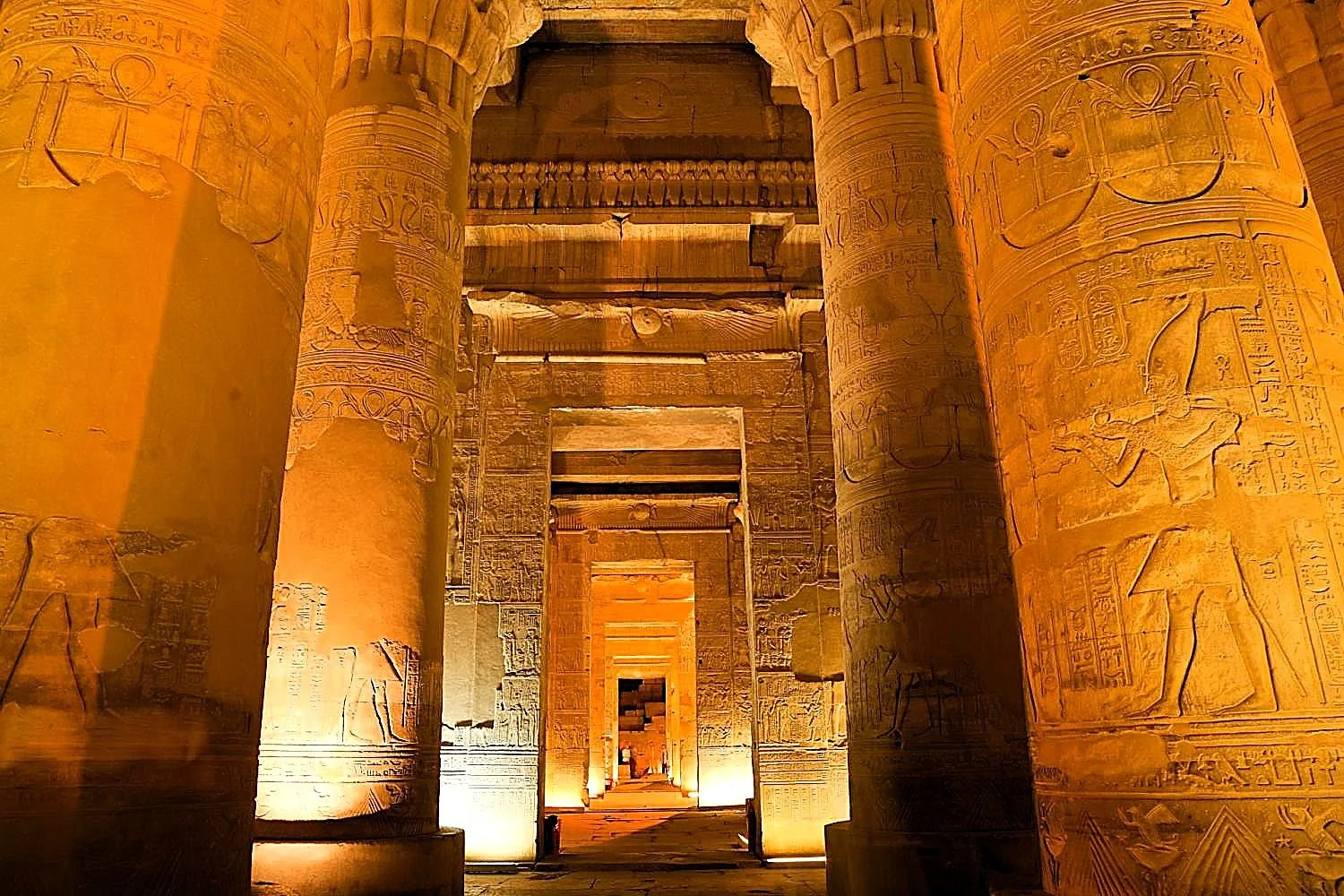
The Temple of Luxor.
Deciphering hieroglyphs is both pleasurable and enriching, not least for the deep satisfaction it brings in discovering, firsthand, the mysterious world of Ancient Egypt.
Travel beyond destinations with my Books in English
The book EGYPT, A Journey to the Nile is published in Greek
Related Articles
Abu Simbel from the Sky: Egypt's Most Extraordinary Aerial Journey
A spectacular aerial perspective reveals the monumental temples of Abu Simbel rising from the Nubian desert, where ancient engineering, colossal architecture and timeless landscapes create one of Egypt's most unforgettable experiences.
Read Article
The Royal Lifestyle of Ancient Egypt: Luxury, Ritual and Fragrance
Perfume, beauty rituals, lavish banquets and royal ceremonies shaped everyday life at the courts of the pharaohs, reflecting the elegance, power and remarkable sophistication of Ancient Egyptian civilisation.
Read Article