
Lorenzo the Magnificent, Florence, Italy
We had to walk quite a while to get to the Medici Chapel. Fortunately, the rain had stopped. The chapel was located on the first floor of the Medici Palace, on the via Larga. It was small and so alive in its colours that you were under the impression that, on its walls, a fairytale was unfolding.
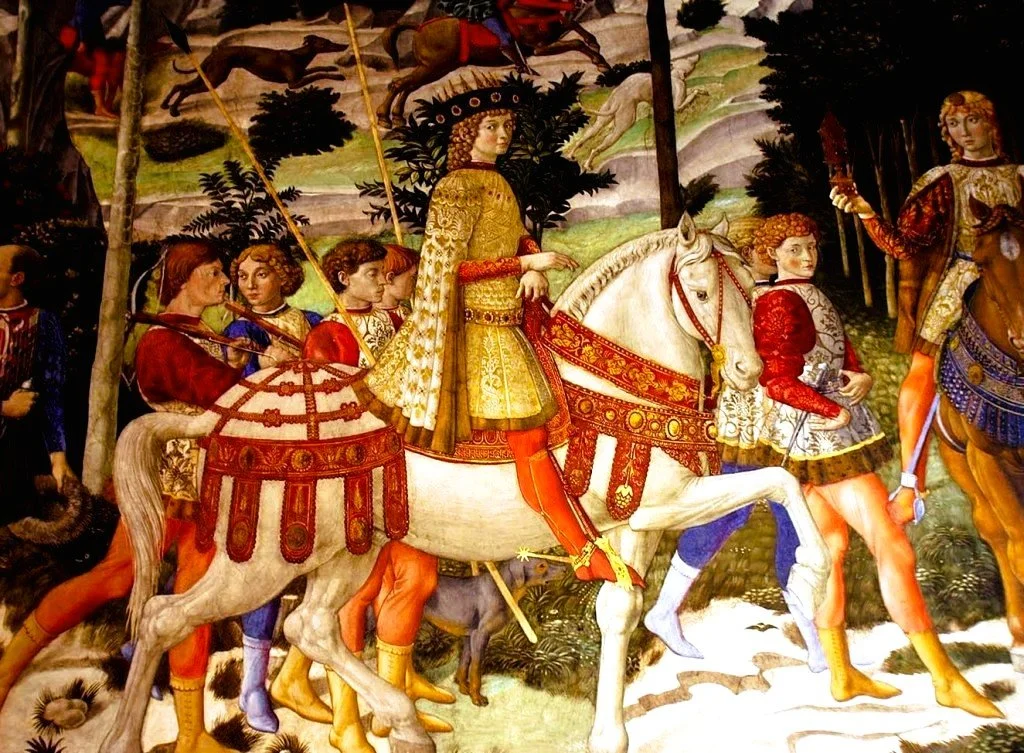
Lorenzo the Magnificent, portrayed as a child of around ten years old, in Benozzo Gozzoli’s fresco cycle in the Cappella dei Magi, Palazzo Medici-Riccardi, Florence.
A procession of lords and knights led to a fantastic city, and behind them was a beautifully painted landscape of hills, lakes, castles and all the animal kingdom. It was The Procession of the Magi by Benozzo Gozzoli. The mural looked like a huge miniature in that it was so precise in its details and with colours made of priceless materials like lapis lazuli and gold. I could imagine how much the gold would shine in the darkness when the chapel was lit only by candles, even though I did find it strange that is was so richly decorated.
“Gold and lapis in a fresco?” I asked.
We were fortunate enough to be alone in this little jewel of a chapel, and could speak without bothering anyone.
“It is a combination of fresco and painting on a dry wall,” Robbie explained to me, “a technique that allowed the painter to use these materials and pay great attention to the details. But, as much as the Medici wanted to impress, they were nouveaux riches in the eyes of the aristocracy. Not to mention that their palace was considered a provocation.”
“Yes, but it became the prototype for all the Renaissance palaces in Florence,” I replied.
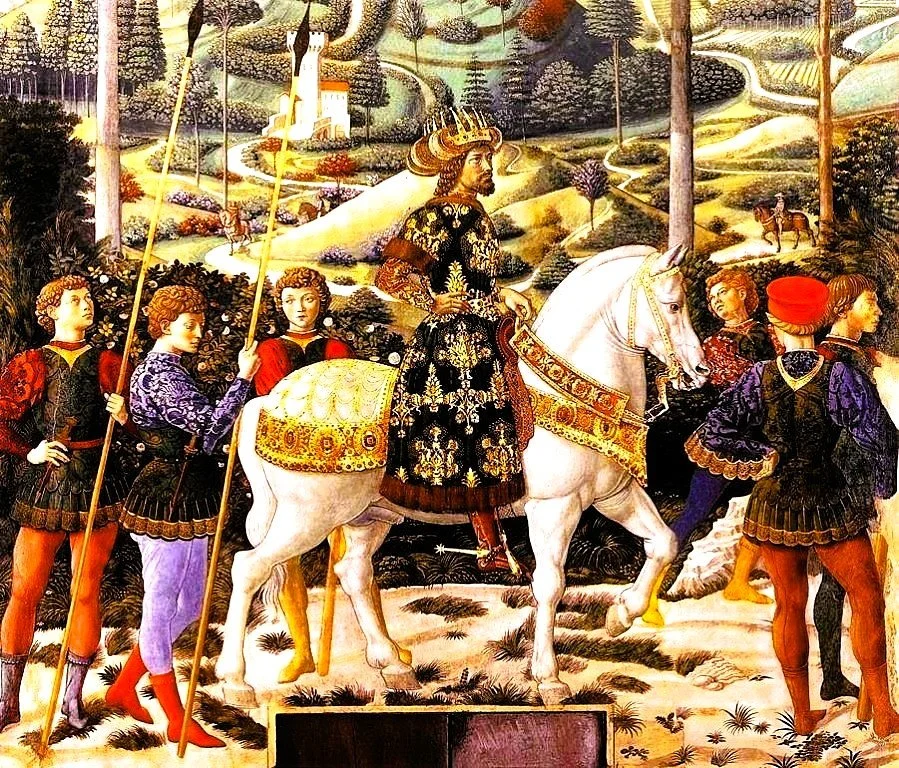
Emperor John VIII Palaiologos depicted in Benozzo Gozzoli’s fresco cycle in the Cappella dei Magi, Palazzo Medici-Riccardi, Florence.
Three generations of the dynasty were depicted in the mural: Cosimo; his son, Piero; and his grandson, Lorenzo (all contributed to the cultural superiority of Florence during the Quattrocento, 1400-1492). It was strange. I kept thinking how fate or luck had it that some people come along at just the right time. The Medicis arrived at the time that Europe was coming out of the Middle Ages and was undergoing a transformation. Benozzo Gozzoli created his beautiful frescoes in the chapel on the order of Cosimo.
Art and travel are deeply connected in my world, each enriching the way I observe beauty and experience place.
My long sojourn in Tuscany is recounted in the book: A Year in Tuscany
Related Articles
Florence: The Art of Preservation and the Legacy of the Medici
How Florence safeguarded its artistic treasures through centuries of political change, preserving a unique cultural continuity.
Read the Story
Florence: Bernard Berenson and the Language of Renaissance Art
The story of how one of the most influential art historians redefined attribution and deepened the understanding of Italian Renaissance masterpieces.
Read the Story