
In the Medina lies the magical serenity of its riads, Marrakech, Morocco
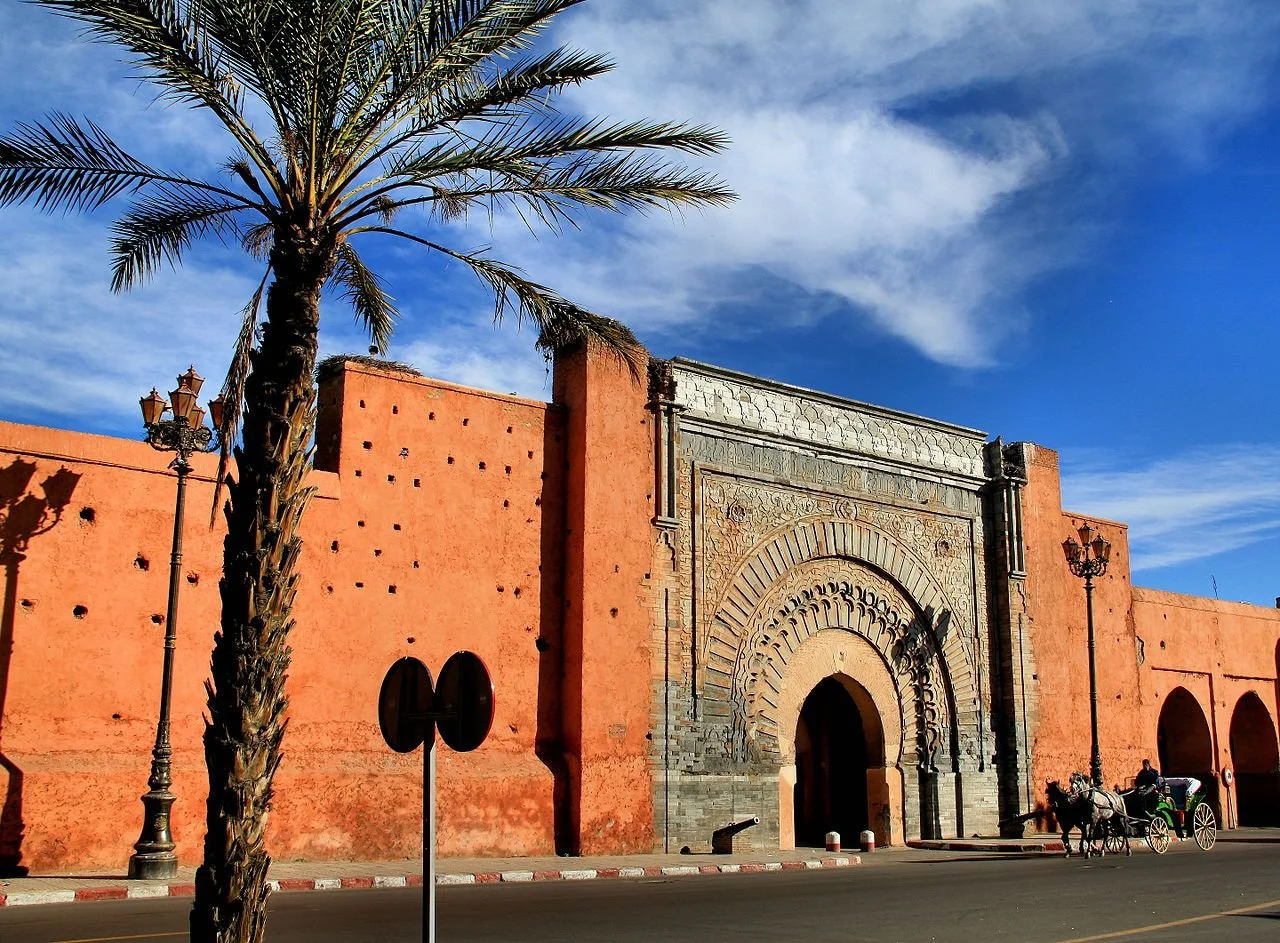
Bab Agnaou Gate in Marrakech
Marrakech reveals itself gradually, like a secret unwilling to be told all at once. It draws you in through colour, sound and movement, until resistance becomes impossible and surrender inevitable.
I followed Ahmet until we reached Jemaa el-Fna Square, near the entrance to the medina. The sun was setting, and a deep pink hue spread across the oasis. The square was already thronged with people preparing for the night ahead. Acrobats and snake charmers were taking their places; Berber women sat on the ground painting tattoos for tourists; grills were being lit for barbecues; and water sellers, descending from the Atlas Mountains, announced their arrival with the jingling of small bells hanging from their hats.
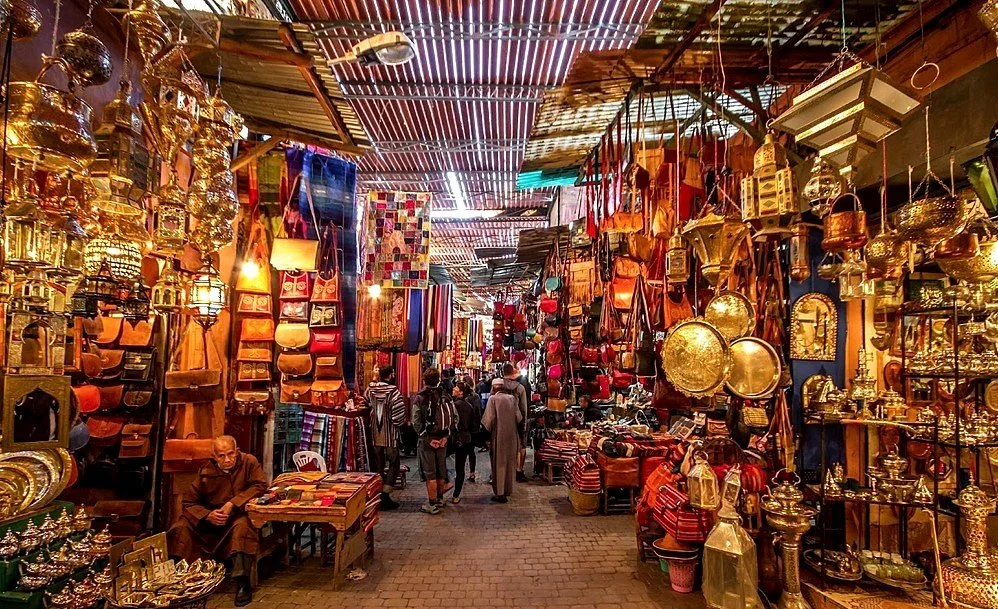
The Medina of Marrakech
Ahmet, accustomed to the chaos, moved through the crowd with practised indifference. I, by contrast, looked about me in rapture, careful not to lose sight of him. He paused briefly at a foreign-press kiosk to buy Le Figaro for the lady he worked for and, after tucking the newspaper into the hood of his bournous, set off again, shuffling along in his leather shoes — known in Morocco as babouches.
Crossing into the medina, the bazaar revealed itself in all its splendour. Its vivid colours and careful organisation struck me as more authentic and distinctive than the bazaar in Cairo. Everywhere I looked, there were details to admire: women veiled from head to toe yet with bare feet and brightly painted nails; traders crouching in front of shops so small they seemed little more than holes in the wall, just large enough for an outstretched arm to reach every corner of their goods.
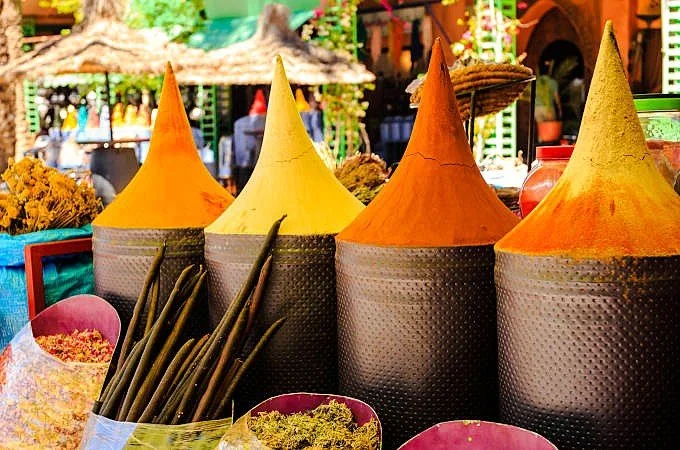
Spice Stall in the Medina of Marrakech
Donkeys, unflappable and laden with baskets of oranges and vegetables, threaded their way through the maze, weaving between sacks of grain. We entered the dyers’ market, where bundles of wool in brilliant hues hung overhead, creating a striking spectacle. I barely had time to linger before Ahmet slipped into an alley so narrow that we were forced to walk in single file.
At the end of it, he stopped and said simply, “We have arrived.” Before us stood a heavy wooden door studded with large bronze nails.
As in the past, so today, many foreigners delight in owning a house in Marrakech. They first built villas in the French quarter of Gueliz, beyond the city walls; later, grander residences rose in the palm grove at the edge of the desert, the Palmeraie. Today, however, it is the riads of the medina that attract them — houses often restored by French interior designers who transform their interiors into small masterpieces.
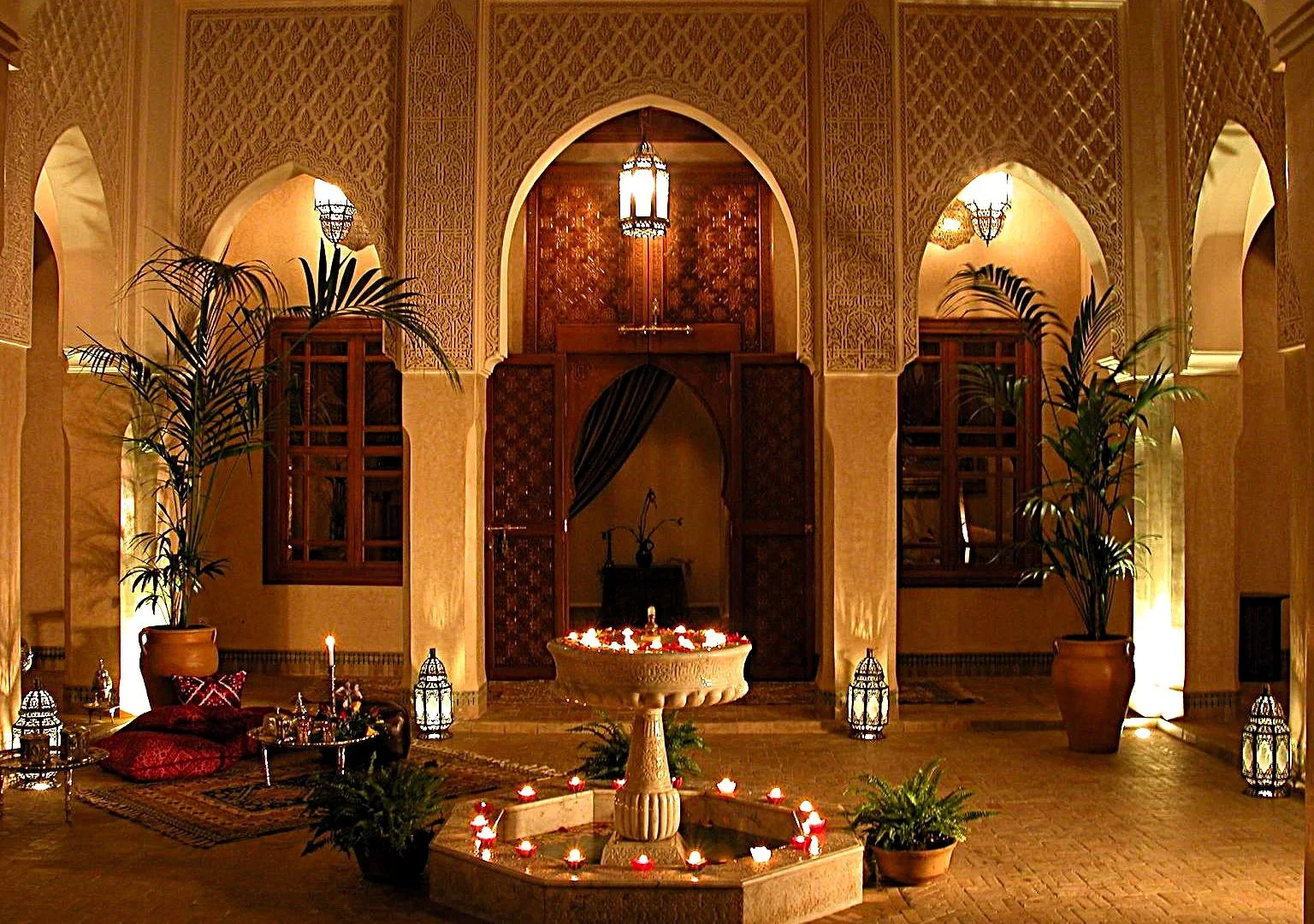
Lantern-lit serenity at Riad Kniza, Marrakech
My friend Alice lives in one such riad. When the heavy door closed behind us, the clamour of the street vanished at once. All that remained was the gentle murmur of water from a fountain at the centre of a small patio, framed by white walls and elegant Andalusian arches. High above, a square opening seemed to draw the sky down into the house.
As my gaze wandered through the rooms, it became clear that everything had been designed to delight the most refined taste: the furniture, the paintings and works of art, the painted and carved ceilings, the marble and precious woods.
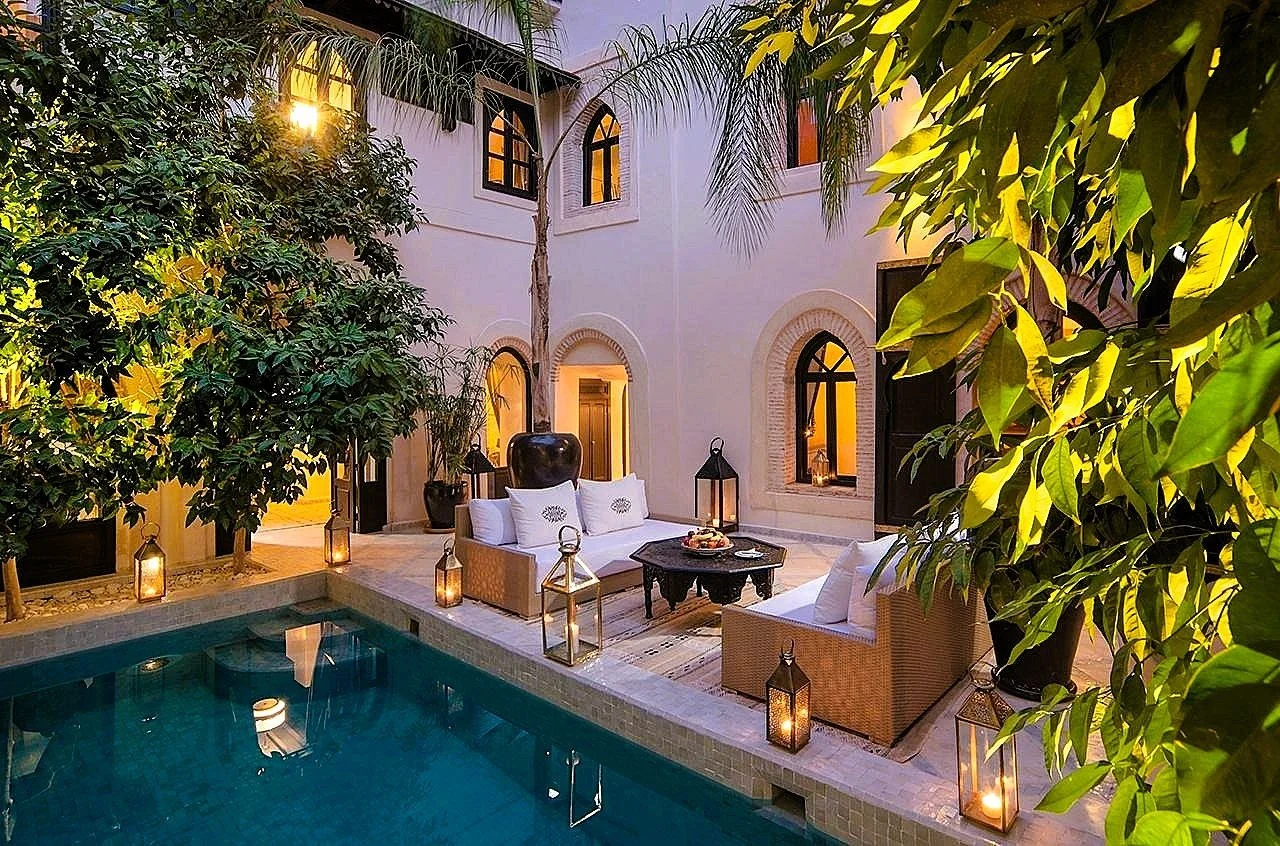
Sunlit grace at Riad Kheirredine, Marrakech
Embark on a journey with my Books in English