
The Villa San Michele, Florence, Italy
A touch of Renaissance
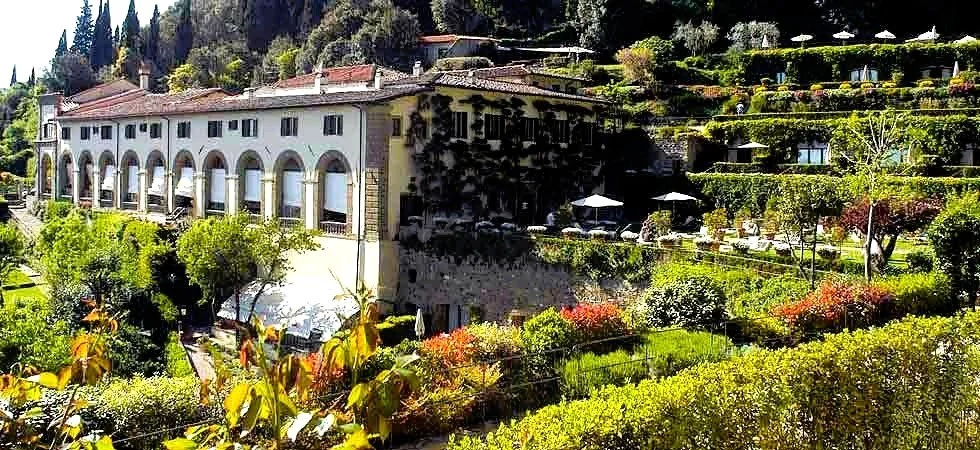
Villa San Michele, with its exquisite terraced gardens overlooking Florence.
If ever I were to buy a house in Tuscany, it would be Villa San Michele, A Belmond Hotel. I should leave it precisely as it stands today and telephone Architectural Digest to come and photograph it, just as it is. Yet the Villa San Michele is not, of course, a private home but a hotel — and before that, a Franciscan monastery.
Set high in the hills of Fiesole, it commands a view of Florence so magical that the city seems almost theatrical, unfolding in soft terracotta and pale stone beneath the Tuscan sky. The hanging gardens, lush and immaculately kept, cascade in terraces of verdant green, lending an air of gracious harmony that gently softens the building’s austere Renaissance lines.
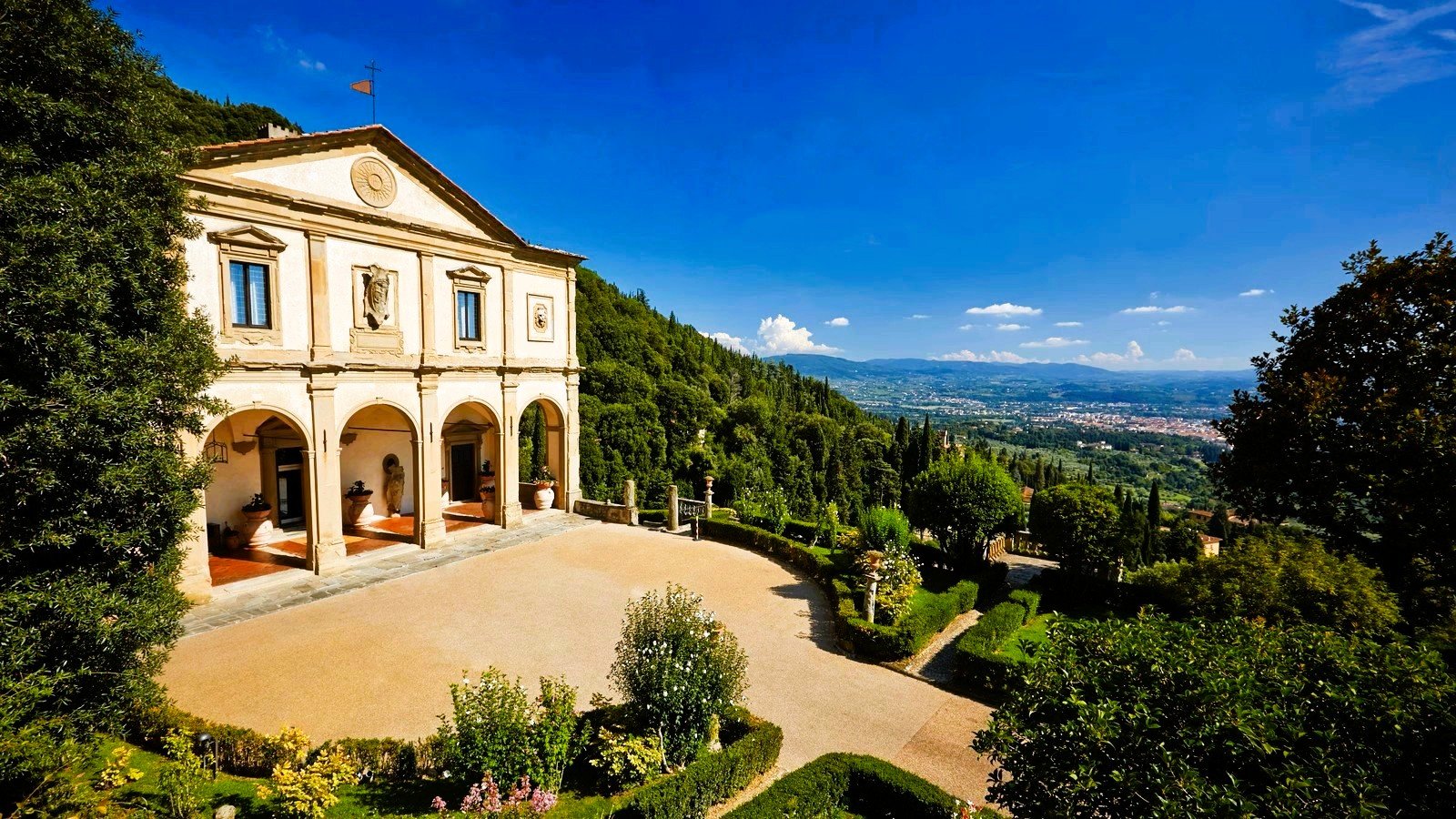
The Renaissance façade of Villa San Michele, A Belmond Hotel, rising serenely above the Tuscan hills.
A masterpiece of Renaissance elegance, with a stately façade long attributed to Michelangelo, the villa rises in serene splendour above the city. Cypress-lined terraces and exquisitely manicured Italian gardens frame the structure, and everywhere there is a sense of cultivated tranquillity — a delicate balance between art, history, and refined comfort.
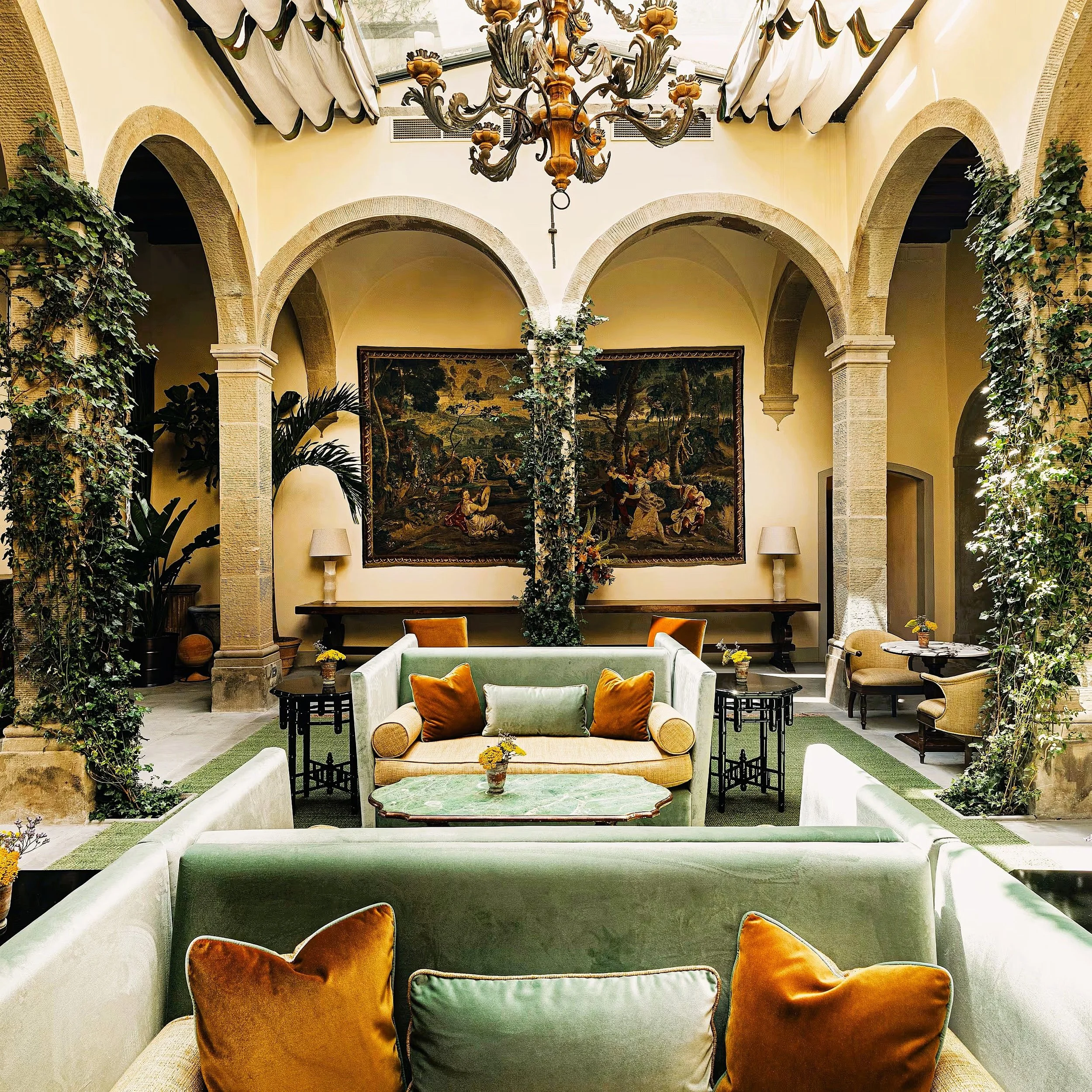
An elegant blend of harmony and Renaissance symmetry at Villa San Michele.
The hotel reception is housed within what was once the church. On entering, I would never have guessed its original purpose. It required an architect’s trained eye to discern it — and even then, the effect owes much to the lighting, which guides one’s gaze with quiet intelligence. My eyes were drawn first to the ceiling with its restrained geometric motifs, then to the rhythm of the symmetrical arches, and finally to the furnishings: substantial, Renaissance in character, yet never oppressive.
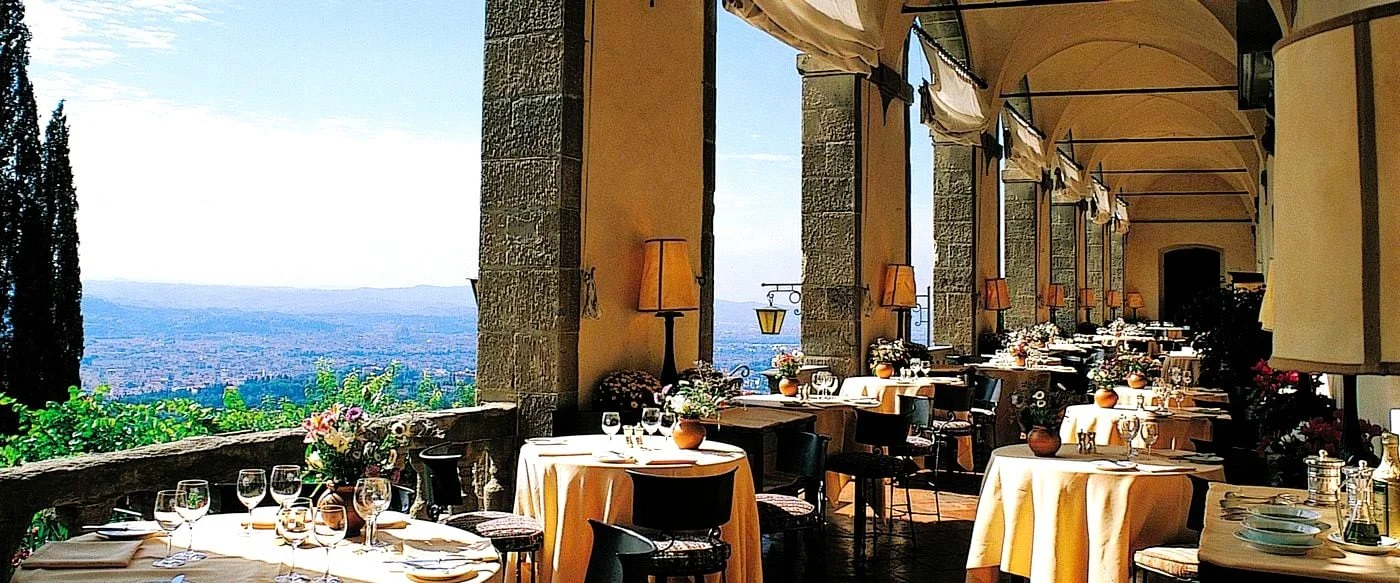
A graceful dinner in the Renaissance loggia, with sweeping views over Florence.
There is an assured subtlety to the design, a dialogue between monastic restraint and discreet luxury. A designer might better articulate the principles at work, but as a guest I simply felt it — that rare and satisfying union of historical integrity and modern comfort, achieved with elegance and without ostentation.
My journeys are guided by a lifestyle philosophy centred on culture, aesthetics and the quiet luxury of meaningful experiences
In A Year in Tuscany, I recount my long and much-cherished sojourn in Tuscany.
Related Articles
Venice: Lagoon Light and Timeless Elegance
At Belmond Hotel Cipriani, secluded gardens, Venetian craftsmanship and waterside tranquillity create one of Italy’s most refined escapes.
Read the Story
Portofino: La Dolce Vita above the Ligurian Coast
Suspended above Portofino’s luminous bay, the Belmond Splendido captures the Riviera’s timeless glamour through terraced gardens, sea light and effortless Italian elegance.
Read the Story