
Lavish elegance at the Fairmont Tazi Palace, Tangier, Morocco
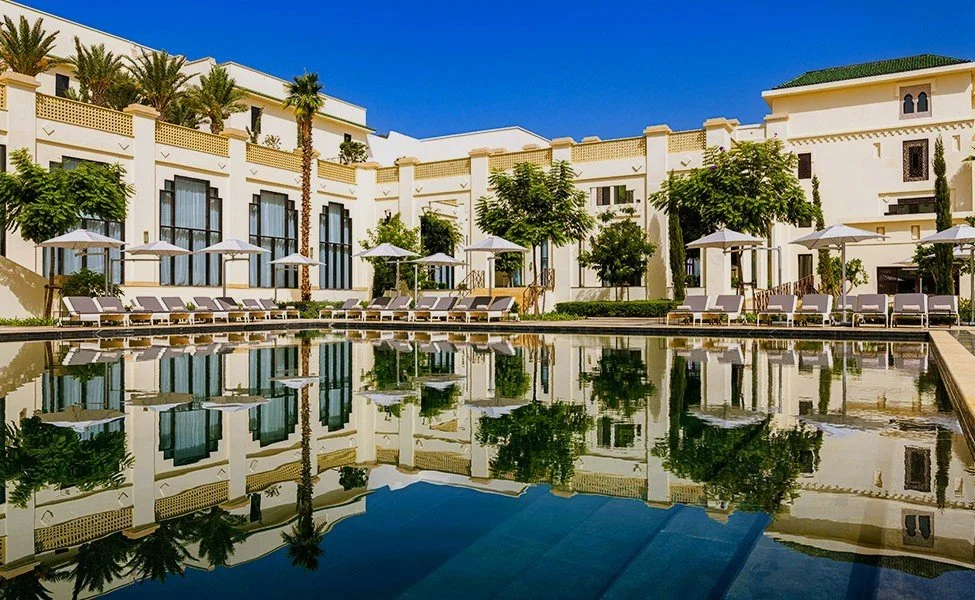
The Fairmont Tazi Palace, Tangier.
Tangier’s rich history, a fusion of cultures, unfolds at every turn. Founded over 2,500 years ago, this ancient city, nestled between the sea and hills, commands a strategic position on the Strait of Gibraltar, the gateway between Europe and Africa. Its gleaming whitewashed houses have earned it the name The White City.
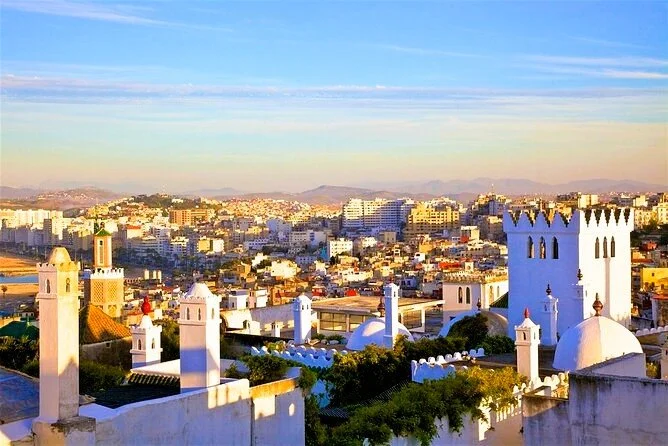
Tangier, the “White City” of timeless allure.
Late one November night, I arrived at the Fairmont Tazi Palace, perched above the Medina of Tangier. Weary from my journey, I fell into bed, but not before admiring the room’s elegant décor: modern Moroccan furnishings, handwoven fabrics, and design touches evoking Arab-Andalusian heritage, from intricate mosaics to engraved brass and wooden screens.
The next morning, the city beckoned. As the first guest awake, I stepped onto the balcony to find the city swathed in a soft mist. After pulling on a sweater, a stroll through the hotel’s private gardens awaited, bathed in the early light. Surrounded by lush hills, the grounds were a sensory delight: ancient eucalyptus trees, groves of palm, citrus, olive, and pomegranate, all set within Andalusian-style gardens.
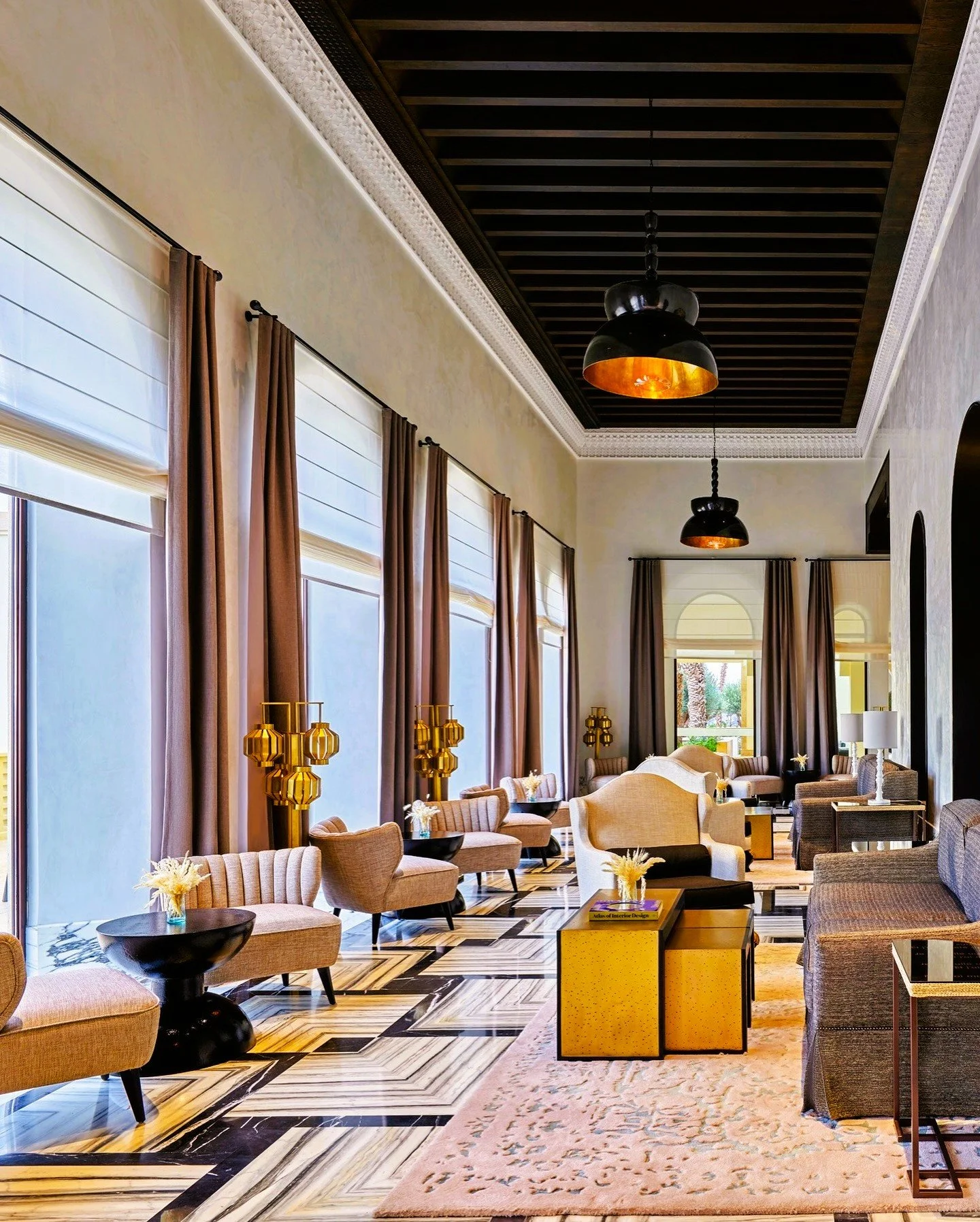
The stylish décor of the lounges at the Fairmont Tazi Palace, Tangier.
Passing opulent lounges adorned with moucharabieh screens, tadelakt plaster, and zellige tiles, I felt as though I was walking through a living testament to Morocco’s finest craftsmanship. Intrigued, I approached the reception, where a young lady guided me to the central wing of the building. With a graceful gesture towards the 12-metre-high ceiling, she shared the palace’s history. Built in 1920 for Mendoub Ahmed Tazi, a royal advisor, the palace was never completed and lay abandoned for decades. Now, after a meticulous restoration, it blends 1920s opulence with modern luxury, preserving the grandeur of its past.
Thanks to its exceptional location, the Tazi Palace proved to be the perfect base for discovering Tangier. Early one morning, I ascended to the Kasbah, the city’s ancient citadel, where stunning views over the Strait of Gibraltar awaited.
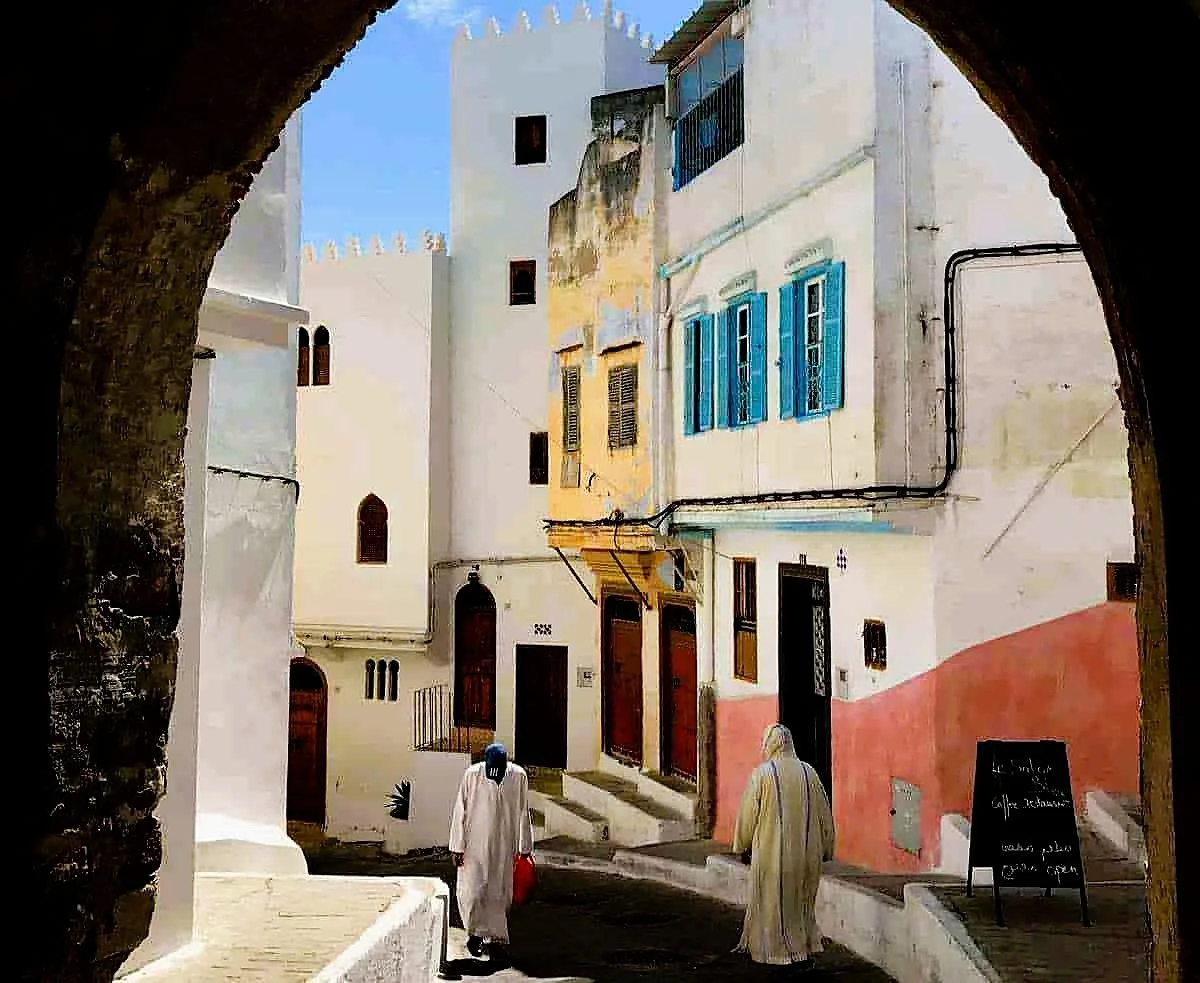
Approaching the medina of Tangier.
From there, a descent into the Medina led through narrow, labyrinthine streets, each one a living artwork. At the heart of the old town, the Petit Socco once bustled with European consulates before the establishment of the International Zone in 1923. My journey continued to the American Legation, a historic building that, since 1821, has served as a consulate, museum, and cultural centre—Morocco was the first country to recognise the United States.

The author in the sitting room of the American Legation, absorbed in reading.
As I wandered through Tangier's vibrant streets, the city's charm unfolded with each step. A gentle turn in the road revealed the Grand Hôtel Villa de France, a 19th-century gem steeped in history. It had welcomed royals, celebrities, and, most notably, the artist Henri Matisse. Here, in this very place, Matisse found the inspiration for his iconic Paysage Vu d'une Fenêtre (Landscape Viewed from a Window), where the vivid blues and striking whites of Tangier’s landscape would echo throughout his later works.

“Landscape Viewed from a Window” (1913) by Henri Matisse, Pushkin Museum, Moscow.
Although he spent only a few months in Tangier, the city left a lasting imprint on his art. When he later settled in Nice in the 1920s, his paintings of odalisques — reclining women draped in patterned cushions and oriental carpets — revealed how the exotic atmosphere of Tangier had influenced his work.
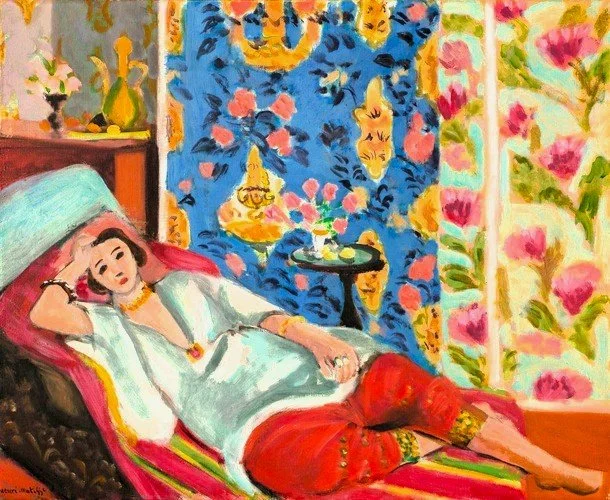
“Odalisque in Red Trousers” (1924-1925) by Henri Matisse, Musée de l’Orangerie, Paris.
It is true that the light here is unlike any other. After the brilliant clarity of the day, the golden sunset casts everything in a glow of shimmering sparks; and as night falls, silver stars punctuate the deep velvet sky. Oh, my magical memories of Morocco began here, in Tangier — the gateway to Africa.
Travel, for me, is never separate from writing — it becomes part of the same unfolding journey.
Related Articles
Marrakesh: The Art of Enclosed Paradise
A journey through the city’s legendary gardens — from Majorelle’s colour to Menara’s silence — where landscape becomes design.
Read the Story
Aswan: The Old Cataract, A Legend by the Nile
A stay at the legendary Old Cataract Aswan, where colonial heritage and river light shape an atmosphere of suspended time.
Read the Story