
Winston Churchill at Reid’s Palace in Madeira
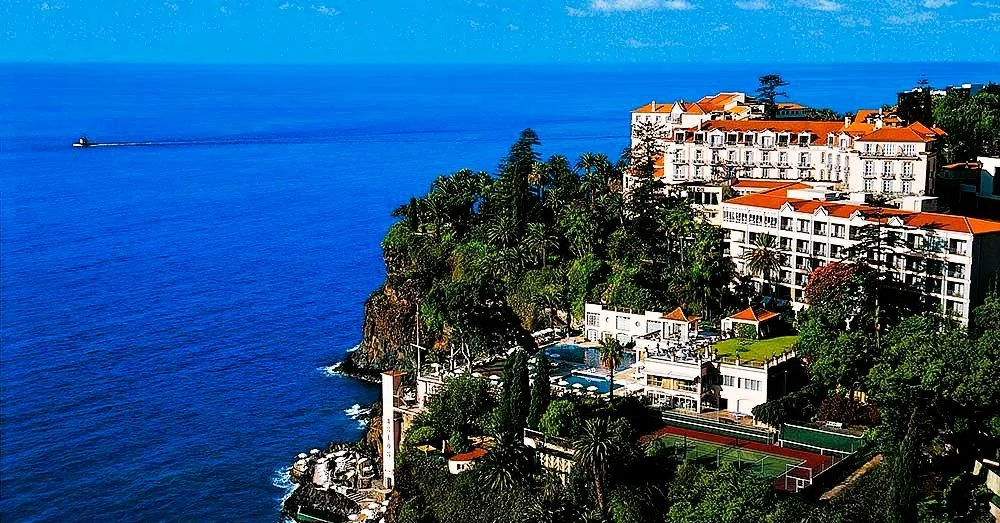
Reid’s Palace, Funchal, Madeira.
Before 1949 ended, the British Consul in Madeira received a telegram from Winston Churchill. They were friends. The “Father of Victory” was seeking a quiet, warm retreat to finish his memoirs and pursue his great passion: painting. Bryce Nairn, gazing at the spectacular view from the consular residence in Funchal, suggested Madeira. Where better?
Churchill welcomed the idea.
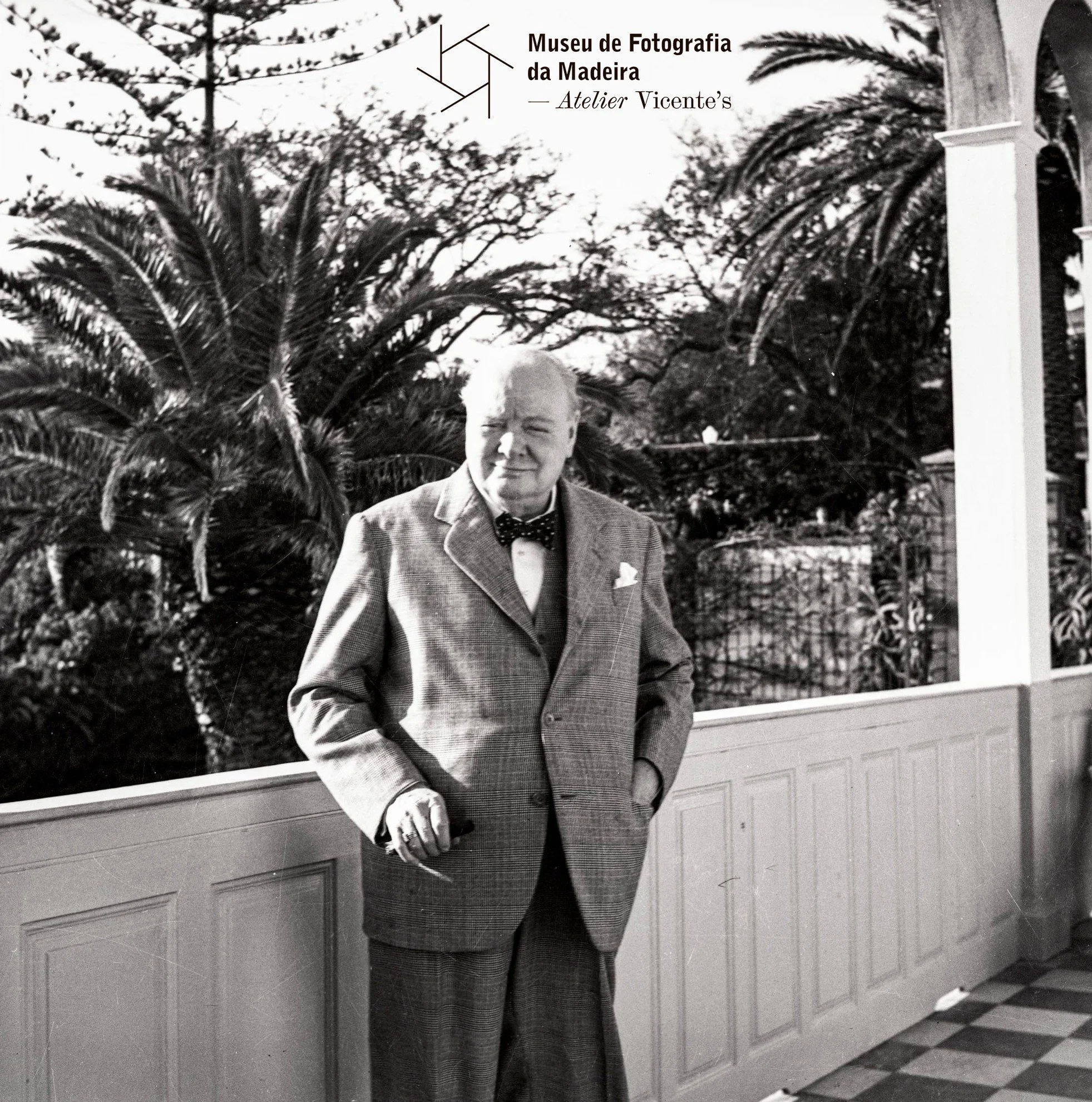
Winston Churchill at Reid’s Palace in Madeira, 1950.
Preparations for his visit were swift. The British Consul reached out to the Blandy family, wine producers since 1811 and owners of Reid’s since 1937, inviting them to host him. At his disposal was the grey Rolls-Royce of the distinguished Leacock family, wine producers since 1741, with its chauffeur in attendance.
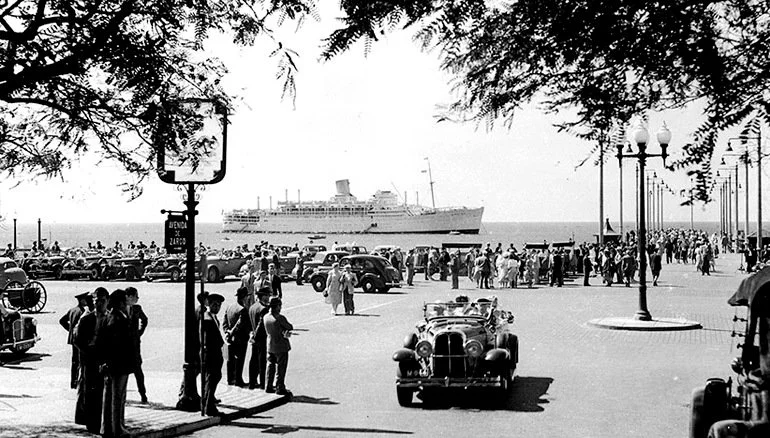
Winston Churchill arriving in Funchal, Madeira.
The day arrived. At dusk on 1rst January 1950, the Union Castle Line ship entered Funchal Bay. Fireworks celebrated the arrival. Churchill disembarked with his wife, Clementine, his daughter, two secretaries, a butler, a literary assistant, and two bodyguards.
All of Madeira had gathered, alongside the authorities, and thousands cheered him as the hero who had saved them. So warm was the welcome that Churchill later remarked on the extraordinary enthusiasm of the people.
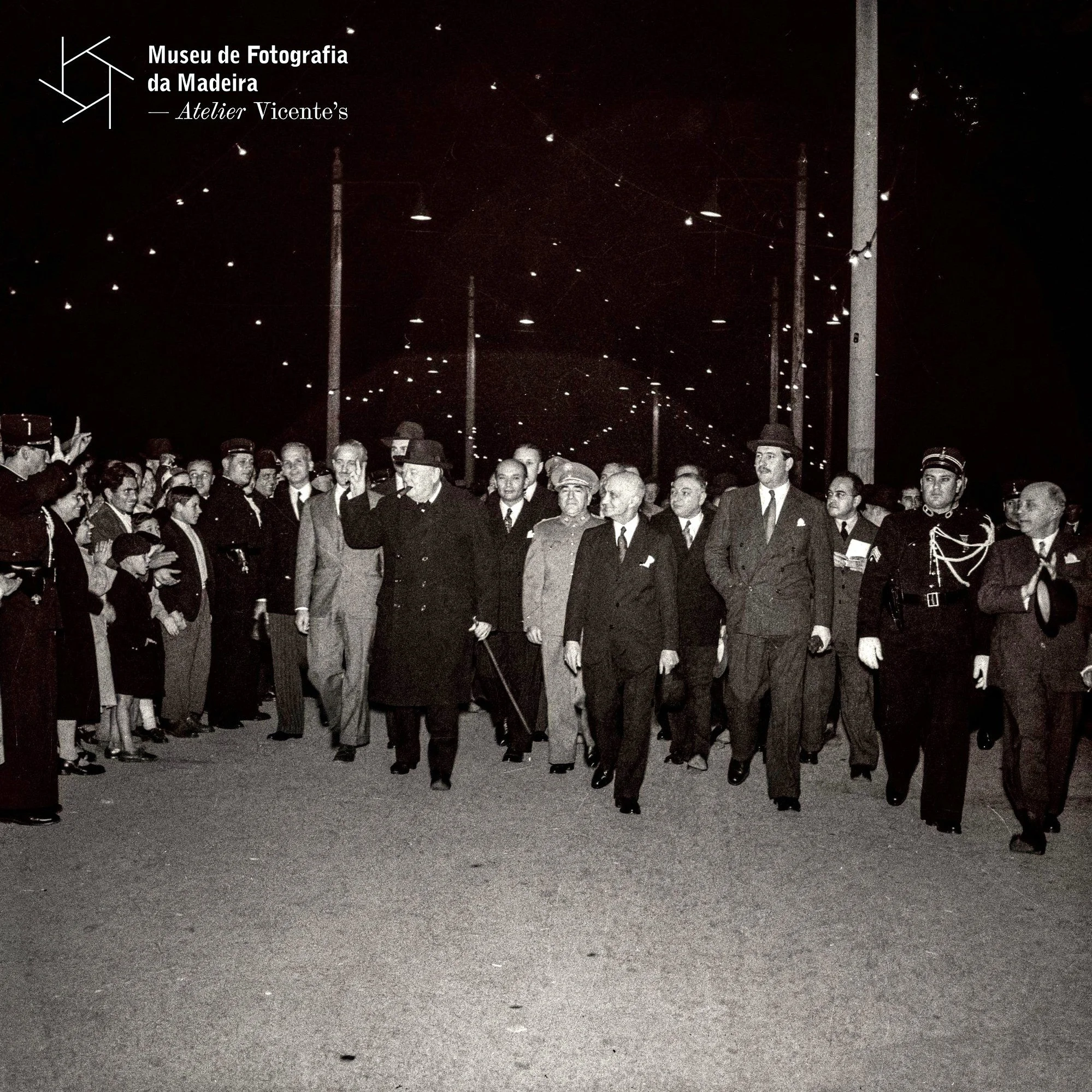
Winston Churchill was enthusiastically greeted by the crowd in Funchal, Madeira, in 1950.
A similar reception awaited him at a dinner hosted by the British Consul at Reid’s. Upon entering the room with his wife, everyone rose and applauded loudly, as if he were a king. Madeira wine was served in his honour: Blandy’s Solera, vintage 1792. Churchill, famous for his wit, picked up a bottle, wrapped it in a napkin, and said: “Ladies and gentlemen, do you realize this famous wine was bottled when Marie Antoinette was still alive?”
During my stay at Reid’s, I had the privilege of visiting the Presidential Suite, once graced by Winston Churchill himself.
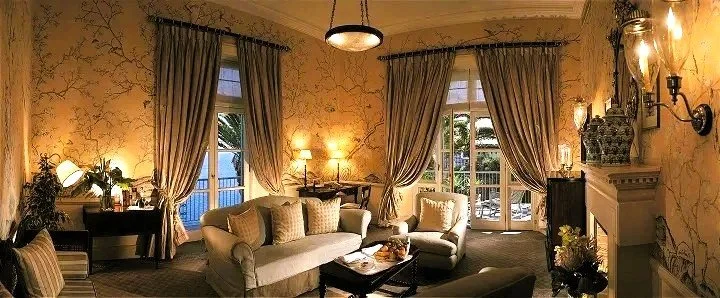
The Presidential Suite in Reid’s Palace, Funchal, Madeira.
“This tapestry is hand-painted, old, and very expensive to maintain,” explained Zoë Barreto, the young and poised Public Relations Director of Reid’s Palace.
“It’s exquisite,” I murmured, tracing my fingertips across the smooth surface. The design reminded me of a Chinese painting: delicate grey branches, leaves, and birds set against a softly golden background. Crafted in England and transported across the seas to Madeira, it adorned the walls of the suite with quiet sophistication.
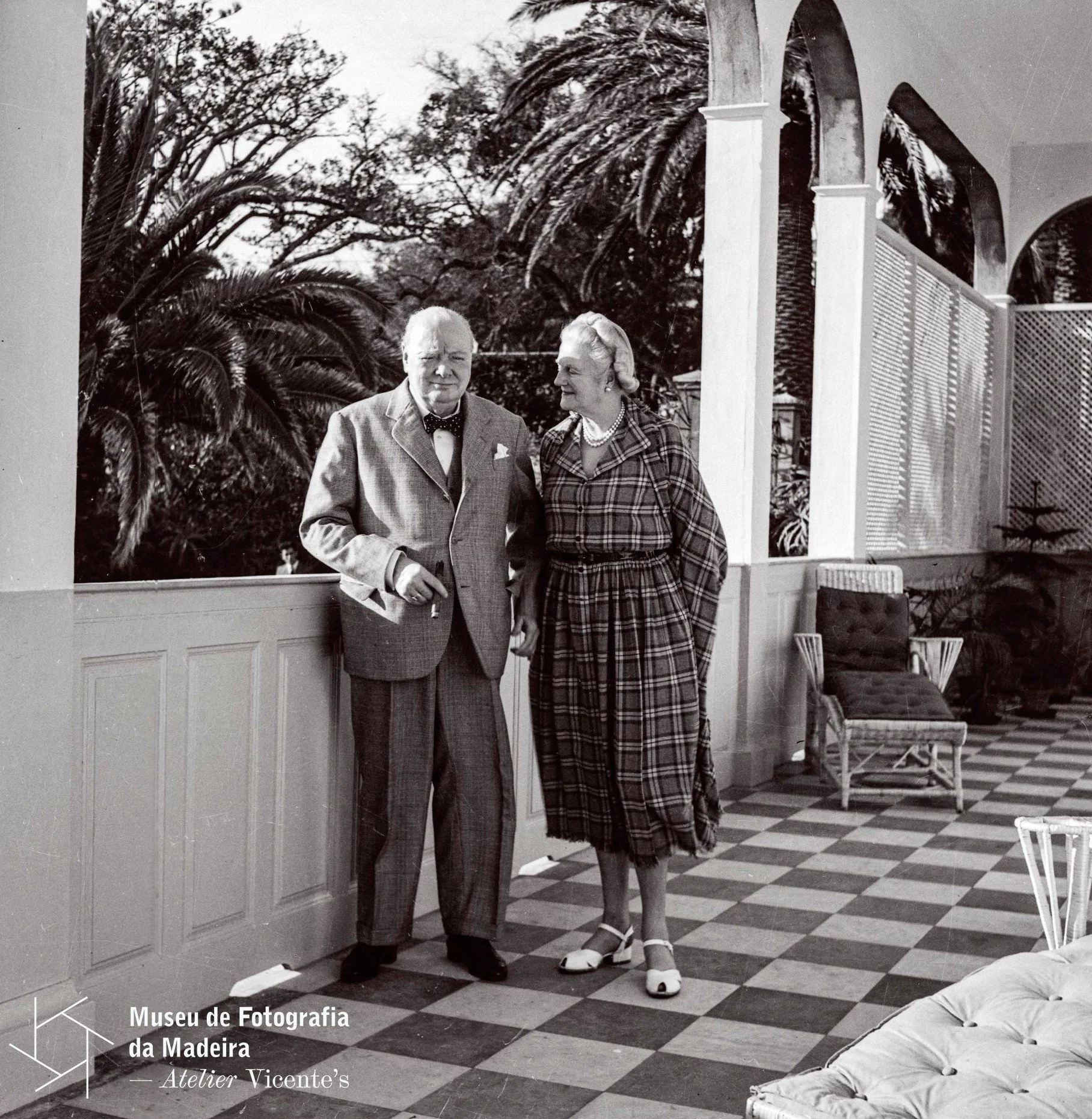
Winston and Clementine Churchill on the terrace of the Presidential Suite at Reid’s Palace.
Stepping onto the terrace, it felt as though the view plunged directly into a ‘Garden of Eden’: the deep-blue ocean and sky framed an explosion of emerald greens, fuchsia, crimson, and sapphire petals. Back inside, my eye fell upon a photograph of Churchill on a side table — his iconic image captured while painting at nearby Câmara de Lobos.
“Ah, I went there yesterday,” I said, excited to have discovered the very spot where the “moving legend” had painted.
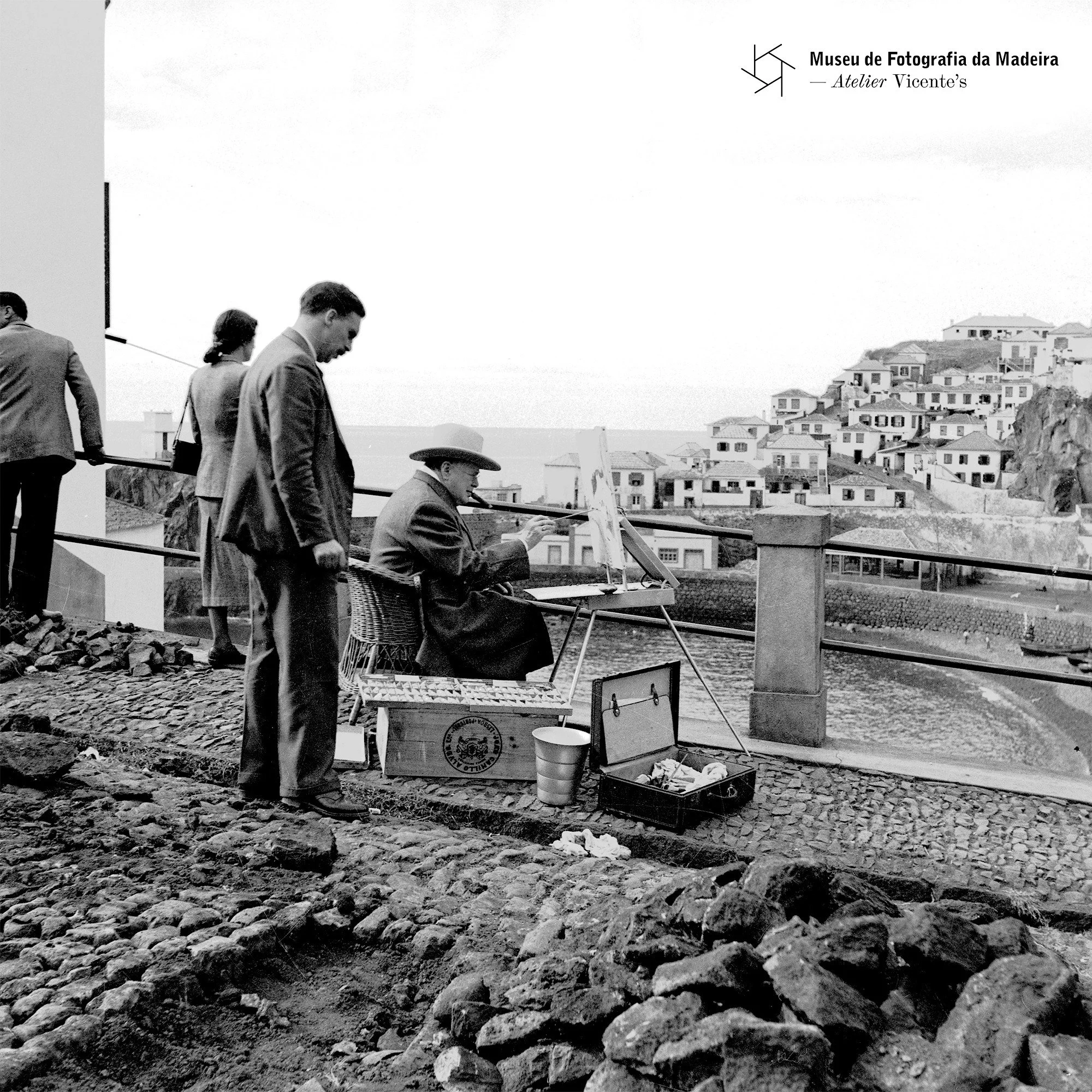
Winston Churchill paints the picturesque village of Câmara de Lobos, Madeira.
The village, Churchill’s favourite fishing haunt, nestles peacefully in a quiet cove, its whitewashed houses and terracotta roofs punctuated by the rainbow of moored fishing boats, like a miniature stage set. I imagined him there, brush in hand, quietly capturing the cliffs, the shimmer of the sea, and the bobbing boats. The famed intensity of the “Father of Victory” seemed softened by the calm of island life, revealing a humanity far more vivid than any historical portrait could convey.
As we left the suite to take tea, Ms Barreto mentioned that Churchill had stayed at Reid’s for only ten nights, cutting his visit short due to the impending elections in Great Britain, where he was soon to be re-elected Prime Minister. He departed the island aboard a seaplane, flying directly to Southampton.
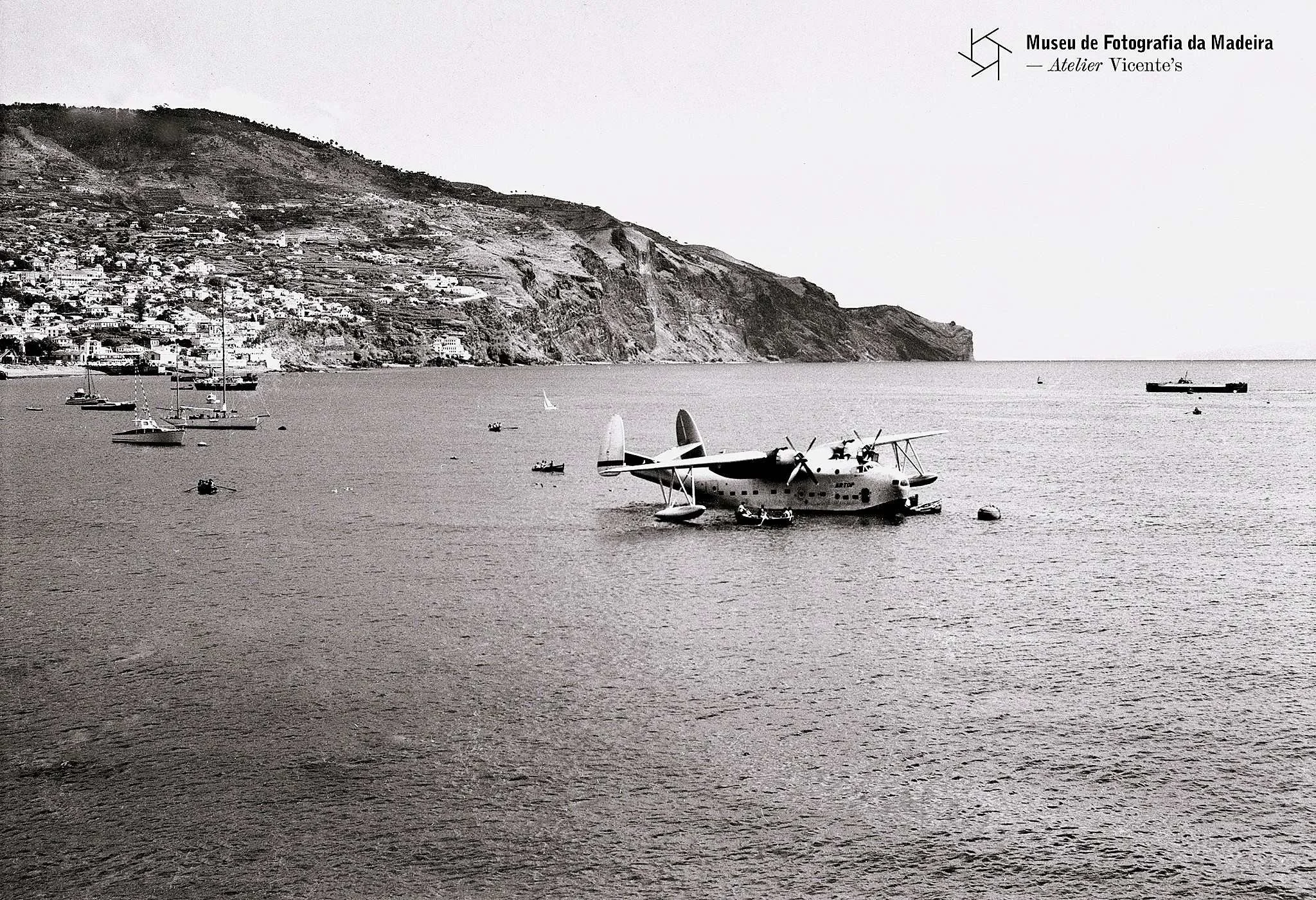
A seaplane landing in Funchal Bay, Madeira.
Though his visit was brief, the suite and gardens retained clear traces of his presence — in the photograph on the side table, the views he admired, and the atmosphere of calm and refinement that had accompanied his stay.
Travel is not simply movement through destinations, but a way of collecting stories, textures and moments that later become words.
Step into a journey through my Books in English Books in Italian Books in Greek
My book PORTUGAL, The Pearl of the Atlantic is published in Greek. It will soon be published in English.
Related Articles
On the shores of the Atlantic, since the late nineteenth century, discerning travellers, writers and statesmen have been drawn to legendary hotels defined by discretion and understated luxury, shaped by the rhythm of the ocean and time itself.
Hôtel du Palais, Biarritz, France: A Belle Époque Palace Overlooking the Atlantic
Once the imperial residence of Empress Eugénie, this iconic palace hotel embodies the grandeur of nineteenth-century France, where ocean light, history and refined hospitality meet on the Basque coastline.
Read the Story
Hôtel Le Normandy, Deauville, France: Belle Époque Elegance on the Normandy Coast
A landmark of seaside luxury, Le Normandy reflects the golden age of Deauville, where film, culture and aristocratic leisure converge in an atmosphere of discreet sophistication and timeless charm.
Read the Story