
Civilisations Embrace When the Wind Blows, Petra, Jordan
There is a wild, almost mournful beauty to Petra, a gravity that shakes you to your core. These canyons, rising as natural fortresses just north of Aqaba, became the capital of the Nabataeans — a Bedouin people who emerged from the depths of Arabia, threading their way through these rocky corridors to command the caravan routes. Children of the desert, the Nabataeans neither sowed nor planted, nor did they build houses. Yet when wealth came and contact with far-flung civilisations followed, they sought to adorn their capital with monumental façades, carving vast funerary monuments directly into the rose-coloured cliffs
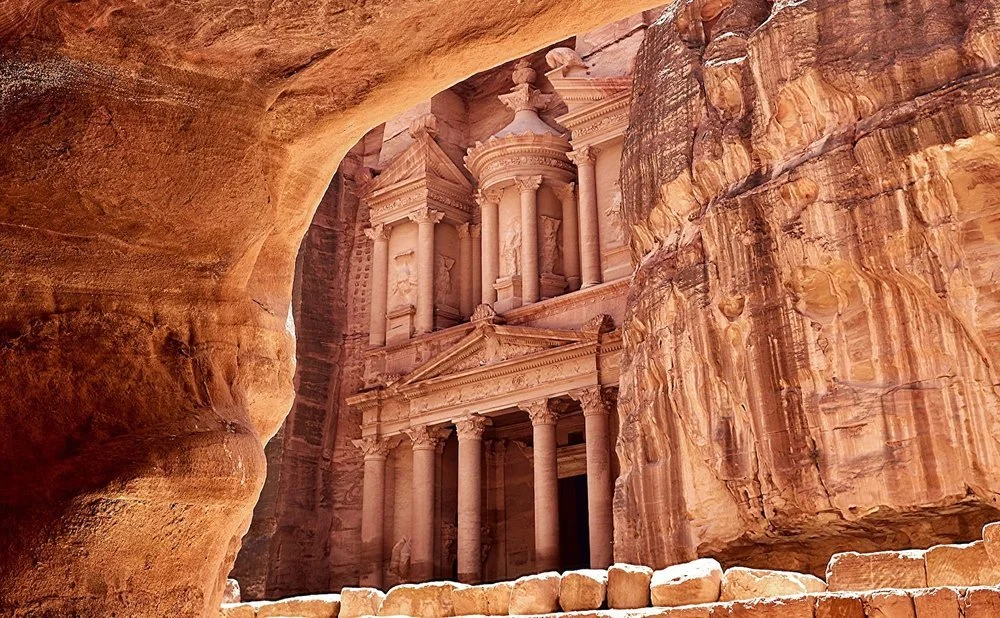
The Treasury in Petra, Jordan.
I wrote these notes in my travel journal while perched atop one of those tombs, a structure bearing the unmistakable imprint of Hellenistic architecture — capitals, triglyphs, metopes. No one ever truly subdued the Nabataeans; only the Roman emperor Trajan, and later the Byzantines, integrated them as guardians of the Empire’s farthest frontiers. To arrive in Petra after flying in from Rome is an awe-inspiring experience. You walk like an acrobat across the tightropes of history, everything within you held in suspension as you attempt to grasp the reality of those distant centuries. So many civilisations whisper from these stones… one’s imagination must labour powerfully to conjure them back to life.
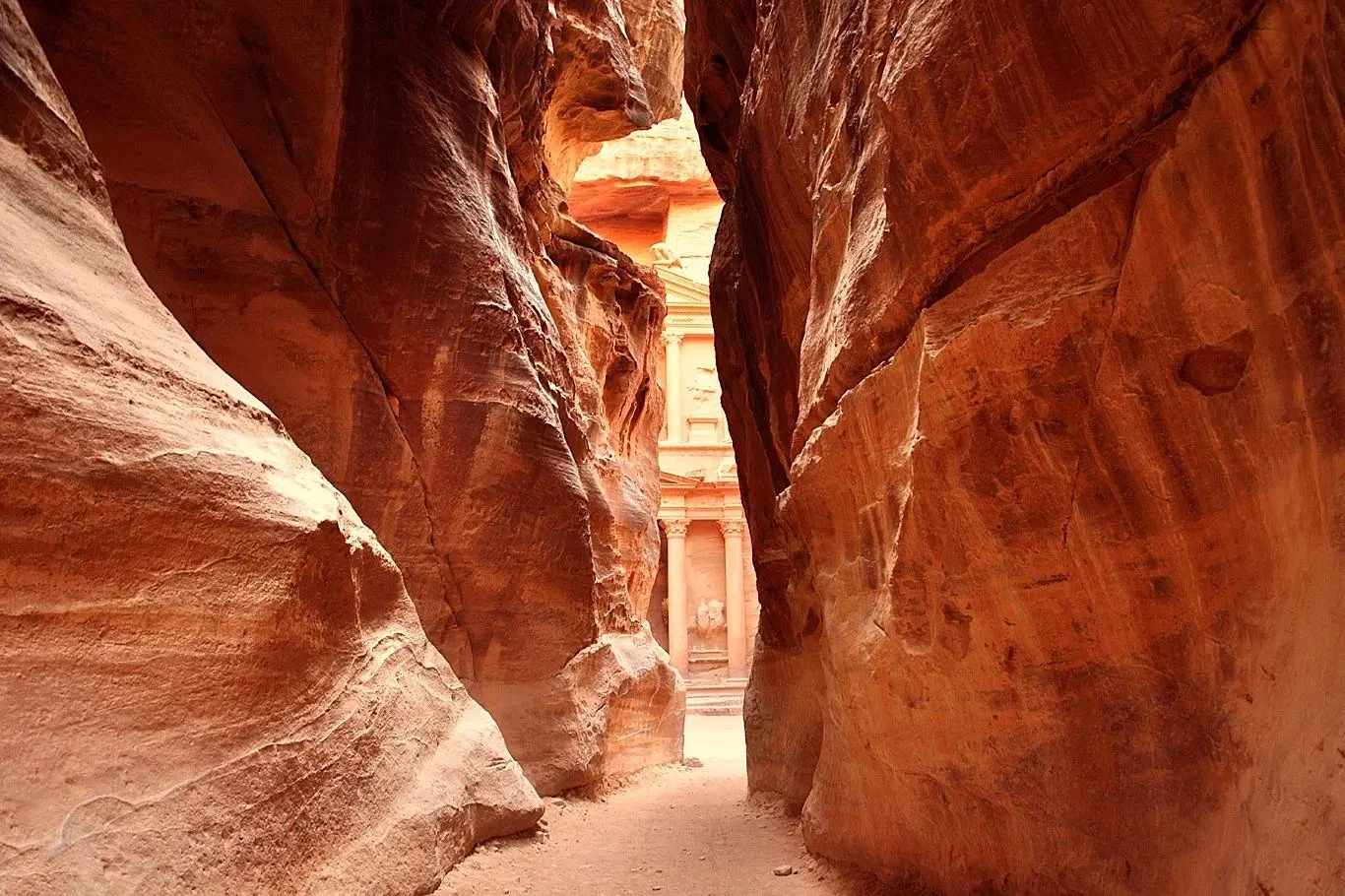
The Siq, a 1.2-kilometre-long natural gateway to the ancient Nabataean city of Petra.
And indeed, I was walking like an acrobat — not merely in thought. First I climbed flights of steps hewn into the rock, and then I followed narrow, rugged paths that seemed to lead straight into the world of the Old Testament. As I ascended, the wind strengthened, and the landscape grew ever more austere. Rocks — nothing but rocks! When I reached the summit of a forbidding ridge and looked into the abyss below, I was struck dumb. The cliffs dropped away sharply, and on the far horizon the Negev Desert unfurled without end.
I had intended to write about Moses’ brother in my journal, but with the wind raging around me, I could not find anywhere to sit. The mausoleum of Aaron was visible atop another distant hill — five hours’ walk away, my Bedouin guide had told me. Tradition holds that Aaron died there, barred by God from entering the Promised Land; the small white mausoleum was later built by local Arabs in his honour.

The ancient city of Petra, one of Jordan’s national treasures.
“Go and sit comfortably on the altar,” the Bedouin suggested, offering what seemed to him a perfectly ordinary solution. The altar stood on the highest shoulder of the rocks, and to reach it I had to climb a smooth stone slope along the cliff’s edge. Staring down at the precipice rendered me speechless for the second time, yet I quickly recovered when I saw a young Japanese woman already seated on the altar, smiling serenely as her travelling companion photographed her.
As I climbed, glancing at the vast sweep of desert below, a light vertigo seized me — but it vanished when I met the couple descending the cliff. The calm on their faces, radiating inner peace, struck me as almost monastic; perhaps it was their Zen disposition, I thought. We exchanged a silent smile, yet in that moment we were connected. It was the bond of a shared experience — standing at the edge of a great height, feeling life concentrate within you as the chasm yawns beneath your feet.
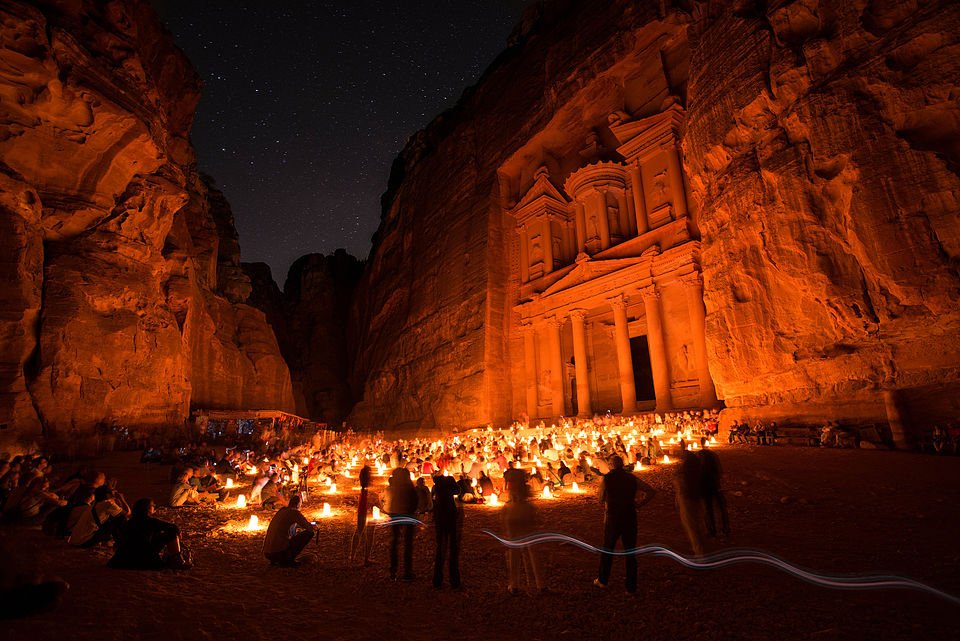
The Treasury at night, Petra,illuminated by candlelight.
When I finally reached the altar, I sat down and opened my journal, though writing was a battle. The wind whipped my hair across my eyes, and my hand skittered uncontrollably as the gusts pushed at the page. Still, I managed to trace four words — simple, yet true: “Civilisations embrace when the wind blows.”
Writing allows me to explore the emotional beauty of ancient cultures, where memory, heritage and place become inseparable.
Related Articles
Harran: Between ancient knowledge and desert silence
A remote centre of learning in Upper Mesopotamia, where Greek texts were translated into Arabic and ancient knowledge was preserved in a changing world.
Read the Story
The Hellenistic heritage: Beauty, power and exchange across the Mediterranean
From Athens to Alexandria and Rome, a civilisation shaped not by borders, but by circulation.
Read the Story