
Old beauty and nobility, Charleston, U.S.A
Fortunately, there are still cities in the world that preserve not only their historic beauty and quiet nobility, but also a deeply rooted traditional way of life. Charleston is a vivid example. I had long wished to visit it — to wander through its quiet, winding lanes, where gardens of luxuriant, almost tropical plants embrace elegant houses. I wanted to glimpse the South as it had been before the American Civil War, for this is a city that was largely spared destruction. The fires halted just beyond its earliest homes, and little, it seems, has changed since.
The history of Charleston does not greatly differ from that of other cities of the colonial South, though it has endured earthquakes, hurricanes, outbreaks of yellow fever, and repeated fires. What sets it apart is that, for over three centuries as the cultural capital of the South, it has remained faithful to its traditions—its gracious architecture of mansions and gardens, its distinctive cuisine, and the refined cadence of speech and manner of its inhabitants.
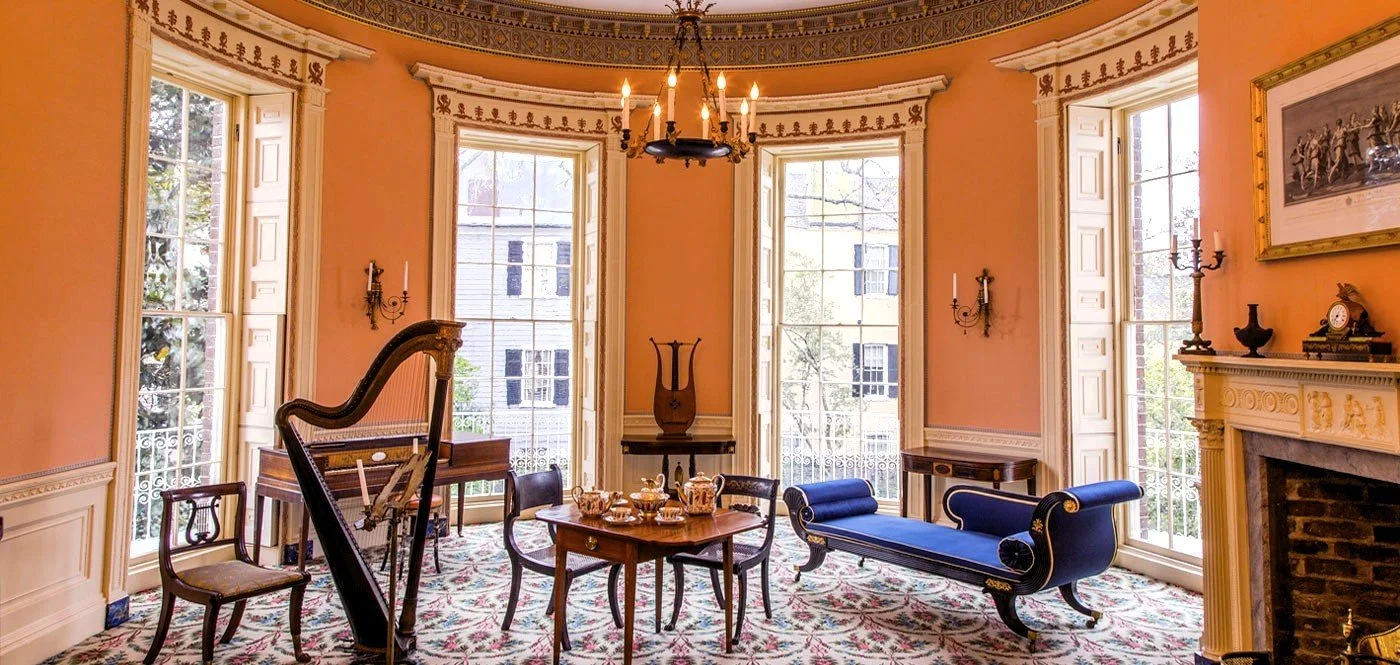
Refined elegance at the Russell Mansion, Charleston.
Charleston is renowned as one of the most hospitable cities in the South. To entertain, or to be entertained, is among the most cherished pursuits of its people. For many years, the week of the races at the track stood as the most important annual event. Shops would close, and fortunes — sometimes modest, sometimes considerable — were made on thoroughbred horses. Diaries from the time dwell at length on elegant hostesses, glittering balls, exquisite local dishes, and well-stocked cellars of fine wines, among which Madeira was especially favoured.
No American city can rival Charleston’s tradition of gardening. Owing to the richness and diversity of its flora, botanists of the seventeenth and eighteenth centuries were drawn here, both to study native species and to introduce exotic plants from Europe. The plantations of Middleton Place, Magnolia Plantation and Gardens, and Cypress Gardens continue to attract visitors from across the globe. The celebrated Avenue of the Oaks – seen in part in the film Gone with the Wind – may be admired at Boone Hall Plantation. The Boone family itself has long since passed, yet the gracious lady in crinoline who welcomed us and moved with effortless poise through the grand rooms of that stately house seemed the very embodiment of a bygone age.
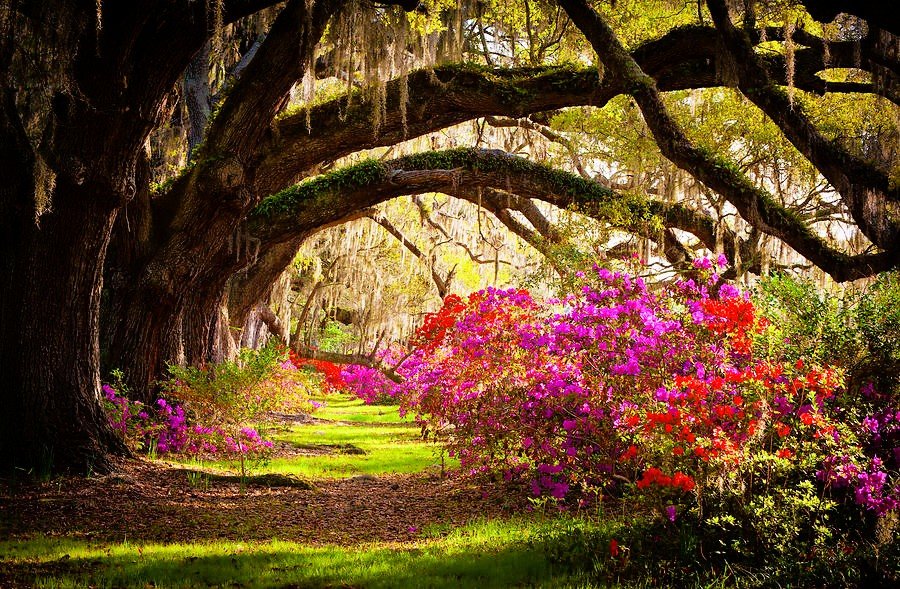
Magnolia Plantation Gardens: Charleston’s historic bloom.
Time may alter many things, but here, tradition endures.
The world unfolds through every page. My Books in English Books in Italian Books in Greek
Related Articles
A journey along the American East Coast unfolds through cities shaped by architectural grandeur and refined artistic sensibility.
New York City: Autumn Light and Architectural Grandeur
Golden autumn light accompanies walks through Central Park and along Fifth Avenue, where landmark architecture and soaring skyscrapers shape the unmistakable character of New York City.
Read the Story
Isabella Stewart Gardner Museum: Art, Venice and a Boston Masterpiece
Inspired by the elegance of Venetian palazzi, Isabella Stewart Gardner’s remarkable residence brings together exceptional art collections, architectural beauty and one of Boston’s most distinctive cultural treasures.
Read the Story