
Alhambra, Granada, Spain
A stroll around the most romantic place in the world
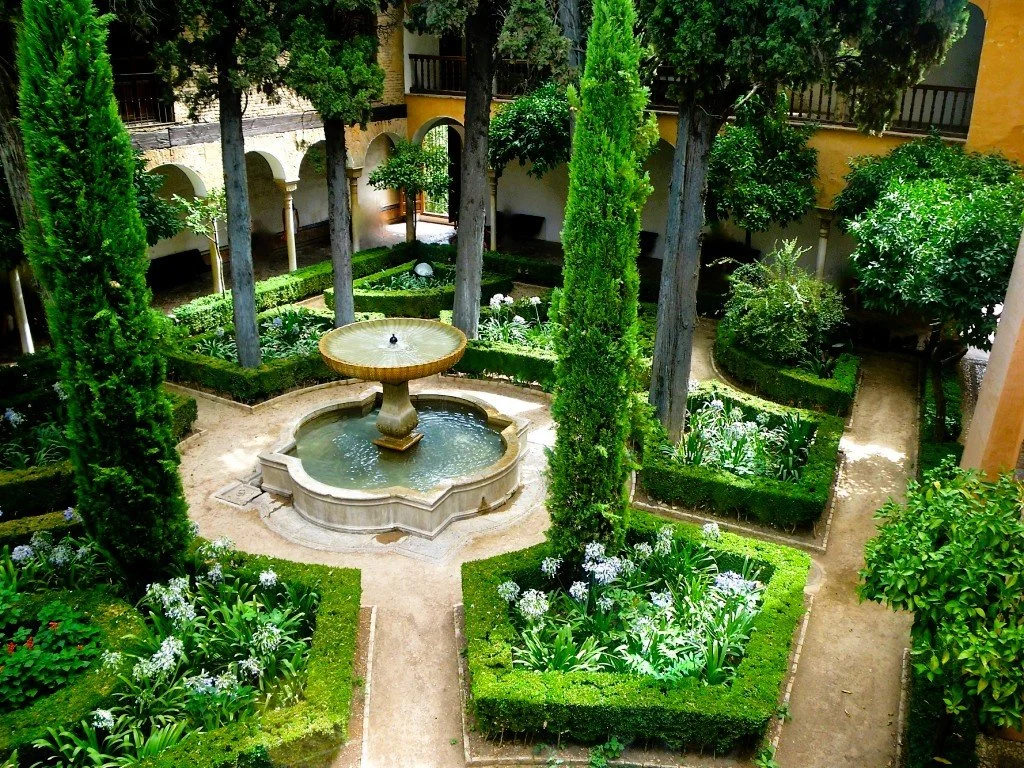
The Daxara’s Patio in the Alhambra.
Stepping into the Alhambra feels like entering a labyrinth of buildings and gardens, where every turn seems uncertain, yet everything is perfectly orchestrated. Thirty towers rise behind red walls, four gates guard the citadel, and three distinct quarters — the Alcazaba for the elite guard, the Nasrid Palaces, and the Medina for court officials — are seamlessly linked by shaded paths beneath cypresses, oaks, and Aleppo pines.
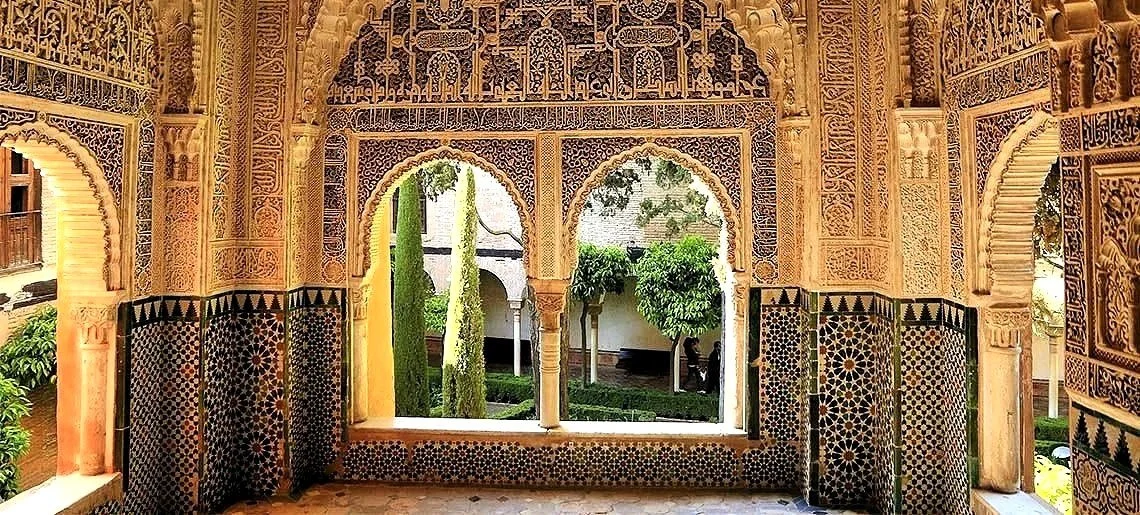
The exquisite geometric and arabesque motifs of the Nasrid Palaces in the Alhambra.
The Palaces’ austere red façades conceal a world of wonder. Dim corridors give way to sunlit patios with singing fountains; covered walkways open onto radiant gardens. Inside, every wall is alive with intricately carved stucco, arches soar to vaulted ceilings, and delicate lattice windows scatter the light. Geometry, epigraphy, and vegetal motifs combine to create a harmonious vision that captivates the eye and the heart.
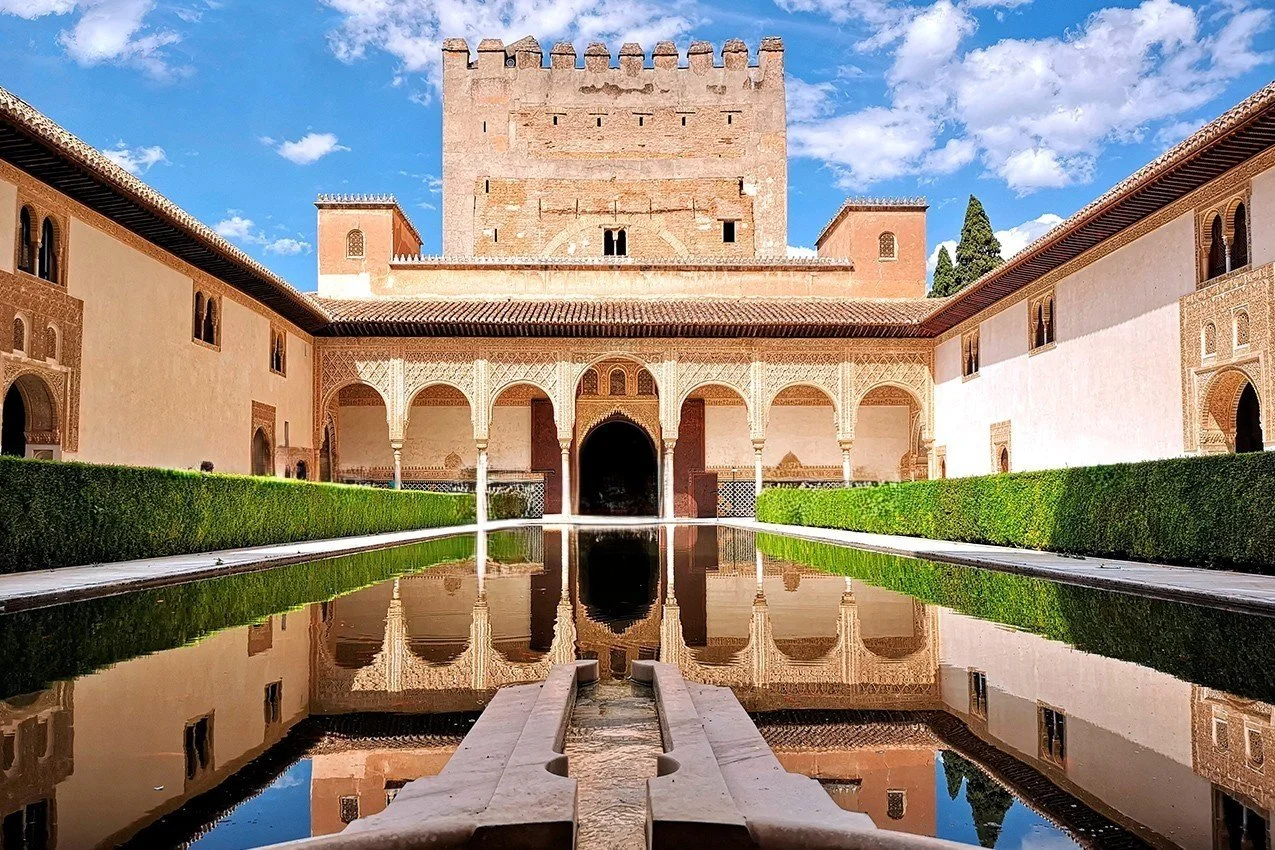
The serene elegance of the Court of the Myrtles in the Comares Palace.
The Comares Tower, its arches mirrored perfectly in the reflecting pond, is breathtaking. Legend recalls Boabdil’s mother watching her son negotiate Granada’s surrender, warning: “Look at what you surrender… all your forebears died kings of Granada.” The Court of Lions, with twelve carved lions guarding a marble basin and a marvel of hydraulic design, leaves one equally speechless. I could only whisper: poetry of art.
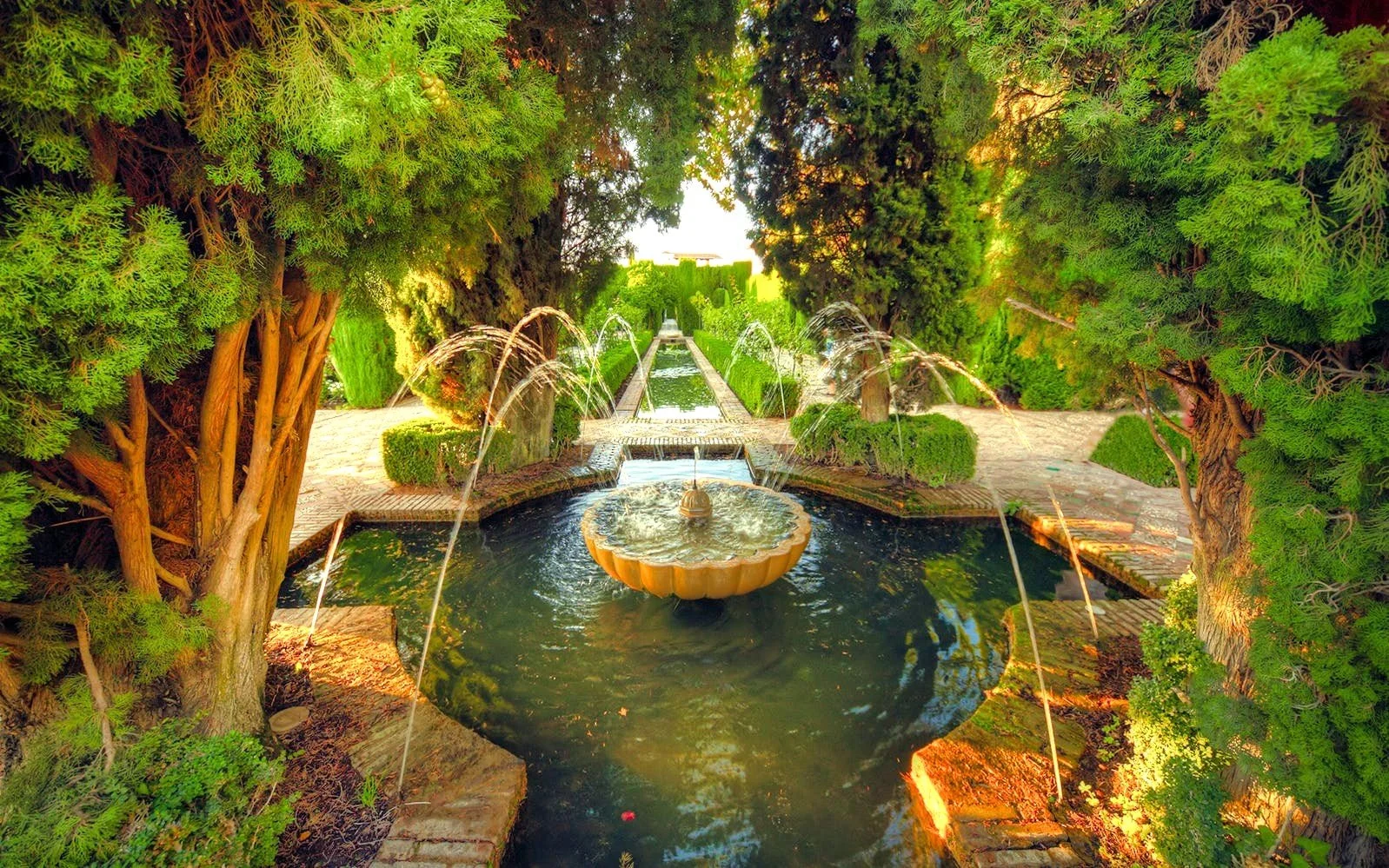
The splendour of the Generalife Gardens, a timeless Moorish paradise beside the Alhambra.
The Generalife gardens, perched on the hill, offer serenity in motion. Water flows through narrow canals and fountains, harmonising sound, sight, and cooling breeze. At the far end, a pleasure palace once offered the Nasrid rulers a retreat from official life. I imagined poets, musicians, and odalisques wandering these gardens, as though time had folded itself around their languid elegance.
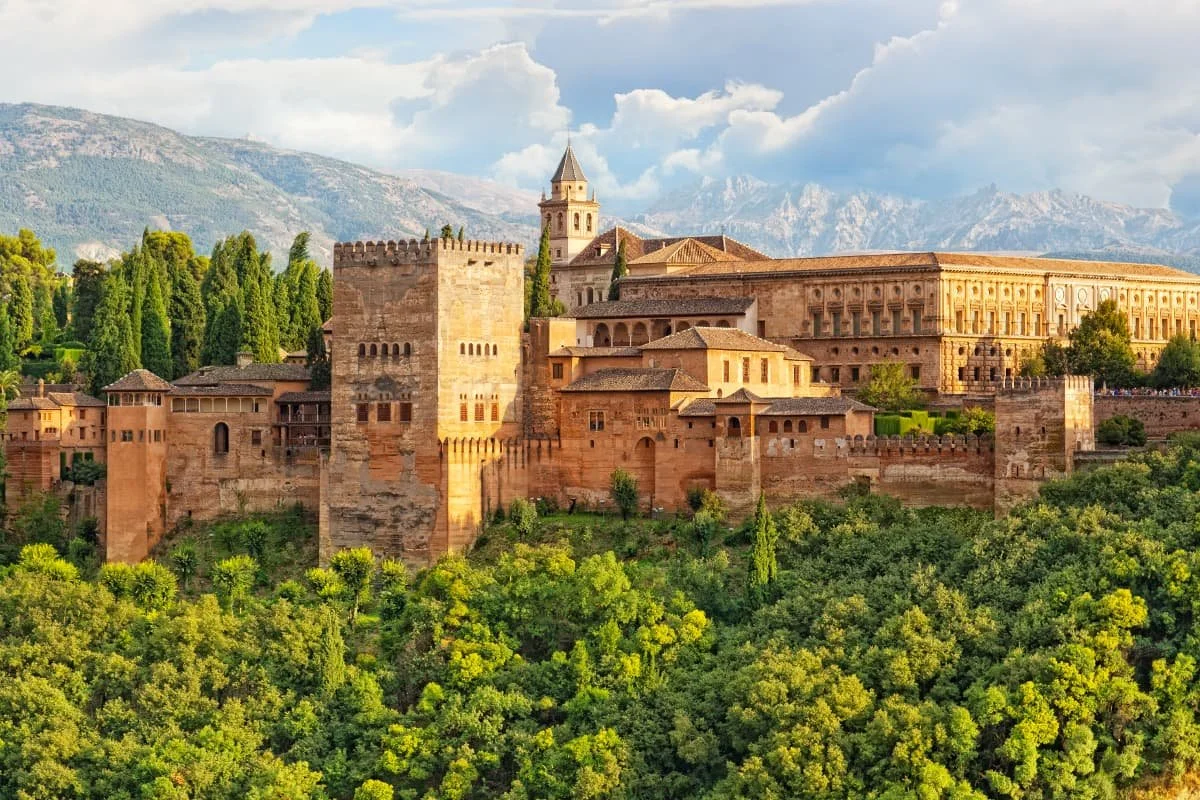
The majestic architecture of the Alhambra.
Finally, I sought the gate through which Boabdil surrendered Granada. Walled up at his request, it preserved his dignity and sorrow. I pictured him descending the ravine on a white horse, the keys in hand, glancing back at the city he could not defend — the Slope of Tears witnessing his grief. His mother, proud Aixa, chastised his tears, yet in him was a quieter pride: a wish for Granada to endure as a testament to the brilliance of its culture. Though his kingdom fell, the Alhambra survives — a living tribute to artistry, imagination, and human spirit.
Every journey I take eventually finds its way into my writing, transformed through emotion, detail and the beauty of place.
Journey through the pages of my Books in English Books in Italian Books in Greek
The book ANDALUSIA, A Jewel of the Light, is published in Greek. It will soon be published in English.
Related Articles
The Marbella Club, Andalusia: The Hotel That Changed Marbella Forever
A visionary prince, elegant simplicity and Mediterranean charm transformed the Marbella Club into one of the world's most celebrated hotels.
Read the Story
Seville: The Art of Andalusian Living
Graceful architecture, hidden patios and the rhythm of flamenco create a city that lingers long after the journey ends.
Read the Story