
Even Paintings Travel
The Arnolfini Portrait

“The Arnolfini Portrait,” Jan van Eyck, 1434, National Gallery, London.
One rainy morning at the National Gallery in London, I stood before Jan van Eyck’s Arnolfini Portrait, painted in 1434 in Bruges when he was court painter to Philip the Good, Grand Duke of Burgundy. Despite its modest size (81.8 x 59.4 cm), the painting is astonishingly precise: the room, the Arnolfini couple, every detail captured as if photographed. The Guardian had listed it among “Twenty Works of Art to See before You Die,” but what truly fascinated me was not merely its perfection, but the extraordinary journey it had undertaken.

The Court of Philip the Good in Burgundy, miniature by Rogier van der Weyden, c. 1447.
Initially, it was admired privately by the Arnolfini household in Bruges. Without heirs, the painting passed to Don Diego de Guevara, a cultured ambassador at the Burgundian court, who later gifted it to Archduchess Marguerite. She displayed it in her private apartments in Mechelen, Flanders, recalling happy days with her late husband.
From Marguerite’s collection, the painting passed to her niece, Mary of Hungary, Regent of the Netherlands. As she was obliged to leave Burgundy to accompany her brother, Charles V, to Spain, where he intended to retire and leave the empire to his son, Philip II, Mary took the painting with her on the journey. Remarkably, it survived, enduring the sea voyage in a galleon, with its humidity and atmospheric changes, and arrived intact.
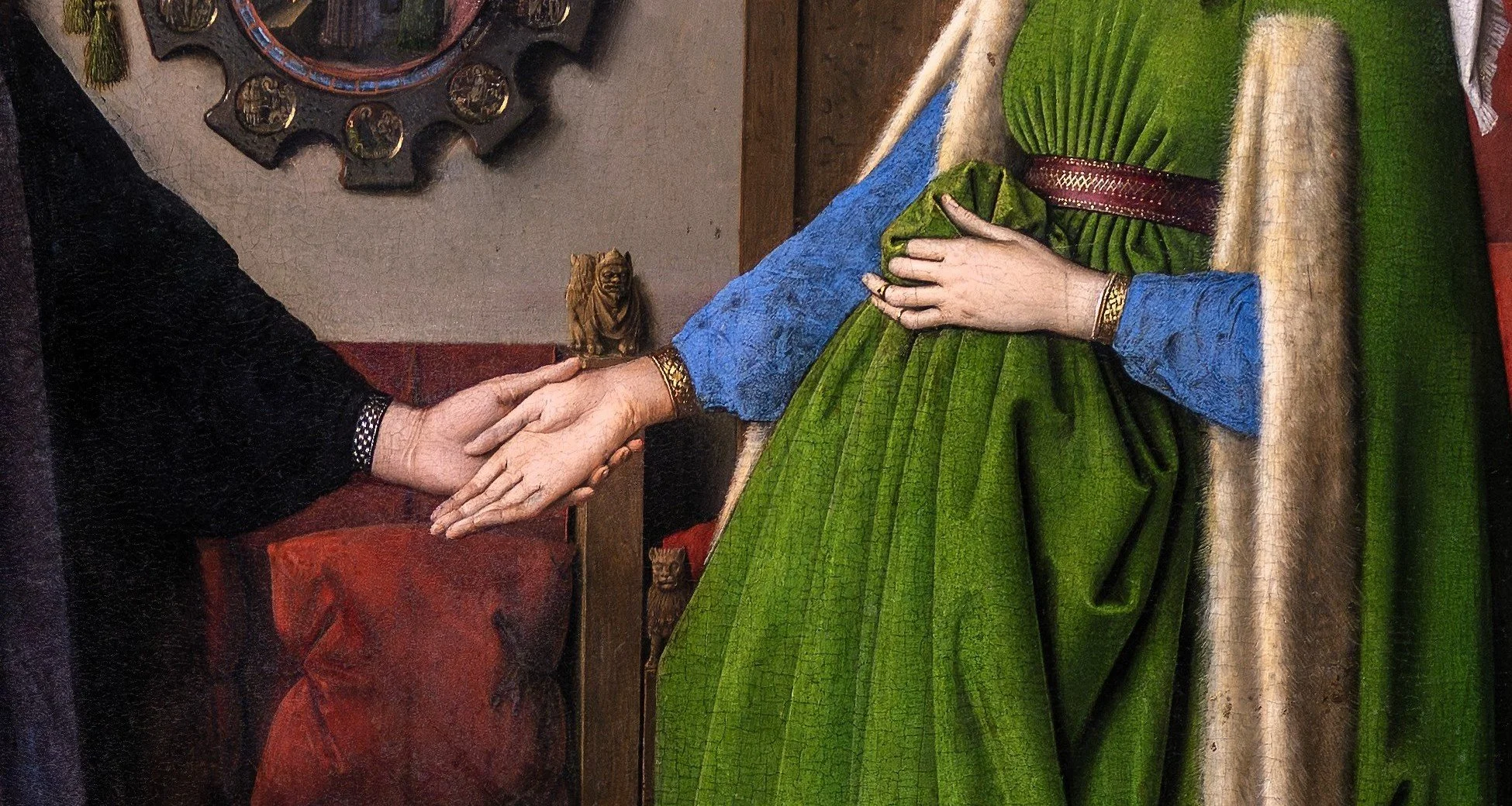
The Arnolfini Portrait (detail).
Art is obedient, subject to the will of its owners, yet remarkably resilient. Unlike humans, fragile and fleeting, a painting can endure centuries. In Spain, it remained in the royal collections, passing from Mary to Philip II, then through the Bourbons, always catalogued and quietly admired, often in private corridors rather than grand public salons.
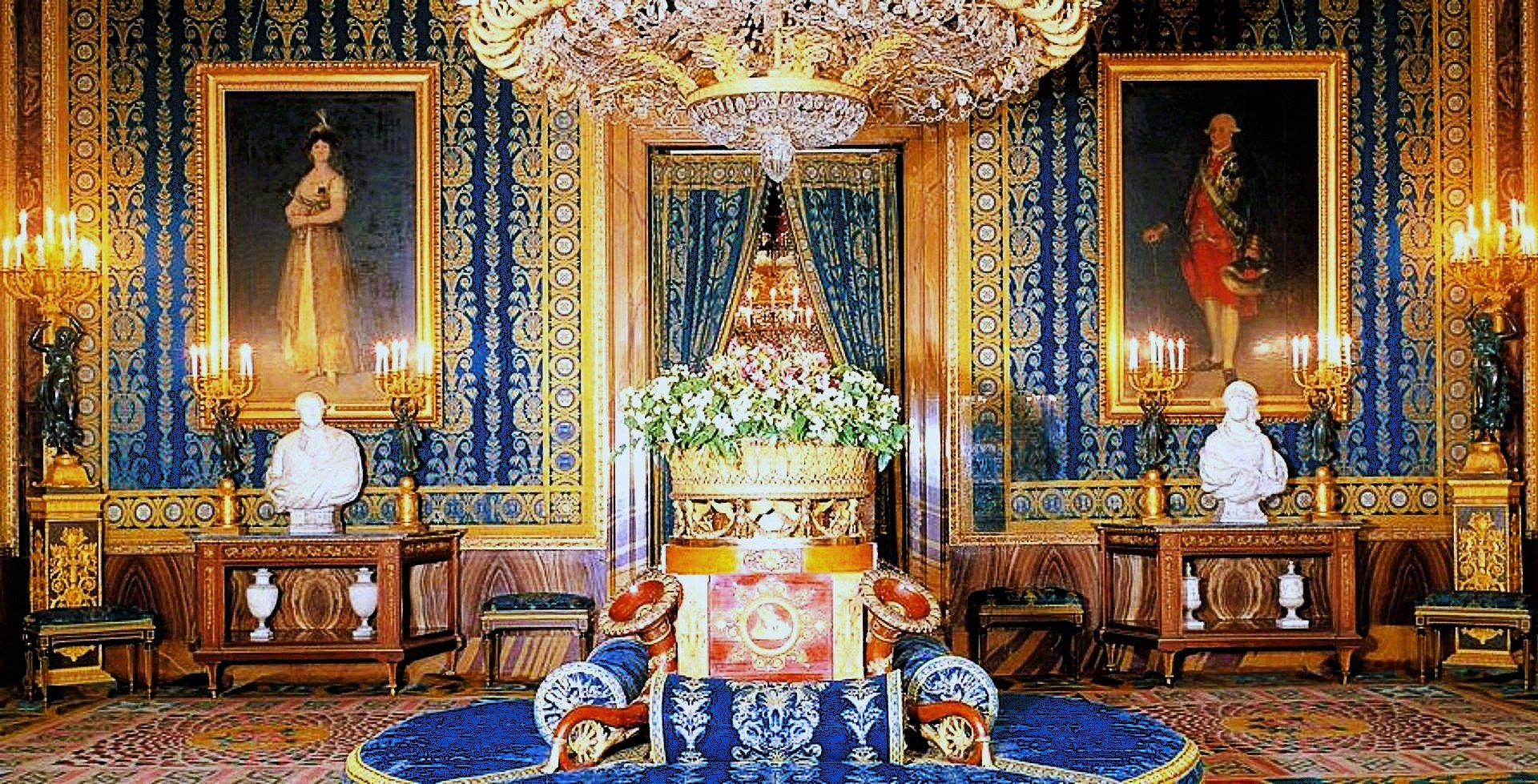
Gasparini Room in the Royal Palace of Madrid – a Rococo masterpiece.
Napoleon’s conquest of Spain threatened countless works, yet the Arnolfini Portrait remained untouched in the Royal Palace of Madrid. During the Battle of Vitoria, Wellington’s troops captured the fleeing King Joseph – Napoleon’s brother – along with his spoils, and the painting, fortunately intact, came into the hands of Colonel James Hay. Eventually, it was sent to the Prince Regent, George IV, but Flemish primitives were then unfashionable; the portrait returned to Hay’s care.
The Pre-Raphaelites and their circle were among the first to appreciate Flemish primitive art. Some scholars, intrigued by the Arnolfini couple, travelled to Bruges to discover more about them and to study Jan van Eyck. They began to write articles, and it was through this scholarship that the painting gradually began to captivate connoisseurs.
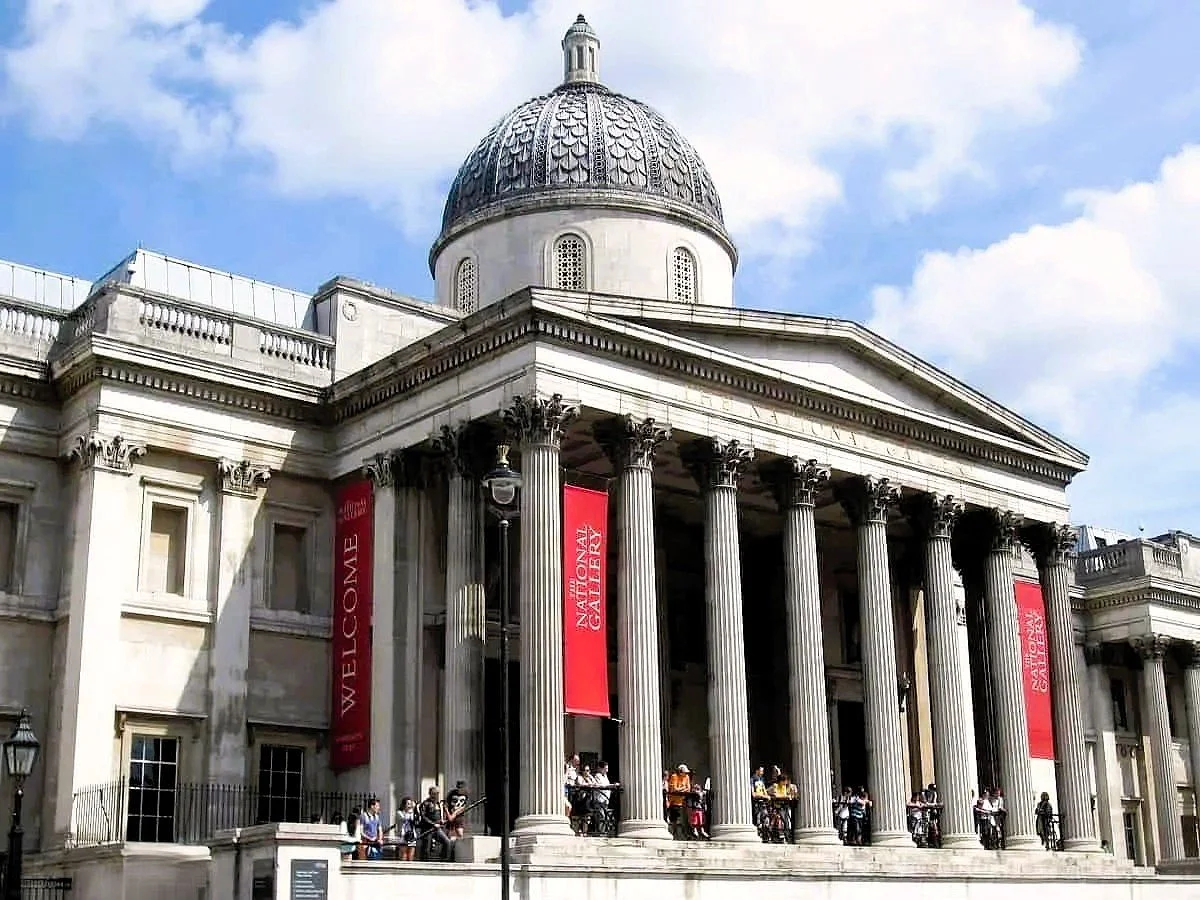
National Gallery in London.
Their research sparked wider interest, and in February 1843 the National Gallery, eager to enhance its Flemish collection, acquired the painting for 600 guineas — the same price as Bellini’s Portrait of the Doge Loredan. Since then, it has remained calm, silent, and revered as a highlight of the Gallery’s collection.
Art has always shaped the way I travel — guiding me toward places defined by beauty, atmosphere and cultural memory.
Journey through the pages of my Books in English Books in Italian Books in Greek
Related Articles
From Burgundy to Bruges: The Legacy of the Old Duchy
A personal journey through Burgundy and Flanders, where medieval courts, vineyards and the city of Bruges reveal a continuous cultural and historical landscape across Europe.
Read the Story
Marguerite of Austria: The Great Mother of Europe and the Courts of Europe
A reflective portrait of Marguerite of Austria, tracing her life between France, Spain and Flanders (Burgundy), and her role as regent in the Burgundian Netherlands.
Read the Story