
A sea voyage to the breathtaking Rock of Gibraltar
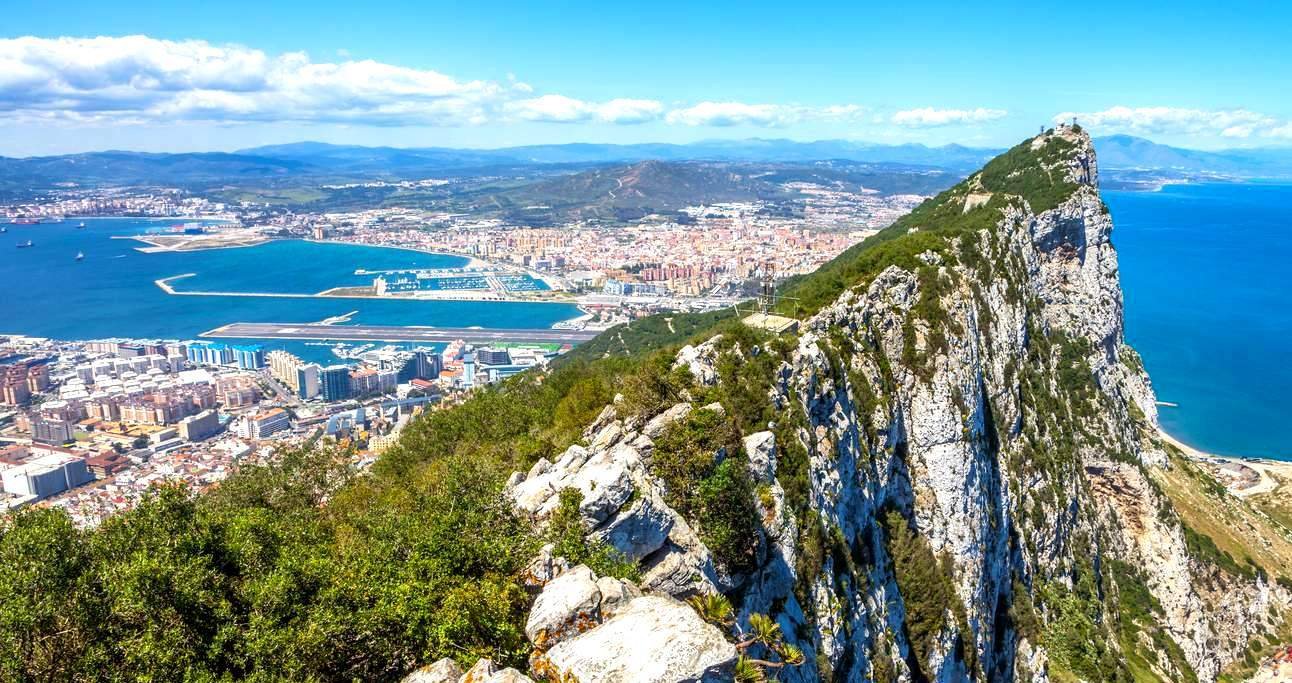
The Rock of Gibraltar
The Mediterranean stretched before us in the pearly greys of early morning, its calm surface bearing the weight of centuries. This most storied of seas — crossroads of ancient civilisations, passage for galleons and now for vast cargo ships bound for distant oceans — shimmered with quiet authority. Our own white yacht, elegant yet Lilliputian beside the freighters, cut a modest line towards the Rock of Gibraltar. Not far off sailed the yacht of an Arab emir, and together we approached that monumental promontory which has commanded the gateway to the Atlantic since time immemorial.

The Barbary macaques, sovereigns of the Rock
From the upper deck we admired its austere grandeur until our friend Isabella, who had visited before, briskly interrupted our reverie. “Beware of the monkeys,” she warned. “Hide your bananas. Don’t feed them — they’ll snatch at your hand.” Thus primed, we encountered the celebrated Barbary macaques with mingled awe and caution. They bounded over railings and rocks with sovereign ease, the undisputed kings of the Rock. We stood still as instructed, and they soon lost interest, leaving us to our explorations.

St. Michael's Cave, Gibraltar
Gibraltar revealed itself as a place where nature and history are in constant dialogue. At St. Michael’s Cave, deep within the limestone mass, we descended into a cathedral of stone. Stalactites and stalagmites, sculpted over millennia, rose and fell in theatrical splendour, illuminated by shifting lights and music that lent the cavern an almost sacred atmosphere. It felt as though the Earth itself were whispering of ages untouched by human hands.
Yet elsewhere within the Rock, humanity had left an indelible mark: a vast network of Second World War tunnels testifying to ingenuity under duress. Hewn by British soldiers and local labourers, these passageways transformed the Rock into a subterranean fortress during Europe’s darkest hours. Despite these hollowed depths, Gibraltar stands as solid as ever — a paradox of resilience.

Gibraltar at our feet: a panoramic view from the Rock
We ascended by cable car to the summit. The panorama was breathtaking: Africa lay hazy yet tangible across the Strait; Spain stretched behind us; the Atlantic opened beyond. Below, the old town clustered within Moorish walls while modern buildings climbed the slopes. On reclaimed land, sleek towers gleamed in the sun. The airport runway, audaciously intersected by Winston Churchill Avenue and closed to traffic at each landing, epitomised Gibraltar’s compact ingenuity. Amid this spectacle, the macaques lounged with effortless indifference.
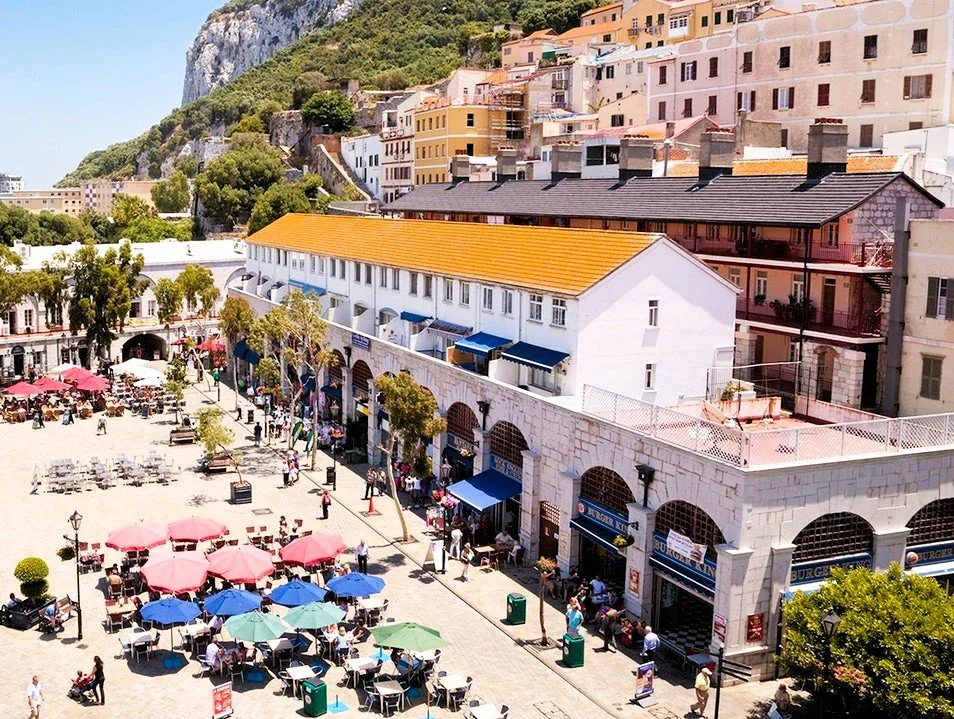
The Casemates Square in the Old Town, Gibraltar
Later, wandering through the old town, I searched for a miniature London of the Georgian era. Instead, I found a beguiling mélange. Genoese shutters shaded Andalusian patios; Portuguese tiles adorned façades; Georgian sash windows stood beside cottages reminiscent of the English countryside. The air carried a lilting blend of English inflected with Mediterranean cadences. Spaniards, Moroccans, Indians and Jewish merchants animated the streets, while duty-free shops glittered with spirits, jewellery and perfumes from across the globe.
As dusk softened the façades, I imagined Christopher Columbus once passing through these same narrow streets before his westward voyage. Crossing the Moorish Waterport Gate, the scene shifted abruptly to the polished modernity of Queensway Marina — glass-fronted banks, palm-lined roads, immaculate roundabouts and luxury apartments overlooking the anchored yachts.
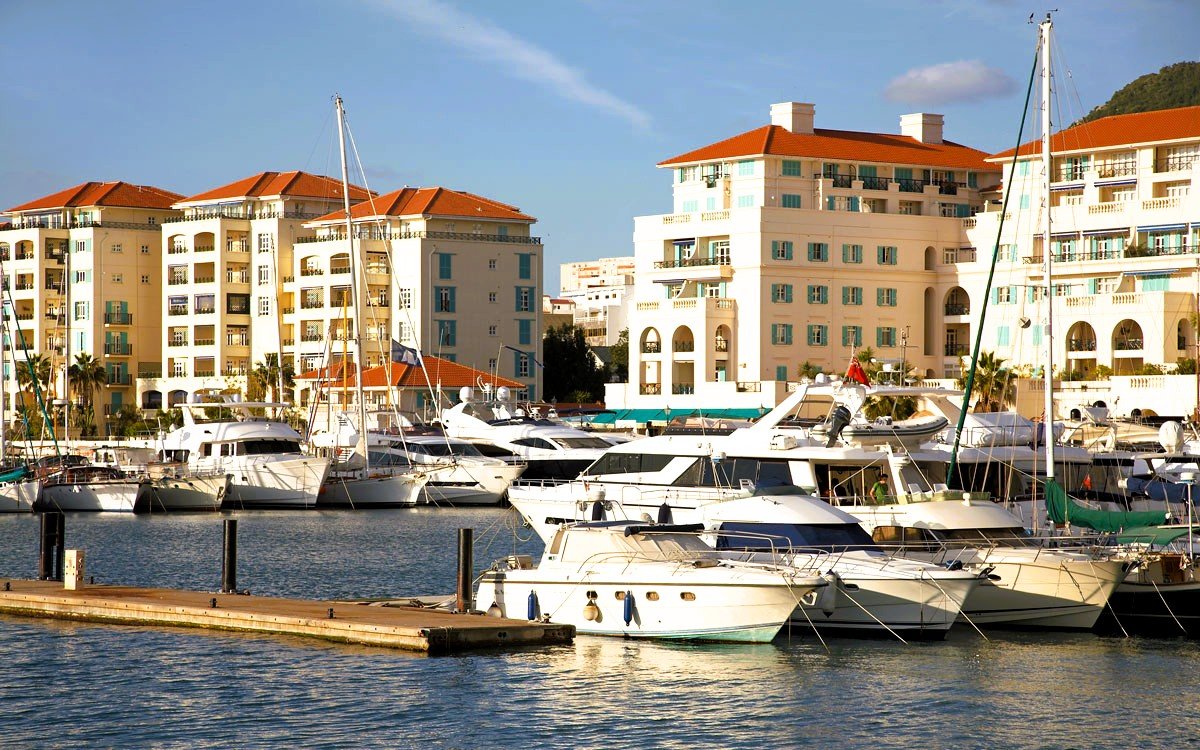
Queensway Quay, Gibraltar – Image Credit: Peter Cumberlidge
Over an aperitif on deck, an English fellow traveller reflected that the sea had once lapped at the Moorish walls and that the Rock had been “more romantic”. I understood her nostalgia, yet found myself quietly disagreeing. Gibraltar’s romance lies not in stasis but in continuity — in its capacity to adapt while retaining its formidable presence.
Solid as the limestone from which it rises, the Rock endures: sentinel of Europe’s southern edge, witness to empires past and guardian of a future as compelling as its history.
Embark on a journey with my Books in English